
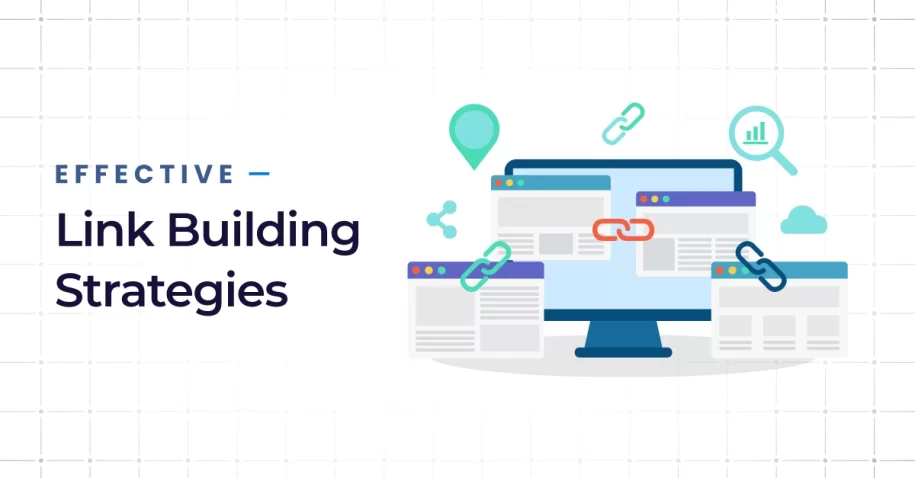
Link building in 2026 works when it earns links through genuine value — original research, expert commentary, and resources worth citing — rather than acquiring them through outreach volume or paid placements, which is exactly the kind of link Google’s algorithm now actively penalises. This guide covers the specific link building strategies that work today, industry by industry, along with how to audit your existing backlink profile and avoid the tactics that put a site at real risk.
Key Takeaways
- Link building in 2026 is fundamentally different from 2020 — Google’s link spam updates have made low-quality, high-volume link acquisition a liability rather than an asset.
- Link earning — creating something genuinely worth citing — now consistently outperforms traditional link building outreach.
- Digital PR, linkable assets, local link building, expert contribution, HARO, broken link building, and partnership links are the seven strategies that still reliably work.
- A backlink’s quality depends on topical relevance, domain authority, editorial placement, referring page traffic, and natural link placement — not link count alone.
- Link building tactics differ meaningfully by industry — what works for healthcare (E-E-A-T-driven digital PR) looks very different from what works for real estate (hyper-local geo-targeting) or manufacturing (technical trade publications).
- Toxic link profiles need regular auditing, and Google’s disavow process exists specifically to address links a site can’t remove manually.
- The tactics to avoid — PBNs, link exchanges, paid links without nofollow tags, and article spinning — carry real penalty risk regardless of how they’re framed.
Why Link Building in 2026 Is Fundamentally Different From What Worked in 2020
Link building advice from 2020 carries real penalty risk if followed today. What used to work — bulk guest posting, reciprocal link exchanges, and directory submissions at scale — has been specifically targeted by several rounds of Google algorithm updates aimed at devaluing or penalising exactly those tactics. A site following outdated link building playbooks in 2026 isn’t just wasting effort; it risks actively damaging its own rankings.
The stakes of getting this wrong are real: Google’s spam-detection systems have gotten significantly better at identifying unnatural link patterns, and a site with a manipulated-looking link profile can face a manual action or algorithmic devaluation that’s far more costly to recover from than simply building fewer, better links from the start would have been.
How Google’s Link Spam Updates Have Changed What Counts as a Quality Backlink
Google has run a series of link spam updates between 2020 and 2026 that collectively reshaped what counts as a positive versus a negative link signal. Early link spam updates focused on identifying and devaluing obvious manipulation — private blog networks, paid link networks, and bulk directory submissions. Later updates expanded to catch more sophisticated manipulation, including large-scale guest posting networks used purely for link placement rather than genuine editorial value, and sites created primarily to host outbound “sponsored” content disguised as organic editorial links.
The practical impact is that link types which once carried neutral or mildly positive value — low-effort guest posts, exact-match anchor text link exchanges, and directory submissions with no editorial review — now carry either no value or active negative risk. Meanwhile, link types that require genuine effort to acquire — earned media coverage, citations from original research, and links from sites with real editorial standards — have become comparatively more valuable, precisely because they’re harder to fake at scale.
Difference Between Link Building and Link Earning
Link building is actively pursuing links through outreach, submissions, or placement; link earning is creating something genuinely valuable enough that other sites choose to link to it without being asked. In 2026, the distinction matters because Google’s algorithm has gotten increasingly good at telling the difference — a link that exists because someone found your content genuinely useful carries far more weight than a link that exists because someone asked for it or paid for it. The most effective modern link strategies blend both: creating genuinely link-worthy assets (earning), then making sure the right people know those assets exist (building).
What Q-Tech Inc.’s SEO Team Has Learned About Link Building Across Different Clients In Miami
In our experience building link campaigns for healthcare, legal, real estate, and other Miami-based businesses, the right link strategy shifts meaningfully by industry:
- Healthcare requires trust, E-E-A-T, and compliance first. We’ve shifted healthcare clients away from standard guest blogging toward digital PR and original medical research — launching a study on patient outcome data or survey results naturally gives authoritative medical journals, health blogs, and news sites a reason to cite the clinic as the original source.
- Legal rewards localized, hyper-relevant citations and local community involvement. Listings on established legal directories — Avvo, Justia, Martindale-Hubbell — and state bar associations still pass meaningful trust and referral traffic even in 2026.
- Accounting depends on credibility and YMYL-level compliance — E-E-A-T signals, local digital PR, listings on high-authority financial platforms, and local news coverage all matter. Sponsoring local little league teams, charities, or participating in business fairs consistently yields high-quality editorial links from .org and .edu community websites.
- Nonprofit organizations benefit from what we’d call a “mission premium” — webmasters, bloggers, and editors are often willing to link for free simply because the cause is worth supporting. Local SEO, brand mentions in news and local blogs, and event roundups tend to generate links from .edu and .gov sites more easily than most other industries.
- Real estate rewards hyper-local geo-targeting — neighborhood-level authority, local PR, and neighborhood guides, with core link sources including local blogs, community sponsorships, and property sites.
- Manufacturing rewards highly technical, specification-driven content and B2B asset creation, with core link sources including trade publications, engineering forums, and partner sites.
This industry-by-industry mix is exactly why we don’t run the same link building playbook across every client — the sources that move the needle for a healthcare clinic rarely move the needle for a manufacturing company, and vice versa. It’s also worth reading alongside a broader look at how link building fits into a full acquisition strategy — our guide to B2B digital marketing strategies covers how these pieces connect.
Quick Reference: The Link Building Strategies That Work in 2026
| Strategy | Best For | Core Approach |
| Digital PR & Earned Media | All industries, especially healthcare, legal, accounting | Original research and data that earns organic press citations |
| Resource Page & Linkable Assets | Professional services, ecommerce | Tools, guides, and data reports worth linking to without outreach |
| Local Link Building | Location-dependent businesses | Associations, sponsorships, and local media relationships |
| Expert Contribution & Guest Content | Thought-leadership-driven industries | Genuine, high-standard contributions to authoritative publications |
| HARO & Expert Source Links | B2B services, professional expertise | Being quoted as an expert source by journalists |
| Broken Link Building | Content-rich sites | Replacing dead links with your own relevant resource |
| Partnership & Supplier Links | B2B, vendor-heavy businesses | Leveraging existing business relationships for natural links |
Note on this table: these strategies reflect widely recognised, white-hat link building practices as of 2026, layered with patterns Q-Tech Inc. has observed running link campaigns for Miami and Florida clients. Results vary by industry, existing domain authority, and market competitiveness — this is a starting framework, not a guaranteed outcome.
Quality Link vs Quantity Link – Difference
A quality-focused link strategy prioritises fewer links from highly relevant, authoritative, editorially reviewed sources. A quantity-focused link strategy prioritises acquiring as many links as possible, often from low-relevance or low-authority sources. In 2026, quantity-focused strategies carry real risk — Google’s algorithm evaluates a site’s overall link profile, and a large volume of low-quality links can actively suppress rankings rather than help them. A smaller number of genuinely relevant, high-authority links consistently outperforms a large volume of weak ones.
What Makes a Backlink High Quality in 2026
A high-quality backlink in 2026 comes down to five signals Google’s algorithm evaluates: topical relevance, domain authority, editorial placement, traffic on the linking page, and link naturalness.
- Topical relevance — whether the linking site’s subject matter genuinely relates to yours, not just a tangential connection
- Domain authority — the overall trust and authority signal associated with the linking domain
- Editorial placement — whether the link appears within genuine, reviewed editorial content rather than a footer, sidebar, or paid placement
- Traffic on the linking page — pages that actually receive real visitor traffic tend to signal more genuine value than pages that exist purely to host outbound links
- Link naturalness — whether the link’s anchor text, placement, and surrounding context read as organic rather than manipulated for SEO purposes
What Makes a Backlink Toxic in 2026
Toxic links generally share a few identifiable characteristics: links from link farms built purely to pass authority between low-quality sites, links from private blog networks (PBNs), links from irrelevant foreign-language sites with no topical connection, footer links placed in bulk on low-quality sites, and links acquired through paid link schemes.
To identify whether an existing link profile has dangerous links, we recommend using Google Search Console’s link reports alongside SEMrush or Ahrefs toxicity scoring tools, and manually checking each flagged link’s spam score, Domain Authority (DA), and Page Authority (PA) — a link with a high spam score and low DA/PA from an irrelevant site is a strong candidate for removal or disavowal.
How to Conduct a Backlink Audit Before Building New Links
Before investing in new link building, we recommend auditing the existing backlink profile through a consistent four-step process:
- Step 1 — Export your backlink data. Use Google Search Console, SEMrush, or Ahrefs to pull a complete list of every domain currently linking to the site.
- Step 2 — Evaluate link quality and toxicity. Check each tool’s toxicity score for flagged links, and manually review anything questionable — checking whether the linking site is topically relevant, whether it has real traffic and editorial content, whether the domain has a history of spam, and whether the link placement looks natural or manipulated.
- Step 3 — Remove and disavow bad links. For links from sites you have some relationship with, request manual removal first. For links you can’t get removed — and that pose a genuine risk — compile them into a disavow file for submission to Google
- .Step 4 — Perform a competitor backlink gap analysis. Using a tool like Ahrefs Site Explorer or the SEMrush Backlink Gap tool, identify which pages on competitor sites have attracted the most links, and use that data to inform better, more authoritative content and assets of your own.
Strategy 1: Digital PR and Earned Media
Digital PR is, in our experience, the highest-leverage link building strategy available in 2026 — it’s the closest thing to a scalable way to earn genuinely high-authority links, because it produces content journalists and editors have a real reason to cite.
What Is Digital PR
Digital PR is the practice of creating genuinely newsworthy content — original data, research, or expert commentary — and pitching it to journalists and publications in a way that earns organic media coverage and backlinks. It differs from traditional PR in that its explicit goal includes earning a clickable backlink alongside brand coverage, not just media mentions — which matters for SEO specifically, since a mention without a link carries no direct ranking value.
Creating a genuinely linkable story typically comes down to one of a few approaches: publishing original research data no one else has, offering a contrarian expert opinion on an industry trend, producing Miami-specific data insights that local and national press can’t get anywhere else, or newsjacking a current event with credible expert commentary.
How Q-Tech Inc. Develops Digital PR Campaigns for Miami Business Clients
When Q-Tech Inc. builds a digital PR campaign, the process consistently follows eight steps:
- Aligning the campaign with the client’s specific objectives — making sure the campaign targets the right audience and outcome, not just press coverage for its own sake.
- Building data-driven content — original surveys or industry data analysis that gives journalists something concrete to reference.
- Producing in-depth guides, infographics, and visually appealing reports — content formats that are easy for publications to embed or reference directly.
- Pitching industry-specific editors and bloggers — reaching out to the journalists who actually cover the client’s specific industry, offering additional information, quotes, or exclusive data.
- Running local, industry-based digital PR — targeting Miami-specific publications and industry press alongside national outreach.
- Link reclamation — monitoring the web for unlinked brand mentions and reaching out to request the mention be turned into a clickable link.
- Monitoring results — tracking new brand mentions, new backlinks, and any resulting keyword ranking improvements.
- Analysing the right metrics — including Domain Authority (DA) of the linking sites, referral traffic driven to the client’s site, and overall organic search growth. Worth noting: DA is a third-party metric provided by Moz, not an actual Google ranking factor — it’s a useful proxy for site strength, not something Google itself uses to rank pages.
Strategy 2: Resource Page and Linkable Asset Link Building
Creating a genuinely useful, well-built resource lets a site earn links without needing to run outreach for every single one — once the asset exists and starts circulating, links tend to accumulate organically as more sites discover and reference it.
What Makes a Linkable Asset in 2026
The asset types that consistently earn links across industries include:
- Original industry data studies — for example, a healthcare clinic publishing patient outcome research, or a real estate firm publishing a Miami housing market data report
- Comprehensive how-to guides — for example, a legal firm’s complete guide to a specific legal process, or a manufacturing company’s technical specification guide
- Free tools and calculators — for example, an accounting firm’s tax estimate calculator, or a real estate firm’s mortgage affordability calculator
- Local market data reports — for example, a nonprofit’s annual community impact report, or a real estate firm’s neighborhood-level market trends report
- Industry-specific glossaries — for example, a legal firm’s plain-language glossary of legal terms, or a manufacturing company’s technical terminology reference
How to Find Resource Pages That Link to Content Like Your
Resource page prospecting typically follows a consistent process:
- Use advanced Google search operators — such as “yourkeyword” + inurl:resources, “yourkeyword” + intitle:resources, “yourkeyword” + helpful links, and site:.edu “yourkeyword” + resources
- Analyse competitor backlinks — checking which resource pages already link to a competitor’s highly-ranked content using a tool like Ahrefs or SEMrush
- Check relevancy before reaching out — confirming the resource page’s audience and topic genuinely align with your content
- Identify relevant industry directories — resource-style pages maintained by industry associations or organizations
- Craft a personal outreach email — explaining specifically why your resource is a strong addition to their page, how it helps their readers, and what value it adds for them, not just for you
How Q-Tech Inc. Creates Linkable Assets for Miami Healthcare, Legal, and Real Estate Clients
In our experience building linkable assets across industries, the process consistently starts the same way: competitor backlink analysis to identify what’s already working, followed by finding the specific pain point in the client’s industry that no one else has fully answered yet. From there, our process generally includes original research and data studies, in-depth “ultimate guides,” downloadable PDFs or spreadsheets, targeted email outreach, broken link building, local PR, and social sharing to help the asset gain initial traction.
For healthcare clients– we create linkable assets by transforming complex medical data, expert knowledge, and clinical tools into engaging, authoritative online resources. Because healthcare falls under Google’s strict YMYL (Your Money or Your Life) criteria, these assets need to prioritise medical accuracy and credentialed authority to successfully earn backlinks from journalists, educational institutions, and medical publishers. This typically includes:
- Industry reports — original data on patient outcomes, treatment trends, or regional health statistics
- Illustrative infographics — visual breakdowns of medical processes or data, built for easy embedding by other sites
- Patient care guides — comprehensive, medically accurate resources addressing common patient questions
- E-E-A-T-driven blog content — written or reviewed by credentialed medical professionals
- Industry-specific asset creation — tools or resources tailored to a specific medical specialty
- Internal linking — connecting these assets to relevant service pages to reinforce topical authority sitewide
- Local and national PR — pitching these assets to both Miami-specific health journalism and national medical publications
For legal clients– we focus on establishing topical authority and E-E-A-T in Google’s eyes, targeting both consumer (B2C) and other legal professional (B2B) audiences through:
- Comprehensive legal guides — in-depth resources covering a specific legal process or practice area
- Data research reports — original analysis of legal trends or case outcome data
- Industry insights using the Skyscraper Technique — identifying an existing high-performing resource and building something more comprehensive
- Expert vetting — ensuring content is reviewed by a credentialed attorney before publication
- Promotion and link building — actively pitching the finished asset for placement and citation
- Resource page link building — targeting legal-specific resource pages directly
- Unlinked brand mention reclamation — turning existing text mentions into clickable links
- State-specific legal resource hubs and local PR — building content and press relationships specific to Florida legal requirements
For real estate clients– effective linkable assets typically include property calculators, in-depth property or neighborhood guides, local and national PR placements, infographics, broken link building, partner linking with related local businesses, and social media promotion to help the asset gain initial traction.
Strategy 3: Local Link Building
Local link building focuses specifically on earning links from other businesses, organizations, and media within the same geographic market — a category of link that carries particular weight for any business relying on local search visibility.
How to Build Local Links From Miami Business Organisations, Associations, and Media
Local link building doesn’t require a large budget to be effective. A few consistent, no-cost or low-cost approaches include: joining and getting listed with local business associations, contributing content to local business publications, sponsoring local events in a way that includes a digital presence and link back, and actively participating in Miami business community online discussions and forums.
Local Citation Building vs Local Link Building
Local citation building means getting a business’s name, address, and phone number listed consistently across directories — these citations reinforce local SEO trust signals but don’t always include a clickable link. Local link building specifically means earning an actual hyperlink back to the site. Both matter for local SEO, but they serve slightly different purposes: citations reinforce local trust and consistency, while links pass direct authority and referral traffic. For a fuller breakdown of how these fit into a complete local SEO strategy, our 2026 local SEO guide covers both in more depth.
Strategy 4: Expert Contribution and Guest Content
Genuine expert contribution is the legitimate version of guest posting — publishing real, substantive expert content on authoritative industry publications, rather than the low-effort, purely link-motivated guest posting Google has spent several algorithm updates devaluing.
Why Most Guest Posting Is Now Worthless for SEO And What Works
Most guest posting has become worthless for SEO because it stopped being about genuine editorial contribution and became a transaction — content produced purely to place a link, submitted to sites with little to no editorial standard. What still works is guest content published on sites with a publication domain authority above roughly 50, genuine editorial review standards, real topical relevance to that site’s actual audience, and an author bio link that points to a relevant service page rather than a generic homepage.
How to Identify High-Value Guest Posting Opportunities
Evaluate potential guest posting targets against a consistent set of criteria:
- Domain authority — prioritising publications with established, credible authority
- Editorial standards — confirming the site has a genuine review and editing process, not automatic publication
- Audience relevance — making sure the publication’s actual readership overlaps meaningfully with your target audience
- Publication traffic levels — favouring sites with real, active readership over sites that exist primarily to host guest content
How to Pitch Guest Content That Gets Accepted
A successful guest content pitch consistently includes a personalised subject line (not a generic mass-outreach template), a specific content angle with a clear value proposition for that publication’s audience, two or three concrete title options rather than a vague topic idea, and a brief statement of the expertise or credentials that make you a credible contributor on the topic.
Guest Post Outreach Template
Strategy 5: HARO and Expert Source Link Building
HARO (Help a Reporter Out) style platforms connect journalists who need expert commentary with sources willing to provide it — and for a business with genuine subject matter expertise, this remains one of the more reliable ways to earn links from major, high-authority media publications.
How HARO Link Building Works
The process generally follows five steps: monitoring the platform regularly for relevant queries, filtering for queries genuinely relevant to your expertise (rather than responding to everything), responding within roughly four hours of a query being posted, since journalists work on tight deadlines and early responses get read first, providing a specific, quotable expert answer rather than a vague statement, and confirming and tracking the resulting link once the piece is published.
HARO Response Format That Gets Used by Journalists
Responses that actually get used tend to share the same structure: a specific data point or statistic that adds real substance, a contrarian or genuinely surprising observation rather than an obvious statement, a direct, quotable sentence a journalist can lift with minimal editing, named credentials establishing why you’re a credible source, and overall brevity — ideally under 200 words, since journalists are scanning many responses quickly.
HARO Alternatives
Beyond HARO itself, several other platforms serve a similar purpose for expert source link acquisition:
- Qwoted
- SourceBottle
- Terkel
- Featured.com
- Direct journalist outreach via X (Twitter)
Strategy 6: Broken Link Building
Broken link building works by finding dead links on other websites — pages that no longer exist — and offering your own relevant content as a replacement. It’s a genuinely mutually beneficial tactic: the site owner gets to fix a broken link that’s hurting their own user experience and SEO, and you earn a relevant, contextual backlink in return.
How to Find Broken Link Building Opportunities
Broken link prospecting at scale typically relies on a combination of tools: Ahrefs and SEMrush for identifying broken links on relevant sites at scale, the Check My Links Chrome extension for quickly scanning individual pages, and Screaming Frog for crawling larger sites to find broken links systematically. The general process involves identifying resource or content pages relevant to your industry, checking them for dead links, and confirming your own content is a genuinely appropriate replacement before reaching out.
How to Pitch Broken Link Replacements
An effective broken link pitch identifies you as being helpful rather than promotional — leading with the fact that you noticed a broken link, not with a request. It names the specific broken link and exactly where it appears on the page, and offers your content as a possible replacement without demanding the link be placed, leaving the decision genuinely with the site owner.
Strategy 7: Partnership and Supplier Link Building
Partnership links leverage relationships a business already has — vendors, suppliers, clients, and industry contacts — to earn natural, relevant links that require far less cold outreach than most other strategies.
How to Audit Your Existing Business Relationships for Link Building Opportunities
A relationship audit for link building opportunities should look at several specific relationship types: vendor and supplier partner pages that may already list clients, client testimonial pages where a business could be featured with a link, industry association member directories, certification body listings, and award or recognition pages the business may already qualify for but hasn’t claimed.
How to Ask for Links From Business Partners Without Damaging the Relationship
The most effective approach frames the request as mutual benefit rather than a favour being asked — for example, offering to link back in return, or highlighting how featuring the partnership benefits both sides. Being specific about exactly where the link should appear, and making the actual linking action as easy as possible for the other party — providing the exact text, logo, or description they’d need — significantly increases the odds of a straightforward yes.
What to Avoid In Link Building Tactics
Certain link building tactics carry real penalty risk under Google’s current spam policies, regardless of how they’re framed or justified.
Link Schemes
Google’s algorithm actively identifies and penalises several specific link scheme tactics: private blog networks (PBNs) built purely to host outbound links, link exchanges and reciprocal linking arrangements done at scale, paying for links without the required nofollow or sponsored tag, article spinning to place slightly varied versions of the same content across multiple guest post placements, and link farming — networks of low-quality sites that exist solely to link to each other and paying clients.
What to Do If Your Website Already Has Toxic Backlinks
If an audit surfaces toxic links, Google’s disavow process provides a structured way to address them:
- Identify the toxic links using Ahrefs, SEMrush, or Google Search Console’s link reports, focusing on links with no topical relevance, low or spam-flagged domain authority, or clear signs of manipulation.
- Attempt manual removal first by contacting the site owner directly and requesting the link be taken down — Google generally expects this step before disavowing.
- Compile the disavow file for any links you couldn’t get removed manually, formatted according to Google’s specifications.
- Submit the disavow file through Google Search Console, using the Disavow Links tool under the relevant property.
Link Building for Healthcare Businesses
When Q-Tech Inc. builds link campaigns for healthcare clients in Miami and Florida, the strongest sources consistently include medical association listings, guest contributions to established healthcare publications, medical device and pharmaceutical industry directories, local hospital partnership pages, and expert source placements in health journalism — supported by both local and national digital PR promotion.
Link Building for Law Firms
For law firm clients, the link sources that consistently produce results include bar association member directories, contributions to legal publications, well-maintained Martindale-Hubbell and Justia profiles, Avvo attorney listings, and expert legal quotes placed in local business media — supported by local digital PR promotion.
Link Building for Real Estate Agencies
For real estate clients, the strongest link sources include local real estate board member listings, contributions to property publications, neighbourhood business association pages, and citations of Miami real estate market data by other publications — supported by both digital and national local PR promotion.
Link Building for Manufacturing Companies
For manufacturing clients, the link sources that consistently produce results look meaningfully different from consumer-facing industries — trade publications, engineering forums, and partner or supplier site listings tend to carry the most relevant authority, supported by digital local PR promotion targeted at industry-specific outlets rather than general local press.
How to Measure Link Building Success
Link building success should be measured on quality signals, not raw link count:
- Domain authority of linking pages — tracking the overall strength of the sites providing new links
- Topical relevance score — how closely aligned each new link’s source is with your actual industry
- Link velocity — the rate at which new links are being acquired, since an unnaturally fast spike can itself look suspicious to Google
- Referring domain diversity — the number of distinct domains linking to a site, rather than many links from the same handful of sources
- Anchor text distribution — making sure anchor text looks natural and varied, rather than repeatedly using the same exact-match keyword phrase
How Q-Tech Inc. Builds Local Link Authority for Miami Business Clients
The most common link building mistake we find when auditing a new client account is a link profile built entirely around outdated, low-quality tactics — bulk directory submissions and generic guest posts with no real editorial standard behind them. When Q-Tech rebuilds local link authority for Miami clients, our approach consistently combines:
- Backlink audits to identify and remove or disavow toxic links before building anything new
- Digital PR campaigns built around original data and genuine expert commentary
- Linkable asset creation tailored to the client’s specific industry
- Local link building through Miami business associations, sponsorships, and media relationships
- Genuine expert contribution and guest content on high-standard, relevant publications
- HARO and expert source placements for ongoing media link acquisition
- Broken link building and partnership link outreach as ongoing, lower-effort supplements
- Continuous measurement against quality signals — not link count — to confirm the strategy is actually working
How Q-Tech Inc. Builds Link Campaigns for Miami Businesses
When Q-Tech Inc. audits a new Miami client’s backlink profile before building new links, we’re checking for both opportunity and risk — what’s already working, what’s actively hurting the site, and which of the seven strategies above will move the needle fastest for that specific industry. The link sources that consistently produce the most SEO impact for our Miami clients are rarely the fastest or cheapest ones — they’re the ones built on something genuinely worth citing. If your business needs a backlink audit or a link building strategy built around what actually works for your industry in 2026, our SEO services team can run that assessment and build a campaign suited to where your site stands today. Get in touch with Q-Tech Inc. to talk through what that would look like for your business.
Conclusion
Link building in 2026 rewards the same principle it always should have: genuine value earns genuine authority. Digital PR, linkable assets, local relationships, expert contribution, and partnership links all work because they give other sites a real reason to link — not because they exploit a loophole in Google’s algorithm. The businesses building durable search visibility are the ones treating link building as a byproduct of doing genuinely good, citable work, not a checklist of outreach volume to hit.
FAQ
Q: How Do Backlinks Help My Website Rank Higher in Google?
A: Backlinks signal to Google that other sites consider your content trustworthy and valuable enough to reference. High-quality, topically relevant backlinks from authoritative sites help build the domain authority and topical trust that influence how well a page ranks for relevant search queries.
Q: What’s the Fastest Way to Get Backlinks for My Business Website?
A: In our experience, the fastest way to get backlinks is cross-backlink promotion — actively promoting a genuinely strong piece of content (a study, tool, or guide) to an audience likely to reference it, rather than waiting for organic discovery. Beyond that, broken link building and HARO-style expert source responses tend to produce results faster than digital PR or resource page outreach, since both target an immediate, existing need rather than requiring a publication to build a new story around your content.
Q: How Do I Find Websites That Will Link to My Site?
A: Use advanced Google search operators (like “yourkeyword” + inurl:resources), analyse competitor backlinks with a tool like Ahrefs or SEMrush to see who already links to similar content, check relevant industry directories and resource pages, and confirm topical relevance before reaching out with a personalized pitch.
Q: Do I Need Backlinks if I’m Already Ranking Well?
A: Yes — rankings can shift as competitors build their own authority and as Google’s algorithm evolves, so an existing good ranking isn’t guaranteed to hold without continued authority signals. Ongoing, quality-focused link building helps protect current rankings and supports future content as it’s published.
Q: Are Backlinks from Social Media Worth Anything?
A: Social media links are typically nofollow, meaning they don’t pass direct SEO authority the way an editorial backlink does. That said, they still carry indirect value — driving referral traffic, increasing content visibility to people who might link to it from their own sites, and supporting overall brand awareness, which can lead to more organic, earned links over time.