
In the fast-paced world of B2B marketing, one question continues to spark debate: should businesses focus on LinkedIn Ads or invest in LinkedIn organic growth? Both strategies have their strengths, and the decision often depends on a company’s goals, resources, and stage of growth.
While paid advertising can offer speed and immediate exposure, organic online growth provides credibility, cost-effectiveness, and long-term relationship building. This blog will help you evaluate both approaches, highlight their pros and cons, and offer actionable insights for your marketing planning so you can maximize ROI and scale your business with confidence.
What Are LinkedIn Ads & Organic Growth Strategies?
Before comparing, it’s essential to understand what each strategy entails. Both LinkedIn Ads and organic growth aim to boost visibility, attract B2B leads, and support the sales process, but they operate differently in terms of cost, execution, and results.
Definition of LinkedIn Ads (Sponsored Content, Message Ads, etc.)
LinkedIn Ads are a form of paid advertising where businesses allocate ad spend to run sponsored content, Message Ads, or paid campaigns targeting specific decision-makers. These ads appear directly in users’ feeds, inboxes, or sidebars, ensuring visibility among your target audience. They are powerful tools for sales professionals, account executives, and sales managers who need to fuel the sales team pipeline quickly. With features like audience segmentation, A/B testing, and lead form integrations, LinkedIn Ads are designed to accelerate lead generation and shorten the sales cycle.
Definition of Organic Growth (Posts, Profile Optimization, Employee / Founder Content)
LinkedIn organic growth relies on consistent posting, LinkedIn company page optimization, thought leadership from sales reps, and leveraging employee and founder content. Instead of paying for visibility, businesses invest time in building credibility, engaging with their target audience, and nurturing relationships. By focusing on authenticity, storytelling, and delivering value, companies establish trust and build authority in their industries. Organic efforts, such as publishing articles, videos, and updates, represent effective social media marketing strategies for increasing engagement while supporting a long-term LinkedIn roadmap for business growth.
For example, creating authentic employee-driven posts and enhancing engagement on LinkedIn can position your company as a trusted thought leader.
Head-to-Head Comparison: 5 Key Decision Factors
Let’s examine both strategies across crucial factors to determine which is more suitable for your B2B marketing strategies.
1. Cost
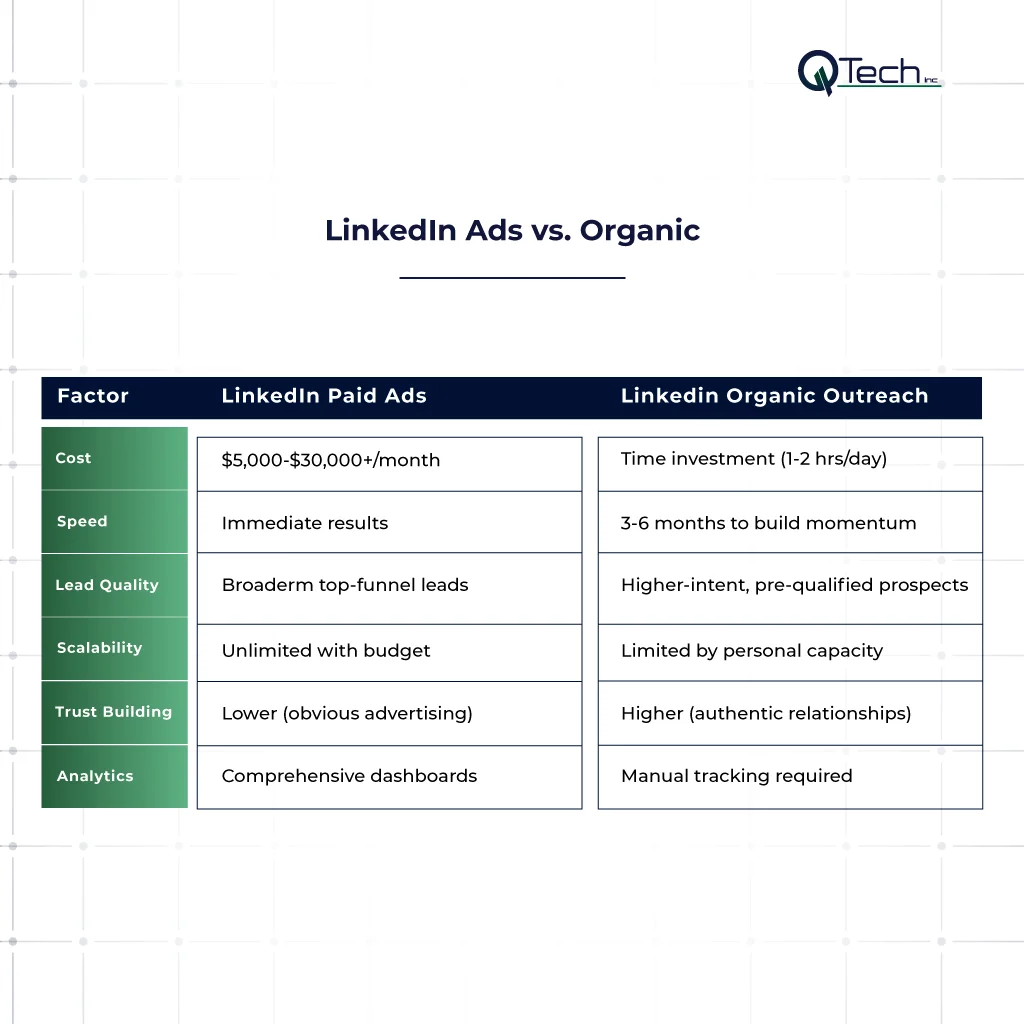
The most obvious difference between LinkedIn Ads and organic growth is cost. Paid campaigns require significant ad spend, which may be challenging for startups or companies with limited budgets. A single click can cost several dollars, and scaling campaigns requires constant investment.
Organic growth, on the other hand, primarily costs time and effort. By focusing on content marketing, thought leadership, and marketing efforts, companies can grow without recurring ad costs. While the growth may be slower, the long-term ROI can often outweigh the expense of paid advertising.
2. Speed of Results
If your sales team needs leads fast, LinkedIn Ads deliver immediate results. A well-structured paid campaign can generate hundreds of impressions, clicks, and leads within days. This makes ads ideal for sales reps and account executives who need to hit quotas or drive awareness for urgent events.
By contrast, LinkedIn organic growth is a marathon, not a sprint. Results may take months to materialize, but the payoff includes stronger trust, thought leadership, and sustainable visibility. For businesses prioritizing long-term authority and a consistent sales cycle, organic is the better route.
3. Credibility and Trust
Trust is critical in B2B marketing. Buyers often question the intent behind ads, which can feel promotional. While ads work for visibility, they may lack the authenticity needed for complex sales processes.
Organic content builds credibility. When employees, founders, or sales professionals share valuable insights, the audience perceives them as industry experts rather than marketers. Organic engagement fuels trust, which leads to stronger connections and makes closing deals smoother for sales managers and their teams.
4. Scalability
LinkedIn Ads are highly scalable. Increase your ad spend, and your content reaches a broader target audience. However, scaling comes at a cost and requires precise marketing planning to avoid wasted dollars.
Organic growth scales differently—it compounds. Each post, comment, and share adds to your reputation. Over time, a strong LinkedIn marketing strategy builds exponential reach without additional expenses. Both methods scale, but the choice depends on whether you prefer immediate volume or sustainable compounding.
5. Lead Quality
Not all B2B leads are created equal. Ads often generate quick leads, but quality varies. Some prospects may be unqualified, leading to longer nurturing cycles for sales reps.
Organic content tends to attract higher-quality leads because prospects engage willingly, drawn by authenticity and expertise. When prospects come through LinkedIn organic growth, they are often further along in the sales cycle, making them easier for account executives to convert.
6. Analytics
Another major advantage of LinkedIn Ads is robust analytics. From CTR to conversion tracking, businesses can measure success in real-time and optimize accordingly. This data supports sales managers in guiding their teams and improving performance.
Organic growth also offers insights, though less detailed. Tracking engagement, comments, and profile views helps identify what content resonates. By combining organic insights with ad analytics, businesses can refine both paid vs organic efforts effectively.
The Hybrid Approach: How to Combine Ads and Organic for Maximum Impact
Instead of choosing one over the other, many top performers leverage both strategies to achieve scalable growth. A hybrid model blends speed with credibility, ensuring businesses capture immediate opportunities while building authority for the future.
Using Ads to Amplify High-Performing Organic Content
When partnering with an experienced digital marketing agency in Miami, a smart LinkedIn strategy involves boosting organic posts that already perform well. If a founder’s thought leadership post gains traction, repurposing it as sponsored content extends its reach to new high-intent audiences. This approach combines authenticity with the reach of paid advertising.
Retargeting Website Visitors and Engaged Followers
Another effective hybrid tactic is retargeting. By using ads to retarget website visitors or followers who engage with your posts, you can nurture warm prospects into B2B leads. Retargeting maximizes ROI by ensuring your ad spend targets an audience already familiar with your brand.
Decision Framework: Which Strategy is Right for Your Business?
Every business is unique, so the right strategy depends on goals, resources, and stage of growth. Here’s a framework to guide your choice.
Choose Organic Growth
If your company is in early stages, budget-conscious, or focused on building trust, prioritize LinkedIn organic growth. Consultants, startups, and businesses aiming for long-term credibility should invest in consistent posting—including knowing the best time to post on LinkedIn for business—alongside company page optimization and authentic storytelling.
Choose LinkedIn Ads
If speed is critical—such as promoting events, launching products, or fueling LinkedIn lead generation campaigns choose LinkedIn Ads. For sales managers who need quick results or sales reps who must generate leads fast, ads provide measurable, scalable results.
Choose a Hybrid Model
Established businesses with the resources to balance both can leverage a hybrid model. Using ads to amplify content and organic strategies to build credibility ensures maximum reach and impact. This approach aligns with ambitious business growth and scalable B2B marketing strategies.
Best Practices to Maximize ROI from Both Strategies
Whether you choose ads, organic, or both, following best practices is crucial to achieving ROI.
Targeting & Audience Segmentation for Ads
For ads, precision is key. Use LinkedIn’s targeting tools to reach decision-makers like sales professionals, account executives, and executives. Avoid wasting ad spend on broad audiences—focus on those most likely to enter your sales process.
Content Strategy for Organic (Authenticity, Video, Employee Posts)
For organic, authenticity wins. Encourage employees to share personal stories, insights, and company culture. Video content also boosts engagement, making your company a top performer in the feed. Consistent marketing efforts around authentic storytelling strengthen trust over time.
Tracking & Analytics: UTM, Lead Attribution, Engagement Metrics
Combine ad data with organic insights. Use UTM tags, track attribution, and measure engagement on LinkedIn to understand what drives the best results. These insights guide sales managers and sales reps in optimizing the sales cycle and improving performance.
Consistency & Experimentation
Success requires consistency. Whether it’s running regular ads or posting weekly updates, staying consistent ensures results compound. Experimentation is equally important—test different ad formats, messaging styles, and organic approaches to identify what resonates most with your target audience.
Conclusion: How Q-Tech Inc. Can Help You Find the Right Mix
Choosing between LinkedIn ads vs. organic, how to choose a strategy for b2b lead generation doesn’t have to be a binary decision. By understanding the strengths of each, businesses can align strategies with their goals and resources. LinkedIn Ads deliver speed, scalability, and measurable ROI, while LinkedIn organic growth provides credibility, authenticity, and sustainable visibility.
As a premier social media marketing agency in Miami, Q-Tech Inc. specializes in designing B2B marketing strategies that combine social media advertising, content marketing, and tailored approaches for LinkedIn lead generation. Whether you need a paid campaign to support your sales team or a long-term LinkedIn marketing strategy to build trust, our experts are here to help. Together, we’ll design a roadmap that drives leads, shortens the sales cycle, and supports lasting business growth.
FAQ
What’s the main difference in ROI between LinkedIn Ads and organic content?
Answer – LinkedIn Ads offer a quick return on investment (ROI) and are ideal for short-term campaigns and immediate lead generation. Organic content, however, offers a much higher long-term ROI by building brand authority and trust over time.
How can I make my LinkedIn organic content go viral?
Answer – There’s no surefire way, but you can increase your chances by creating authentic, high-value content that resonates with your audience. Engaging in conversations, using relevant hashtags, and leveraging your employees’ networks can significantly increase your reach and visibility.
Which is better for my business: a paid or organic strategy?
Answer – The best strategy for most businesses is a hybrid approach. Use organic content to build trust, authority, and a loyal following. Then, use LinkedIn Ads to amplify your best-performing content, reach new, targeted audiences, and drive quick conversions for specific campaigns.
How long does it take to see results from organic LinkedIn growth?
Answer – Organic growth is a long-term strategy. You may see initial engagement within days, but building a meaningful following and consistent lead flow typically takes 3-6 months of dedicated, high-quality activity.