
In today’s rapidly evolving digital landscape, the traditional security perimeter is no longer enough. With remote work, cloud-based applications, and hybrid infrastructures, businesses face threats that move faster and smarter than ever before. This new reality calls for a complete shift in how organizations approach cybersecurity — and that’s where the Zero Trust model comes in.
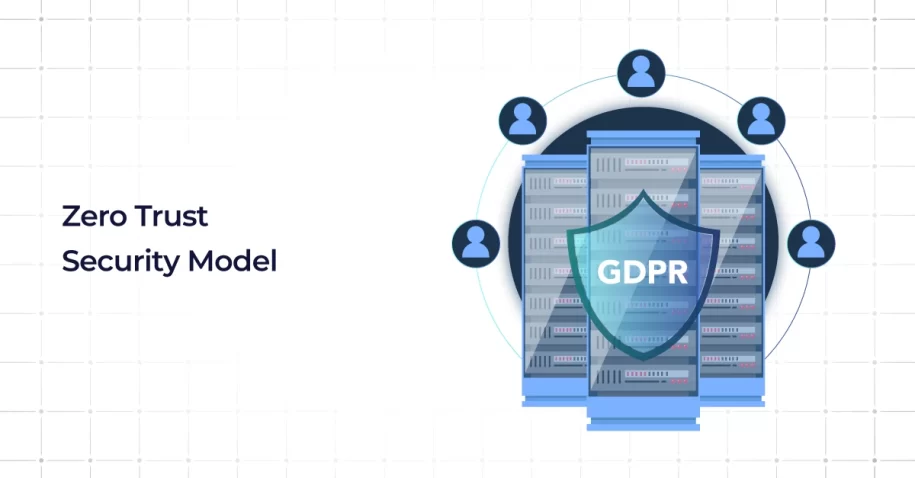
Zero Trust Security is not just another trend. It’s a strategic framework that eliminates the concept of “trust by default.” Instead, it operates on a powerful principle: never trust, always verify. This mindset ensures that every user, device, and application is continuously authenticated, authorized, and monitored, no matter where they’re connecting from.
The Flaw in the “Castle-and-Moat” Traditional Security Model
For decades, companies relied on the “castle-and-moat” approach to protect their digital assets. The idea was simple — build a strong perimeter around your network (the moat) and trust everything inside (the castle). While this method worked in isolated systems, it quickly became obsolete as cloud environments, remote work, and mobile devices expanded the network perimeter.
In this model, once a user or device gained access, they could often move freely throughout the network an open invitation for attackers who breached the initial defenses. This approach created blind spots, lacked continuous monitoring, and offered little protection against insider threats. The reality is clear: in a world where cyberattacks are inevitable, assuming safety inside the perimeter is a dangerous illusion.
What is Zero Trust?
Zero Trust is a comprehensive security strategy built on the assumption that breaches can and likely will happen. Instead of focusing on building a hard outer shell, it secures every connection from the inside out.
From “Trust but Verify” to “Never Trust, Always Verify”
Traditional security models relied on the idea of “trust but verify.” However, Zero Trust replaces this with “never trust, always verify.” Every user, device, and application must prove its legitimacy through authentication, authorization, and continuous monitoring.
The Core Idea: Assume Breach and Verify Explicitly
At its core, the Zero Trust model assumes that attackers are already present in the environment. Therefore, it continuously verifies every access request, enforces strict access controls, and limits lateral movement within the network. The result? A stronger, more adaptive security posture that minimizes risk and protects sensitive data in real time.
The 5 Core Pillars of a Zero Trust Architecture
A Zero Trust framework relies on five core pillars each reinforcing a layer of defense designed to protect users, devices, applications, and data across the entire digital ecosystem.
1. Identity: Verify Every User with Strong Authentication
Identity is the foundation of Zero Trust. Every access request is verified through multiple layers of authentication, such as Multi-Factor Authentication (MFA) or biometrics. By validating identity before granting access, organizations ensure that only authorized users can reach their resources.
2. Devices: Ensure Health and Compliance Before Granting Access
Every device whether a laptop, smartphone, or IoT sensor must meet compliance and health standards before accessing the network. Zero Trust ensures that devices are regularly scanned, updated, and secured to prevent vulnerabilities.
3. Networks: Segment and Encrypt, Even on “Trusted” LANs
Zero Trust eliminates the concept of a “trusted” network. Through micro-segmentation and encryption, it isolates traffic into secure zones, limiting lateral movement and containing breaches before they spread.
4. Applications & Workloads: Secure Access with Micro-Segmentation
Applications and workloads are protected through microsegmentation solutions that create barriers around individual systems. This ensures that if one component is compromised, it doesn’t jeopardize the rest of the network.
5. Data: Classify, Encrypt, and Control Access at the File Level
Data security lies at the heart of the Zero Trust architecture. Every file and dataset is classified based on sensitivity and encrypted both in transit and at rest. Strict access controls ensure that data is only accessible to users and devices with verified authorization.
Essential Components of Zero Trust Architecture
Implementing a Zero Trust model involves integrating several core components that work together to maintain security continuity.
1. Identity and Access Management (IAM)
IAM solutions govern who can access what and when. They enforce trust strategies through dynamic policies, ensuring that users only have the permissions necessary for their role.
2. Multi-Factor Authentication (MFA)
MFA is a critical layer that requires users to verify their identity using multiple credentials, reducing the risk of compromised passwords.
3. Endpoint Security
Protecting endpoints is crucial as they serve as entry points to your environment. Zero Trust uses continuous monitoring and automated security measures to detect anomalies in real time.
4. Microsegmentation
Microsegmentation divides the network into smaller, secure zones where each access request is independently validated. This drastically reduces the potential for attackers to move laterally.
5. End-to-End Encryption
All communication between users and devices is encrypted, ensuring that even intercepted data remains unreadable to unauthorized entities.
6. Real-Time Monitoring and Threat Intelligence
Continuous visibility and real-time analytics are key for proactive defense. Threat intelligence helps identify risks and adapt security measures dynamically.
7. Policy Engine and Enforcement Points
Policy engines evaluate each access request against security policies, while enforcement points decide whether to grant or deny access based on risk factors.
8. Automation and Orchestration
Automation streamlines Zero Trust operations applying updates, handling compliance, and responding to threats instantly improving both efficiency and accuracy.

Key Technologies That Enable Zero Trust
Identity and Access Management (IAM) & Multi-Factor Authentication (MFA)
IAM and MFA form the core of Zero Trust by verifying identities and ensuring accountability across cloud-based and on-premise systems.
Micro-Segmentation and Software-Defined Perimeters (SDP)
By creating micro-segmentation layers and using SDPs, organizations can manage trust network access (ZTNA) dynamically, allowing granular visibility and control over users and devices.
Endpoint Detection and Response (EDR) and Mobile Device Management (MDM)
EDR and MDM protect endpoints through continuous monitoring, behavioral analytics, and automated responses to suspicious activity, strengthening the organization’s security posture.
Benefits & Use Cases of Zero Trust
Reduced Attack Surface & Lateral Movement Protection
By segmenting access and verifying each connection, Zero Trust dramatically reduces the attack surface, preventing attackers from moving freely across systems.
Better Control in Hybrid / Cloud / Remote Settings
Zero Trust aligns seamlessly with cloud environments and remote work models. It provides centralized visibility and control across distributed networks, enabling businesses to safeguard resources wherever they reside.
Improved Resilience Against Insider Threats
Even trusted employees can become security risks, whether accidentally or intentionally. Zero Trust enforces continuous verification and access controls, protecting critical assets from misuse.
Compliance, Auditing, and Regulatory Alignment
Zero Trust enhances regulatory compliance by enforcing consistent policies, maintaining detailed audit logs, and ensuring data protection standards are met across every layer of the infrastructure.
Challenges & Pitfalls to Watch
Complexity in Integration with Legacy Systems
Migrating to Zero Trust can be challenging, especially for organizations running legacy applications. It requires careful planning and phased integration to avoid operational disruption.
False Positives & User Friction
Overly strict security measures can create friction for legitimate users. Balancing usability and security is key to ensuring adoption without compromising productivity.
Data and Logging Gaps, Limited Visibility
Incomplete data collection or fragmented logs can weaken continuous monitoring, leaving blind spots in the Zero Trust ecosystem.
Overextension / “Zero Trust Theatre”
Implementing Zero Trust without proper alignment to business objectives can result in “Zero Trust Theatre” where tools exist but aren’t effectively enforced or integrated.
Conclusion: How Q-Tech Inc. Can Help You Implement a Zero Trust Model
Transitioning to a Zero Trust framework is not just a technical upgrade it’s a transformation of your organization’s entire trust strategy. At Q-Tech Inc., we specialize in helping businesses implement Zero Trust through tailored solutions that enhance visibility, strengthen defenses, and future-proof your digital infrastructure.
Our team combines Advanced Cybersecurity practices with Managed IT Services for Business to design, deploy, and maintain zero-trust architectures that align with your goals. From application and workload protection to real-time monitoring and automation we provide the tools and expertise to keep your organization one step ahead.
The benefits of Zero Trust go beyond compliance and risk reduction they empower your business to operate with confidence in an increasingly complex world. So if you’re ready to redefine your trust approaches and elevate your security posture, now is the time to embrace Zero Trust the “never trust, always verify” framework that defines the future of cybersecurity.
FAQ
How is Zero Trust different from traditional network security (castle-and-moat)?
Answer – Traditional security trusts everything inside the network perimeter (the “castle-and-moat” model). Zero Trust assumes breach and requires explicit verification and authorization at every access point for every request, removing implicit trust entirely.
What are the three main components of a Zero Trust Architecture (ZTA)?
Answer – The three key pillars are: Zero Trust Network Access (ZTNA) to secure remote connections, Microsegmentation to isolate network segments, and Identity and Access Management (IAM) with Multi-Factor Authentication (MFA) to strictly enforce access policies.
Does Zero Trust mean I have to get rid of my firewall?
Answer – No, firewalls are still important, but their role changes. In a Zero Trust model, the firewall becomes one of many Policy Enforcement Points (PEPs). The focus shifts from building a giant perimeter wall to creating many smaller, dynamic enforcement points around each individual resource (application, data set, etc.).
What is the difference between Zero Trust and VPN?
Answer – A VPN grants users broad access to an entire network once they’re authenticated (a “trusted” user on the “trusted” network). Zero Trust grants access only to specific applications or resources the user is authorized for, without placing them on the network. Zero Trust provides least-privilege access, which is more secure than the all-or-nothing access of a VPN.
Is Zero Trust only for large enterprises?
Answer – Absolutely not. SMBs can and should adopt Zero Trust principles. The implementation might be different—using cloud-native security tools that have Zero Trust features built-in—but the core concept of “never trust, always verify” is scalable and perhaps even more critical for SMBs with limited IT resources to handle a breach