
Introduction: Why Modern Enterprises Need Technology Transformation
Modern enterprises operate in an environment shaped by speed, competition, and constant change. Customers expect fast responses, seamless digital interactions, and consistent service across every touchpoint.
Leaders are under pressure to protect margins, strengthen infrastructure, and support growth without disrupting daily business operations. That is why business digital transformation is no longer optional. It is a core business requirement for companies that want to stay relevant, resilient, and profitable.
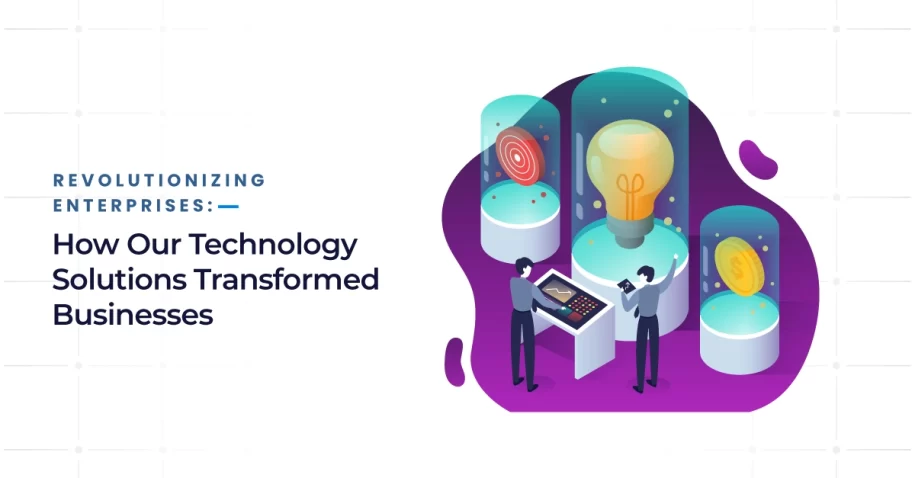
The idea behind revolutionizing enterprises, how our technology solutions transformed businesses, is not built on hype. It is built on practical change. Organizations that modernize outdated systems, streamline business processes, and invest in enterprise technology solutions position themselves to move faster and make better decisions. They also gain the flexibility to respond in real time to changes in the market and rising customer expectations.
Why Traditional Systems Slow Growth
Many businesses still rely on disconnected tools, aging hardware, manual workflows, and reactive support. These legacy environments may appear manageable, but they create friction across the organization. Teams waste time jumping between systems, leaders struggle to access reliable data, and departments compensate for gaps that technology should already solve. Instead of helping the company scale, traditional systems often hold it back.
This problem becomes more serious as a business expands. The same processes that once supported a smaller company can start to delay communication, limit visibility, and increase risk. When systems are not aligned with modern operating models, they affect everything from internal productivity to customer service. Over time, that friction makes it harder to improve business operations, launch new products or services, support the supply chain, and reach larger business goals.
Key Challenges Businesses Face Without Modern Technology
Operational Inefficiency
Operational inefficiency is one of the clearest warning signs of outdated infrastructure. Employees spend too much time repeating administrative tasks, searching for information, or fixing preventable errors. Teams often rely on spreadsheets, email chains, and duplicate data entry just to keep workflows moving. That creates avoidable delays and makes workflow optimization much harder than it should be.
When leaders cannot see how work moves across departments, they also lose the ability to refine performance. Projects stall, approvals take longer, and routine tasks consume valuable hours. Businesses that want to improve business operations need systems that reduce manual handoffs, centralize information, and support smarter decision-making. Without that foundation, efficiency remains inconsistent and difficult to scale.
Security Risks
Security risks grow quickly when businesses depend on outdated software, unmanaged devices, and weak access controls. Cyber threats do not only target large corporations. They affect organizations of every size, especially those without strong patch management, monitoring, and policy enforcement. A single vulnerability can disrupt operations, expose sensitive data, and damage hard-earned trust.
The cost of weak security is not limited to recovery expenses. It can also affect customer satisfaction, customer loyalty, and long-term customer retention. When clients believe their data or digital experience is unsafe, they begin to question the reliability of the business itself. Strong cybersecurity is part of the transformation strategy that protects reputation, continuity, and confidence.
Limited Scalability
A business cannot scale efficiently when its infrastructure was never designed for growth. Legacy servers, fixed storage limits, and rigid software environments create bottlenecks as demands increase. As teams grow, locations expand, or service expectations rise, those limitations force businesses to spend more time maintaining systems instead of using them strategically.
Limited scalability also makes it harder to adopt emerging technology. Companies may want to implement machine learning, integrate automation software, or support remote teams, but their environment may not be ready. In that situation, leadership is forced to delay innovation. Modern digital solutions remove that restriction by creating a more flexible foundation for growth.
Poor Customer Experience
Technology issues eventually become customer issues. Slow websites, delayed responses, inconsistent service, and disconnected communication tools all contribute to a weaker customer experience. Even when a company has excellent products or services, poor digital execution can create frustration and lower trust. Today, customer expectations are high, and businesses are judged not only by what they offer but by how easy they are to work with.
That is why improving customer experience must be part of every digital transformation effort. A company that invests in speed, security, accessibility, and integrated communication is better positioned to deliver great customer service. Better systems support stronger customer service teams, faster resolution times, and more personalized interactions.
How Our Technology Solutions Transform Businesses
Managed IT Services for Operational Stability
Reliable technology starts with consistency. Managed IT services give businesses a structured way to maintain systems, monitor performance, resolve issues early, and support users without waiting for disruptions to escalate. Instead of reacting to problems after they affect the business, organizations can take a proactive approach that protects uptime and strengthens daily execution.
At Q-Tech Inc., this approach is designed to stabilize the core of business operations. Through managed IT services for business, companies gain expert oversight, faster support, and stronger alignment between infrastructure and business goals. That stability helps leadership focus on growth while internal teams work with fewer interruptions.
Cloud Computing for Scalability and Flexibility
Cloud computing gives enterprises the flexibility to grow without being constrained by physical limitations. With the right cloud environment, businesses can scale resources based on demand, support distributed teams, secure data more effectively, and improve collaboration across departments. It also allows leadership to shift from heavy capital spending toward more adaptable operating models.
More importantly, cloud adoption supports a larger transformation strategy. It improves access to information, strengthens disaster recovery planning, and creates the foundation for real-time visibility across the organization. Whether a company is modernizing storage, migrating workloads, or supporting hybrid work, cloud computing plays a central role in long-term business digital transformation.
Business Automation for Higher Productivity
Repetitive work slows momentum and introduces unnecessary risk. Business automation helps organizations streamline approvals, reduce manual tasks, eliminate duplicated effort, and create more predictable outcomes. When routine actions are handled through automation software, employees can focus on higher-value work that supports growth, service, and innovation.
This is where business automation creates a measurable impact. Automated workflows improve consistency across business processes, support workflow optimization, and help teams respond more efficiently to customer needs. For many organizations, the ability to reduce manual intervention is one of the fastest ways to strengthen productivity and build a more scalable environment.
Cybersecurity for Risk Reduction
Cybersecurity is one of the most important pillars of modern enterprise performance. It protects data, devices, communications, and the systems that keep the business running. A strong security posture includes prevention, monitoring, response planning, user awareness, and ongoing maintenance. Without those elements, even a well-run company remains vulnerable to avoidable disruption.
Q-Tech Inc. helps businesses treat cybersecurity as a business priority rather than a technical afterthought. That mindset supports business continuity, regulatory readiness, and stronger trust with clients and stakeholders. It also reinforces the digital transformation strategies that allow growth to happen safely.
Website and Digital Infrastructure Optimization
A company’s website and digital infrastructure are often the first proof points of its credibility. If the site is slow, difficult to navigate, or disconnected from internal systems, potential clients notice immediately. Digital optimization improves performance, usability, integration, and visibility so businesses can better support lead generation, communication, and service delivery.
This work goes beyond design. Faster sites, cleaner integrations, stronger hosting, and more reliable data flow all contribute to improving customer experience. They also help businesses meet customer expectations, strengthen customer satisfaction, and create a digital presence that reflects the quality of the brand.
Why Businesses Choose Q-Tech Inc. for Technology Solutions
Businesses choose Q-Tech Inc. because technology transformation requires more than installation or troubleshooting. It requires strategy, partnership, and execution that connect directly to business results. Q-Tech Ic approaches enterprise technology solutions with a broad understanding of how infrastructure, security, automation, and digital performance work together to support growth. That creates more value than isolated fixes ever could.
Our team helps clients align technology with their transformation strategy, refine business processes, and build digital solutions that support real operational progress. From modernizing internal systems to enabling smarter service delivery, we help organizations create practical change that lasts. The result is a stronger foundation for innovation, better customer experience, and a clearer path toward sustainable growth.
Conclusion: Technology Is the Foundation of Business Growth
Technology is no longer just a support function. It shapes how companies operate, compete, and serve their markets. Businesses that continue relying on fragmented tools and outdated systems will find it harder to scale, protect data, and meet rising demands. Businesses that invest in digital transformation strategies create the conditions needed for efficiency, resilience, and long-term success.
For organizations looking to modernize, the goal is not technology for its own sake. The goal is to build smarter systems that support people, strengthen performance, and make growth more attainable. That is how companies improve business operations, strengthen customer service, and create an environment where innovation supports outcomes. In today’s market, technology is the foundation that makes growth possible.
FAQ
Q: How long does a typical business transformation take?
A: It depends on scope. Small projects (e.g., website SEO + email automation) show results in 2-3 months. Larger transformations (e.g., full cloud migration + Zero Trust security) take 4-9 months. We break work into phases to deliver value quickly.
Q: How do you ensure data security during a transformation?
A: Security is built into every phase. We follow NIST and ISO frameworks, use encrypted migrations, and implement Zero Trust principles. For regulated industries (healthcare, finance), we ensure HIPAA, SOC2, or PCI compliance from day one.
Q: Can Q-Tech handle both IT and digital marketing transformation?
A: Yes – that’s our unique advantage. We have dedicated teams for IT infrastructure (cloud, cybersecurity, managed IT) and digital marketing (SEO, content, paid ads, automation). This integrated approach ensures technology supports marketing goals and vice versa.
Q: What is the first step to start a transformation with Q-Tech?
A: The first step is a free, no-obligation discovery call. We’ll listen to your challenges, review your current tech stack, and identify quick wins. Then we provide a written assessment and a phased transformation roadmap.