
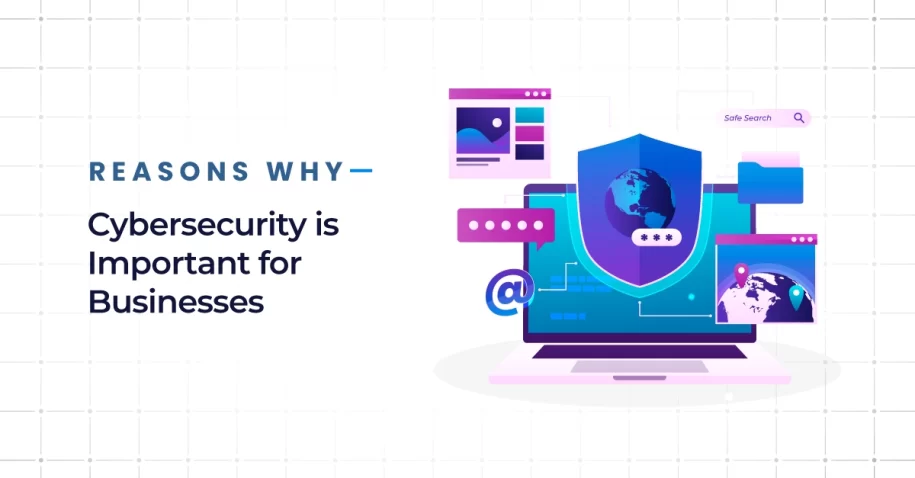
Cybersecurity used to be treated like “IT insurance”—important, but easy to delay. Today, it’s part of daily operations, like payroll, customer service, and cash flow. The top reasons businesses need strong cybersecurity come down to one reality: attacks are faster, smarter, and more automated than ever.
That’s true for global enterprises and small businesses alike. From invoice fraud to ransomware, attackers now use ai driven threats to scale what once took teams of criminals. The importance of cybersecurity for businesses is no longer theoretical—it’s measurable in downtime avoided, revenue protected, and customer trust retained.
What Is Cybersecurity?
Cybersecurity is the discipline of protecting systems, networks, and data from unauthorized access, misuse, disruption, or destruction. In practice, it’s the combination of people, process, and technology that keeps your security systems resilient—so your business can operate even when threats are actively probing for weakness.
Modern programs include access controls, identity protection, device hardening, backups, and monitoring—plus playbooks for incident response when something slips through. It also includes cloud security governance, which defines how data is stored, shared, and secured across cloud platforms and vendors.
Why is Cybersecurity Essential for Modern Businesses?
The threat landscape has shifted from “random virus” to targeted disruption and financial extortion. Attackers study how your teams work, which vendors you rely on, and where you’re most likely to approve a wire, click a link, or reuse a password. As AI systems become more capable, they also become easier to weaponize—raising the stakes for leadership, compliance, and brand trust.
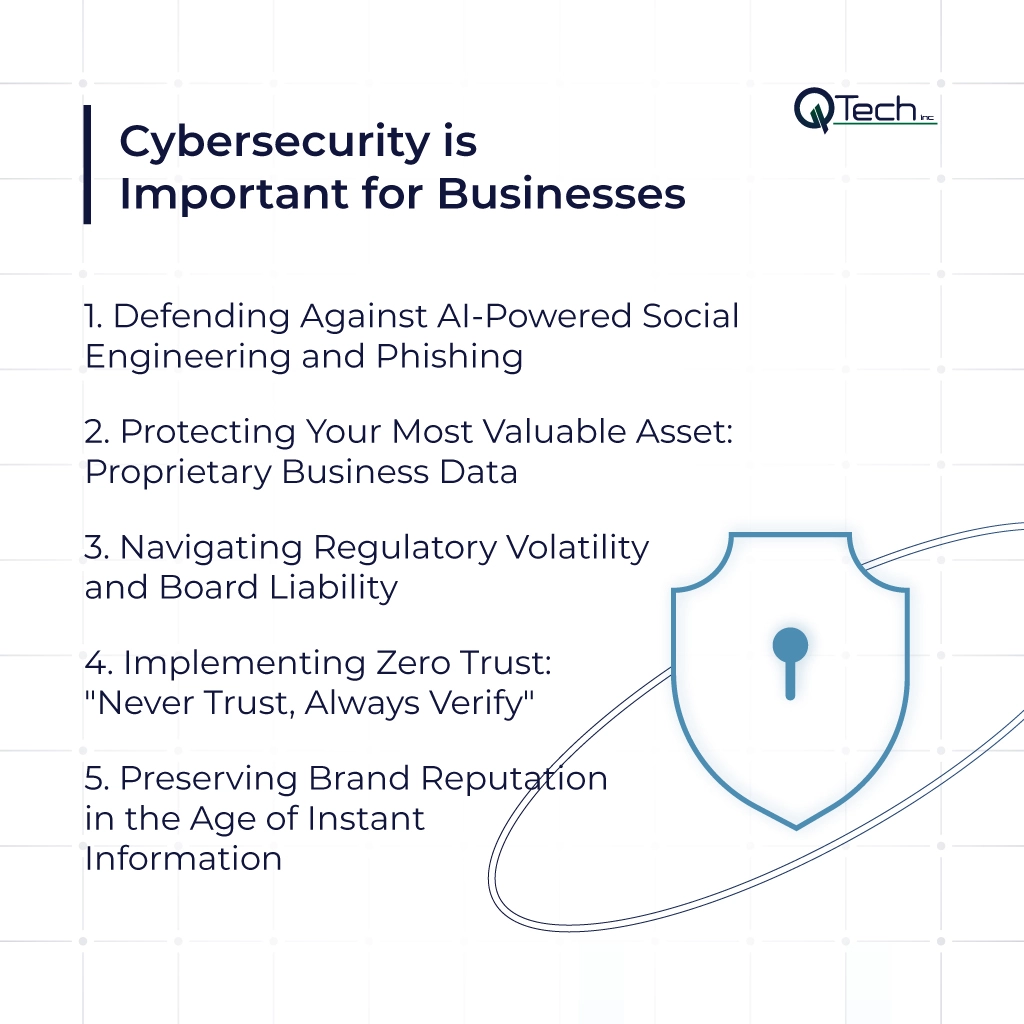
- Defending Against AI-Powered Social Engineering and Phishing
- Protecting Your Most Valuable Asset: Proprietary Business Data
- Navigating Regulatory Volatility and Board Liability
- Implementing Zero Trust: “Never Trust, Always Verify”
- Preserving Brand Reputation in the Age of Instant Information
1. Defending Against AI-Powered Social Engineering and Phishing
Phishing used to look sloppy. Now, AI tools can mimic tone, write fluent messages, and tailor lures to specific roles—finance, HR, executives, even vendors. Some attacks are orchestrated by AI agents and autonomous agents that test multiple messages, subject lines, and send times until someone bites, turning a single mistake into credential theft or a fraudulent payment.
This is why agentic AI security matters. Agentic AI systems don’t just generate content—they can act. That means your defenses must verify identity, detect anomalies, and respond quickly when something changes, like a “new” login from an unusual location or a sudden request to reset MFA.
2. Protecting Your Most Valuable Asset: Proprietary Business Data
For many organizations, the most valuable thing they own isn’t equipment—it’s information. Pricing models, customer lists, internal processes, contracts, and product plans all qualify as sensitive data. When that data leaks, the damage isn’t limited to a single event; competitors gain insights, customers lose confidence, and legal exposure increases.
Protection also extends beyond your office walls. With remote work and cloud adoption, your data may sit across multiple platforms and devices. Strong cloud security governance—paired with least-privilege access controls—reduces the blast radius if an account is compromised, and helps ensure proprietary information stays proprietary.
3. Navigating Regulatory Volatility and Board Liability
Security is now a governance issue, not just an IT issue. Many industries face overlapping obligations tied to privacy, reporting, and safeguards—especially for regulated data. If you operate in healthcare, for example, HIPAA-covered entities must demonstrate protections that align with risk and patient privacy expectations, and regulatory compliance gdpr hipaa considerations often appear together in global operations.
Timelines can be unforgiving. In some cases, organizations must assess and disclose serious incidents quickly—sometimes within 72 hours—while still investigating what happened. That pressure is exactly why preparedness matters: documented controls, tested response plans, and clear accountability reduce chaos when leadership needs answers fast.
4. Implementing Zero Trust: “Never Trust, Always Verify.”
Zero Trust is a practical mindset: trust is not a default—verification is. It assumes credentials will be stolen, devices will be lost, and users will occasionally make risky choices. So instead of relying on a “safe internal network,” Zero Trust Model uses layered access controls, strong authentication, segmentation, and continuous validation of users and devices.
This is also where managed detection and response becomes a force multiplier. With monitoring that looks for behavioral anomalies, suspicious logins, and lateral movement, you reduce the time attackers spend inside your environment. The goal is rapid detection and response mdr—supported by MDR solutions and MDR services—so potential incidents are contained before they become outages.
5. Preserving Brand Reputation in the Age of Instant Information
Brand trust is fragile because the internet has no patience for uncertainty. When data breaches occur, customers want clarity: what was exposed, what you’ve done to fix it, and how you’ll prevent it from happening again. Even a small incident can become a headline, a social post, or a competitor’s talking point.
That’s why a strong security operations center (SOC) function—whether in-house or supported by a trusted provider—matters. It shortens the time between “something is wrong” and “we are in control,” which is often the difference between a contained event and a public crisis.
How Businesses Can Improve Their Cybersecurity Posture
Improvement doesn’t require perfection; it requires discipline. The strongest programs focus on measurable controls, real-world testing, and continuous refinement. Over the long term, this is also where you’ll see ransomware prevention roi: fewer disruptions, lower recovery costs, and more predictable operations.
Risk Assessments & Audits
Risk assessments identify where your business is most exposed—by role, system, vendor, and workflow—so you can prioritize fixes that actually reduce risk. Audits validate that controls are working as intended, not just written in a policy. Done right, this process clarifies what you must protect first, how quickly you can detect issues, and whether your incident response plan matches the reality of your environment.
Security Frameworks & Best Practices
Frameworks turn security into an operating system for your business. They standardize how you manage identities, patch systems, monitor logs, secure cloud apps, and respond to threats—while creating evidence that leadership can use for customers, insurers, and regulators.
The practical path is to combine best-practice controls with continuous monitoring and threat intelligence—supported by a SOC model and mdr solutions—so you catch issues early and respond with confidence.
Conclusion — Protect Your Business with Q-Tech Inc’s Cybersecurity Expertise
Cyber risk is now a business risk, shaped by automation, speed, and AI. The organizations that thrive treat AI security as a core capability: they protect sensitive data, enforce access controls, monitor continuously, and execute incident response with calm precision when pressure is high. That’s how you reduce downtime, protect revenue, and keep trust intact.
If you’re ready to strengthen your defenses against AI-powered threats, Q-Tech Inc. can help—whether you need ongoing coverage through Managed Cybersecurity Services or a strategy-first engagement via Advanced Cybersecurity Consulting. Let’s build a security posture that fits your operations today—and keeps pace with what’s coming next.
FAQ
Q: Why is “Zero Trust” better than traditional firewalls?
A: Traditional firewalls protect the “perimeter.” However, once an attacker is inside, they have free rein. Zero Trust assumes the network is already compromised and requires strict identity verification for every request, effectively stopping “lateral movement” within your systems.
Q: What is the first step a business should take to improve security today?
A: Conduct a Comprehensive Vulnerability Assessment. You cannot protect what you cannot see. Identifying “Shadow IT”—unauthorized apps and unpatched devices used by employees—is the baseline for any robust security strategy.
Q: What is the single biggest cybersecurity threat to businesses in 2026?
A: The most critical threat is Agentic AI Malware. Unlike static viruses, these autonomous agents can pivot within a network, discover vulnerabilities in real-time, and mask their activity as legitimate user behavior, making traditional signature-based antivirus obsolete.