
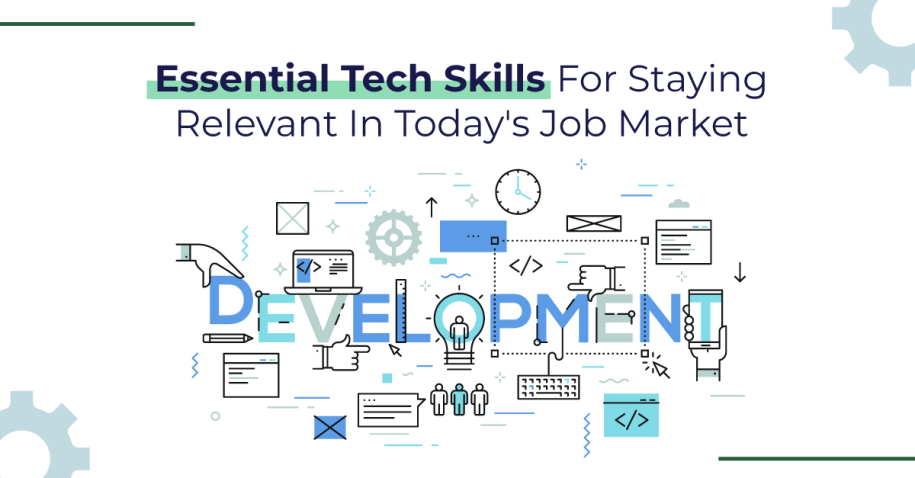
In the tech industry, change is the only constant. From artificial intelligence (AI) to automation, today’s professionals face a fast-evolving landscape where adaptability and continuous learning determine career success.
To future-proof your career, you need to master the essential tech skills that help you stand out in a competitive environment shaped by digital transformation, automation, and data-driven decisions. Whether you’re just beginning your career path or are an experienced professional, understanding the skills required to thrive in the age of AI will ensure long-term growth and opportunity.
Why Tech Skills Are Critical for Career Longevity
The rapid pace of digital transformation across industries
The tech industry continues to redefine how businesses operate. From healthcare to finance and manufacturing, companies are shifting to cloud-based platforms, automation systems, and advanced data analytics tools to enhance productivity and efficiency.
The World Economic Forum reports that over 80% of business leaders plan to accelerate digital adoption by 2025. This transformation demands new skill sets across roles, from project management and cybersecurity to AI and cloud computing. By acquiring these technology job skills, professionals position themselves to remain competitive in a high-demand market.
How automation and AI are changing job requirements
The rise of AI and machine learning has revolutionized nearly every profession. Tasks once handled manually are now supported by intelligent systems capable of real-time decision-making. Rather than replacing humans, these innovations elevate the need for professionals who understand how to collaborate with artificial intelligence AI tools and automation frameworks.
Developing automation skills allows employees to manage AI workflows and improve performance across digital ecosystems. Combining technical knowledge with human skills—like empathy, communication, and creativity—creates an invaluable balance between innovation and adaptability.
Why staying static is risky in the modern job market
In the modern job market, remaining static is one of the biggest risks. Emerging technologies demand professionals who embrace continuous learning and professional development. Those who avoid upskilling will struggle to keep pace with evolving industry standards.
Taking an online course, pursuing an upskilling tech jobs certificate, or engaging in hands-on training ensures long-term relevance and resilience. A growth mindset—the belief that abilities can be developed—has become the foundation for sustainable success.
Top Tech Skills Employers Are Seeking
Cloud Computing
Cloud infrastructure has become the backbone of modern information technology. Companies seek employees with strong cloud computing skills to design, deploy, and secure digital environments. Expertise in cloud-based systems like AWS, Azure, and Google Cloud is now considered one of the most in-demand capabilities in IT.
Blockchain
Beyond cryptocurrency, blockchain technology is revolutionizing data security and transaction transparency. Professionals who understand decentralized systems and open source frameworks are essential to implementing secure, traceable, and efficient processes. This specific skill is increasingly valuable in finance, logistics, and supply chain management sectors.
Cybersecurity
With digital threats on the rise, cybersecurity skills are more critical than ever. Businesses rely on specialists who can identify vulnerabilities, manage risk, and protect data across networks. Knowledge of encryption, compliance standards, and information technology security principles ensures that organizations can defend against evolving cyberattacks.
Data Science
Data has become the new currency of the digital era. Mastering data analysis and data analytics helps professionals transform information into strategic insight. Whether you work in marketing, finance, or operations, the ability to interpret large datasets and forecast trends positions you for leadership in an increasingly analytical world.
Internet of Things (IoT)
The Internet of Things connects physical devices to digital ecosystems, allowing for real-time monitoring, automation, and control. Understanding IoT systems gives professionals the tools to optimize operations and enhance efficiency. From smart homes to industrial sensors, IoT expertise bridges the gap between digital and physical infrastructure.
UI/UX Design
User experience drives engagement and retention. UI/UX designers blend creativity and logic to ensure technology is both functional and user-friendly.
Robotic Process Automation (RPA)
RPA simplifies repetitive business processes through intelligent automation. Employees with automation skills can implement solutions that reduce human error and improve operational accuracy. Understanding how to integrate RPA tools into workflows is a specific skill in rising demand across sectors like finance, HR, and supply chain management.
DevOps
DevOps represents collaboration between development and operations teams. It promotes faster delivery cycles, automation, and reliability. This blend of technical and communication abilities ensures businesses can adapt to real-time needs and streamline their software production pipelines.
Artificial Intelligence
AI is not just a buzzword—it’s the foundation of the future. Professionals who understand artificial intelligence AI applications can build systems that enhance efficiency and accuracy. Learning to manage AI and machine learning algorithms and tools is key to becoming a tech leader. AI also powers predictive models, chatbots, and decision-making systems, allowing professionals to future-proof their roles and organizations.
Augmented Reality and Virtual Reality
AR and VR are transforming industries from entertainment to education. Understanding immersive technologies can open new career paths in simulation, design, and e-learning. Businesses using AR/VR improve engagement and create next-level customer experiences through innovative digital storytelling.
Soft Tech Skills: Adaptability, Digital Collaboration & Continuous Learning
While technical expertise is essential, soft skills like communication, adaptability, and leadership are equally valuable. Employers increasingly seek individuals who can blend human skills with technical fluency, supporting collaboration across digital teams. These soft tech skills foster creativity, enhance teamwork, and empower professionals to adapt in a rapidly changing world.
Common Pitfalls and How to Avoid Them
Following Trends Without Real Expertise
Chasing trends without gaining depth in a specific skill often leads to frustration. Instead of pursuing every new tool, focus on mastering fundamental technology job skills that form a strong foundation for specialization.
Earning Certificates Without Hands-On Skills
While earning an online course certificate is helpful, real growth comes through application. Professionals must combine theoretical learning with real-world experience to develop credible expertise and measurable outcomes.
Ignoring Communication and Teamwork
In modern work environments, collaboration and empathy are just as critical as technical knowledge. Ignoring communication undermines the effectiveness of even the most advanced skill sets. Successful projects thrive when technical professionals communicate clearly and build trust within their teams.
Stopping Learning and Skill Growth
The pace of innovation never slows. Halting your learning journey risks stagnation. Regular professional development and continuous learning through mentorship, workshops, or advanced courses ensure you remain adaptive in an evolving tech industry.
Conclusion
To future-proof your career, investing in essential tech skills is the smartest move you can make. By combining technical fluency with creativity and adaptability, you position yourself as an asset in the information technology ecosystem. Whether your strengths lie in cloud computing, cybersecurity skills, or data analysis, the future belongs to those who blend technology with human skills and vision.
As digital transformation accelerates, partnering with experts like Q-Tech Inc. can give your organization the edge it needs. Explore our Managed IT Services to strengthen your infrastructure and Digital Marketing Services to expand your brand visibility. Stay proactive, embrace learning, and build the career you deserve in today’s AI-driven future.
FAQ
What does “future-proof your career” actually mean?
Answer – It means building adaptability and resilience into your career by developing skills and mindsets that stay valuable despite rapid technological or economic change. Instead of betting on one job or tool, you build a portfolio of capabilities—critical thinking, tech fluency, creativity—that keep you relevant no matter what the future brings.
I’m not in a technical role — do I still need tech skills?
Answer – Yes. Tech skills are career skills. Every role—from HR to marketing to finance—now relies on technology for productivity, communication, and decision-making. Basic tech literacy (data analysis, AI tools, automation platforms) is becoming as essential as writing or teamwork.
What is the most future-proof skill to learn right now?
Answer – AI literacy tops the list. Understanding how AI works, how to use AI tools effectively, and how to interpret AI-generated insights will soon be as vital as computer literacy was in the 2000s. Pair that with adaptability and data fluency for long-term career resilience.
How much time should I spend learning new tech skills?
Answer – Follow the 5-hour rule—commit at least five hours a week to learning and experimentation. Spread it out as one hour a day during weekdays. Continuous, consistent learning compounds over time and keeps you ahead of change.
I’m overwhelmed — where should I start?
Answer – Begin with an honest self-assessment across key skill areas (AI, data, creativity, collaboration, communication, adaptability, and digital literacy). Identify one gap and start small—15–30 minutes daily focused on that skill. Progress, not perfection, builds the momentum you need to stay future-proof.