
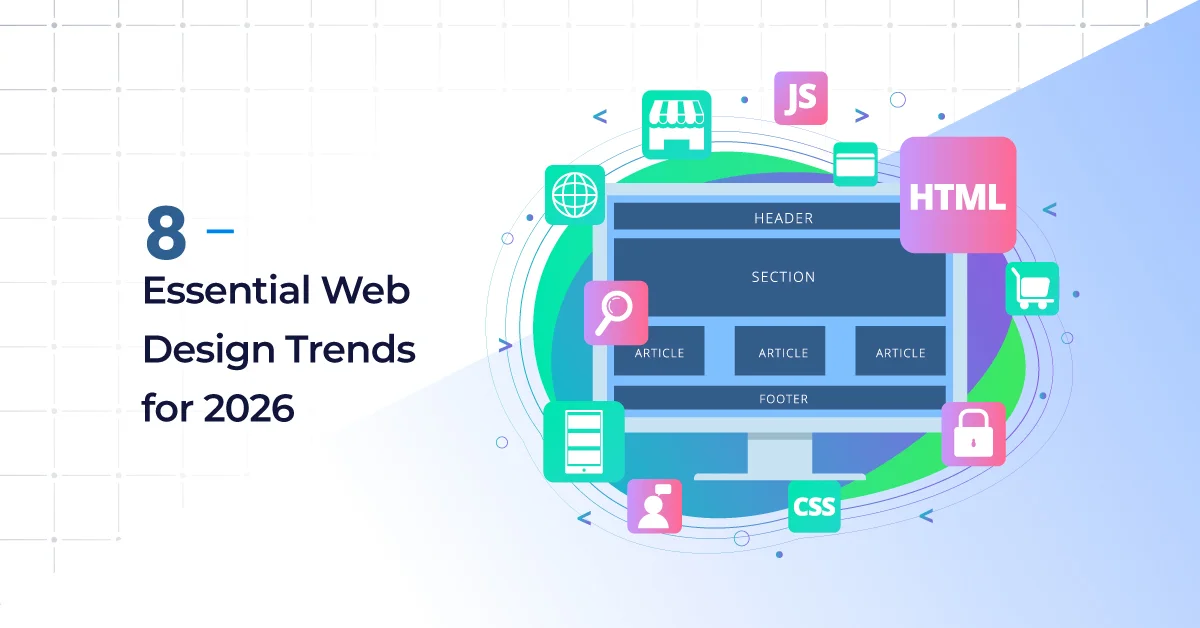
Modern business websites are no longer just digital brochures. In 2026, your site is your first salesperson, your brand storyteller, and often the main way customers decide if they can trust you. That’s why understanding the essential web design trends for 2026, what modern websites should adopt now is no longer a “nice to have” — it’s a competitive advantage.
As web design trends 2026 continue to evolve, the focus is on seamless user experience, smarter use of AI, and designs that look stunning on every device without sacrificing performance or accessibility.
Why Web Design Trends Matter in 2026
The Evolving Web Landscape (AI, Performance, UX)
The biggest design trend in 2026 is that websites are becoming more intelligent and more human at the same time. AI tools are powering personalization, content recommendations, and even parts of the designing process, while users expect lightning-fast load times, clean layouts, and intuitive navigation.
We’re also seeing a closer relationship between visual creativity and technical performance. Beautiful 3d elements, animations, and interactive effects are balanced with lean code, optimized media, and responsive web design that adapts to all screen sizes. The goal is simple: elevate user experience without slowing anything down.
What This Means for Businesses & Users
For businesses, this shift means you can no longer treat web design as a one-time project. Trends shape how customers judge credibility, trust, and professionalism. That’s why web design trends matter: they directly affect user engagement, conversions, and how long someone stays on your site.
For users, it means websites that guide users clearly, respect their time, and feel tailored to their needs. Whether they land on your site from a phone, tablet, or desktop, they expect consistency, clarity, and content that just works — even on a smaller screen.
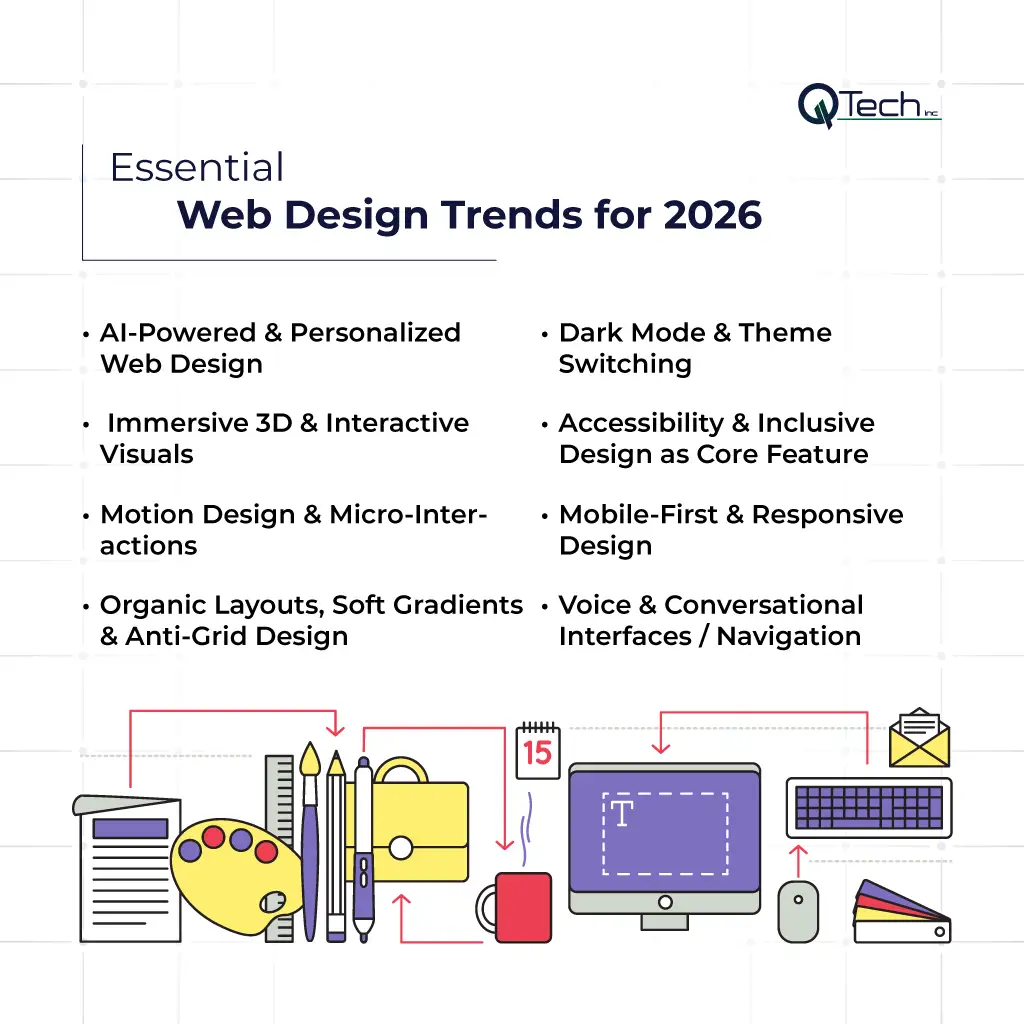
8 Essential Web Design Trends
- AI-Powered & Personalized Web Design
- Immersive 3D & Interactive Visuals
- Motion Design & Micro-Interactions
- Organic Layouts, Soft Gradients & Anti-Grid Design
- Dark Mode & Theme Switching
- Accessibility & Inclusive Design as Core Feature
- Mobile-First & Responsive Design
- Voice & Conversational Interfaces / Navigation
Trend 1: AI-Powered & Personalized Web Design
AI-powered web design is at the heart of how modern websites work in 2026. Instead of guessing what visitors want, AI-powered recommendation engines analyze behavior, location, and preferences to personalize content, offers, and product suggestions in real time.
This doesn’t replace creative strategy; it makes it smarter. AI tools can help generate layout variations, test different headlines, and suggest improvements based on real user data. Your team still sets the vision, but AI accelerates the design process and gives you insight that would be impossible to gather manually.
For businesses, this means you can greet first-time visitors with focused messaging while returning customers see content that feels familiar and relevant. Done well, personalization boosts user engagement, increases conversions, and makes your website feel like a living, evolving asset.
Trend 2: Immersive 3D & Interactive Visuals
Immersive design is no longer reserved for gaming or high-end tech brands. In 2026, more websites will use subtle 3d elements and interactive visuals to bring products, services, and stories to life. Think interactive product demos, animated data visualizations, or scroll-based scenes that reveal your process step by step.
The goal isn’t to overwhelm visitors. Instead, these effects should guide users through key moments: explaining a complex service, highlighting key benefits, or visually walking them through before-and-after transformations. When used strategically, immersive design makes your brand more memorable and helps visitors understand what you actually do.
Trend 3: Motion Design & Micro-Interactions
Motion design is no longer just decorative. In 2026, it’s part of how you communicate. Subtle animations show users where to look, what to click, and what action comes next. Buttons that gently respond, menus that slide smoothly, and icons that react to hovering are all examples of micro interactions done right.
These small details make your website feel polished and alive. More importantly, they support user experience by giving feedback: a button that animates when clicked confirms an action was taken; a smooth transition helps users understand that a new section has loaded.
However, motion design must support usability, not distract from it. The best micro interactions are almost invisible, but they make navigating your site feel intuitive, modern, and trustworthy.
Trend 4: Organic Layouts, Soft Gradients & Anti-Grid Design
Rigid, boxy layouts are giving way to more organic structures. In 2026, many brands are embracing anti-grid design: layouts that feel fluid, layered, and asymmetrical, while still maintaining a clear visual hierarchy that makes content easy to scan.
Soft gradients, rounded corners, and layered sections help pages feel more human and less mechanical. A thoughtful color palette can subtly guide users’ attention, separate sections, and communicate your brand’s personality without overwhelming visitors.
The key is balance. Even with anti-grid layouts, spacing, typography, and alignment still matter. When done well, this style keeps pages interesting while making the journey clean and focused.
Trend 5: Dark Mode & Theme Switching
Dark mode has moved beyond a trend and become an expectation for many users. In 2026, more websites offer theme switching, allowing visitors to choose between light and dark themes based on preference or environment.
This flexibility enhances user comfort, especially for mobile users browsing at night or in low-light conditions. It also presents a creative opportunity: your brand can use different accents and a refined color palette for each mode while still feeling consistent.
From a technical perspective, theme switching is often powered by CSS variables and media queries that detect system preferences. When correctly implemented, it feels seamless and shows users that your brand respects their comfort and habits.
Trend 6: Accessibility & Inclusive Design as Core Feature
Accessibility is no longer optional or treated as a checklist at the end of a project. In 2026, inclusive design is baked into the entire web design trend from strategy to launch. This includes readable typography, proper color contrast, keyboard navigation, alt text, and clear, descriptive labels.
Designing for accessibility improves the experience for everyone. Simple navigation, clear headings, and logical content structure help all visitors — including people using assistive technologies or older devices. It also reduces friction, which directly supports user engagement and conversions.
Trend 7: Mobile-First & Responsive Design (Beyond 2020)
Mobile-first design is not new, but in 2026, it finally means more than just “shrinking the desktop site.” Today’s mobile users expect websites that feel purpose-built for their phones, not just adapted. That’s where truly responsive design comes in.
Modern responsive web design uses flexible layouts, media queries, and optimized content order to ensure every page feels native on any device. Elements reflow gracefully for smaller screen sizes, tap targets are comfortable, and content is prioritized for on-the-go browsing.
Your website must deliver the same clarity and impact whether visitors arrive from a laptop, tablet, or smartphone. For many businesses, most traffic now comes from mobile devices, so a weak mobile experience is essentially telling people to go elsewhere.
Trend 8: Voice & Conversational Interfaces / Navigation
As voice assistants and chat interfaces become more common, websites are embracing conversational navigation. Instead of forcing users to dig through menus, you can offer chat-style interfaces or voice-enabled search that helps them find answers faster.
These interfaces can be powered by AI to understand intent and context, making support, FAQs, and product discovery feel more like a conversation than a search task. They also help reduce friction for users who prefer typing a question or speaking instead of clicking through multiple pages.
When conversational interfaces are integrated with smart search and strong content, they can significantly improve user experience and reduce the time it takes for someone to get what they need from your site.
How to Decide Which Trends Fit Your Website / Business
Match Design With Brand & Audience Needs
Not every design trend in 2026 belongs on your website. The right strategy is to align trends with your brand, audience, and goals. If your customers are highly visual, immersive 3d elements and interactive sections may make sense. If they value speed and clarity, clean layouts and strong typography should come first.
Start by defining what success looks like: more leads, online bookings, e-commerce sales, or better education for prospects. Then choose the trends that support those outcomes. Your custom domain, messaging, and design should feel like one cohesive story, not a collage of random effects.
Performance & Accessibility First — Don’t Sacrifice Usability
It’s tempting to stack feature after feature onto your site, but performance and accessibility should always come first. If animations, videos, or heavy graphics slow down your pages or make navigation confusing, they hurt more than they help.
Focus on creating a fast, stable experience that anyone can use. Prioritize clear navigation, readable content, and efficient page structures. From there, carefully add motion design, micro interactions, and visuals that support — not compete with — usability.
Progressive Enhancement & Test Before Adoption
A smart approach to modern web design is progressive enhancement: start with a simple, functional version of your website, then layer on advanced features for browsers and devices that can handle them. This ensures your content is accessible even on older hardware or slow networks.
Before rolling out new trends, test them. A/B testing, heatmaps, and analytics help you see how real users respond. Do they scroll further? Click more? Stay longer? This kind of feedback-driven design process helps you make informed decisions about which trends to keep, refine, or remove.
Conclusion & How Q-Tech Inc. Makes 2026 Web Design Simple
Web design trends 2026 are about more than aesthetics. They blend AI-powered intelligence, immersive visuals, mobile-first design, and inclusive experiences into one unified strategy. When you combine responsive design, strong content, and thoughtful technology, your website becomes a powerful engine for growth.
At Q-Tech Inc., we bring these trends together through our website design and development services. We help you build a website that looks modern, works beautifully on every device, and is grounded in real business results — from improved user engagement to higher conversions.
Whether you’re refreshing an existing site or starting from scratch, our team can help you translate these 8 essential web design trends for 2026, what modern websites should adopt now, into a practical roadmap. With the right strategy, tools, and partners, your website can feel ready not just for 2026, but for whatever comes next.
FAQ
Q: Why should I care about web design trends for 2026?
A: Web design trends reflect evolving user expectations, technology capabilities (device power, browsers), and SEO/search engine criteria. Adopting modern trends helps your site stay competitive, offer better user experience, and improve engagement and conversions.
Q: What is “AI-powered web design”?
A: AI-powered web design uses machine learning and intelligent tools to generate layouts, personalize content or UX per user, suggest design improvements, and dynamically adapt website presentation — offering more tailored, efficient, and data-driven user experiences.
Q: Are 3D and immersive visuals good for all websites?
A: Not necessarily. While 3D visuals and interactivity can create deeper engagement and storytelling, they may also impact performance (load time, responsiveness). It’s important to balance immersive design with performance optimization and accessibility considerations.
Q: What is the benefit of offering dark mode on a website?
A: Dark mode reduces eye strain, conserves device battery (on OLED screens), and offers a modern look — improving user comfort and satisfaction. It can also reflect brand aesthetics and give users a choice, which enhances user-centric design.
Q: How important is mobile-first design in 2026?
A: Extremely important. Mobile traffic dominates globally, and search engines often use mobile-first indexing — meaning your site must perform well on mobile devices for SEO and user experience. Responsive design, fast load times, and mobile-optimized layouts are essential.