

Brand Identity vs. Brand Awareness
When it comes to building a successful business, two concepts often used interchangeably—but that couldn’t be more distinct—are brand identity and brand awareness. Understanding the brand identity vs. brand awareness key differences is crucial for any company that wants to stand out, stay relevant, and drive long-term growth.
At its core, brand identity represents who your company is—the essence of what you stand for, how you communicate, and how your brand is visually and emotionally recognized. Brand awareness, on the other hand, measures how well people know your brand—whether they recognize it, recall it, and associate it with your product or service.
For modern businesses, mastering both isn’t optional. It’s essential. Together, they define how your target audience perceives you and how far your message travels.
What is Brand Identity?
Your brand identity is the visual, verbal, and emotional framework that defines your business. It’s not just your logo or color scheme—it’s the sum of all the elements that communicate who you are and what you represent.
In short, brand identity meaning is the crafted personality behind your company. It’s your tone of voice, your messaging style, your visuals, and even your company values. It reflects your promise to your audience and differentiates you from competitors in a crowded marketplace.
A strong brand identity is intentionally created—it doesn’t happen by chance. It involves creating a brand identity that connects emotionally, looks consistent across all channels, and conveys trust and purpose.
Key Components of Brand Identity
Several components make up a brand’s identity. First, there’s the visual identity, which includes your logo, typography, color palette, and design system. Then comes your verbal identity, your tone of voice, messaging, and storytelling approach.
Your brand identity also includes your brand stand on the principles and beliefs that define what your business represents. These components work together to create a consistent and recognizable experience.
When done right, your identity influences every customer interaction. From your website design to your social media posts, it should all look, sound, and feel like one cohesive brand.
What is Brand Awareness?
If identity defines who you are, brand awareness is how familiar people are with your brand. The brand awareness definition can be summed up as the degree to which consumers recognize and remember your company.
When people see your logo and immediately connect it to your services, that’s awareness at work. It’s the visibility your business has achieved through effective marketing efforts, strategic campaigns, and memorable experiences.
Awareness is about building recognition in the minds of your target audience, ensuring they think of your company first when they need what you offer.
The Levels of Awareness
Not all awareness is equal. Businesses typically progress through several stages:
- Unaware Stage – The audience doesn’t know your brand exists.
- Recognition Stage – They recognize your name or logo but may not know what you offer.
- Consideration Stage – They know your product or service and begin comparing you to competitors.
- Preference Stage – They choose your brand over others because they trust it.
- Loyalty Stage – They actively advocate for your brand, helping you achieve strong brand awareness and word-of-mouth growth.
Each level builds brand equity, expanding your influence and increasing your market share.
Brand Identity vs. Brand Awareness: A Direct Comparison
Although closely connected, identity and awareness play different roles in your marketing campaigns. Here’s how they compare:
Focus: Internal vs. External
Brand identity is inward-facing; it’s about building a brand that authentically reflects your company’s mission and personality. Brand awareness is outward-facing; it’s how the world perceives your identity. One defines who you are; the other defines how far your name travels.
Goal: Creation vs. Recognition
The goal of identity is to create a brand identity, building a cohesive message and image. The goal of awareness is to build brand recognition and reach through social media, advertising, and consistent storytelling.
Measurement: Qualitative vs. Quantitative
Brand identity is measured through qualitative feedback on how customers feel about your brand. Awareness is measurable through metrics like impressions, engagement, and recall rate, showing increased brand visibility and recognition.
Why Both Are Essential for Business Growth
Having one without the other weakens your foundation. Let’s explore why both matter:
Awareness gets attention, identity builds trust
You can create brand awareness through marketing and social media exposure, but your strong brand identity is what convinces people to stay. Awareness might earn a click; identity earns loyalty.
Awareness without identity is forgettable; identity without awareness is unseen
A company with great exposure but no clear message fades quickly. Likewise, a brand with a solid identity but poor visibility goes unnoticed. Both must evolve together to thrive in today’s competitive market.
Together, they create lasting brand value
When your identity and awareness align, you cultivate brand equity—the intangible value people attach to your name. This alignment leads to stronger relationships, repeat customers, and ultimately, sustained business growth.
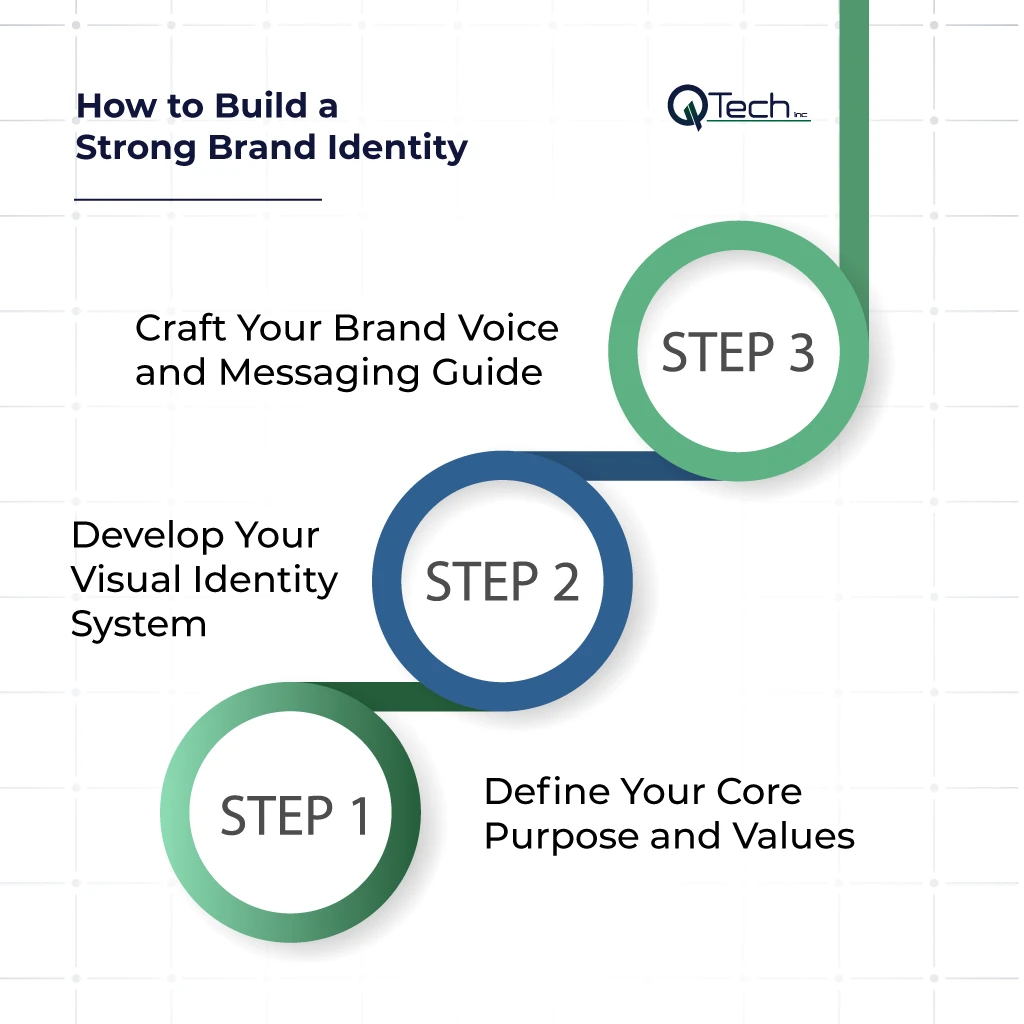
How to Build a Strong Brand Identity (A Step-by-Step Guide)
Step 1: Define Your Core Purpose and Values
Every strong brand identity begins with clarity. Define your mission, vision, and values. Ask yourself: what is our purpose beyond profit? What does our brand stand for? A meaningful foundation ensures consistency across your communication and marketing efforts.
Step 2: Develop Your Visual Identity System
Visual identity elements like your logo, typography, and color palette shape first impressions. Invest in professional design that reflects your personality and resonates with your audience. Consistency across platforms reinforces recognition.
Step 3: Craft Your Brand Voice and Messaging Guide
Your tone of voice defines how your brand speaks. Whether your tone is friendly, professional, or bold, it must remain consistent across all communications. A well-defined voice helps your audience connect emotionally and trust your message.
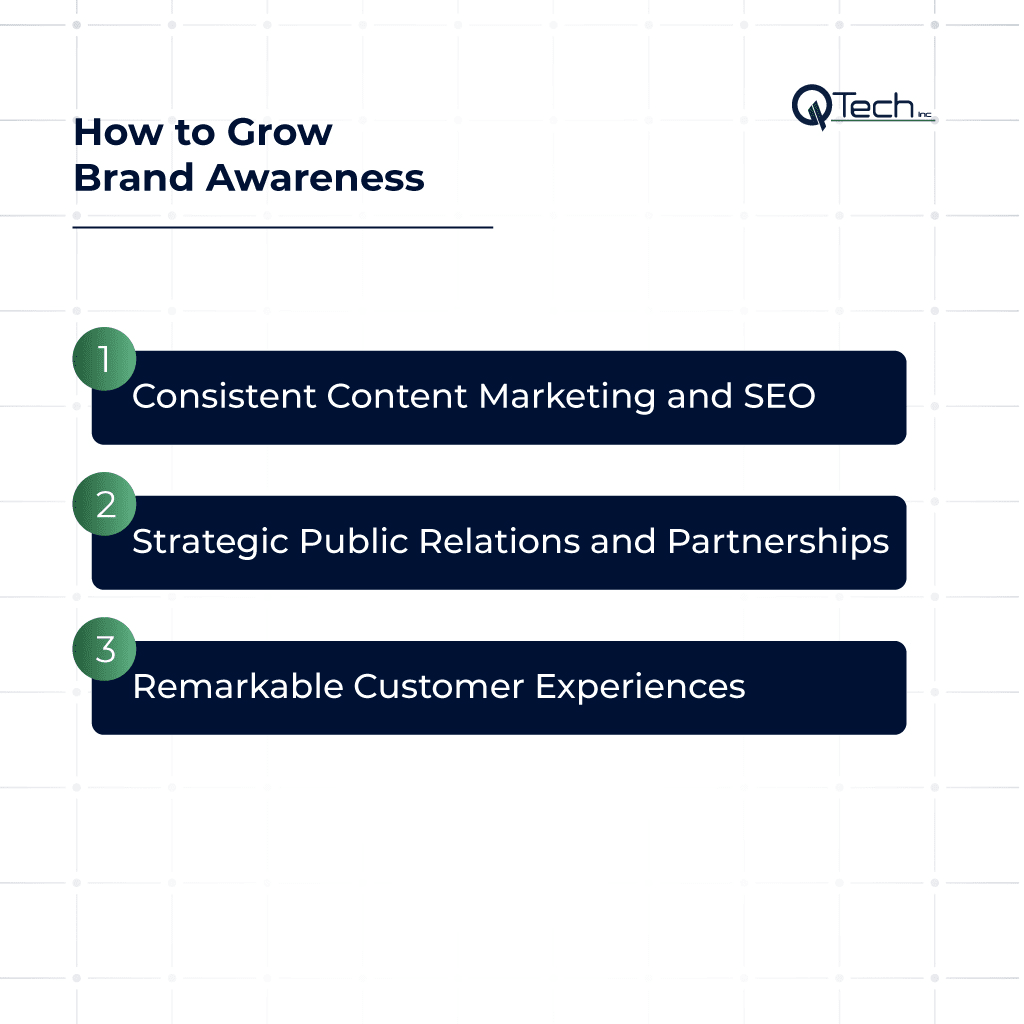
How to Grow Brand Awareness (Actionable Strategies)
Strategy 1: Consistent Content Marketing and SEO
Consistent storytelling drives awareness. By publishing valuable blogs, social posts, and optimized content, you build brand awareness and attract your audience organically. Search engines reward consistency, and users remember reliability.
Strategy 2: Strategic Public Relations and Partnerships
Collaborating with influencers, industry partners, or local organizations expands reach. Strategic collaborations help you create brand awareness in new markets and boost credibility through association.
Strategy 3: Remarkable Customer Experiences
Memorable customer experiences are among the most powerful marketing tools. When people have positive interactions with your business, they share it. Referrals, testimonials, and user-generated content amplify your reach and strengthen brand recognition on social media.
Common Mistakes & Pitfalls to Avoid
Focusing on reach, not meaning
Chasing views without substance weakens your message. Awareness campaigns should always tie back to your brand’s purpose and values.
Great design, no audience
You may have the best logo in the world, but without consistent visibility, no one will see it. Align your visuals with strong marketing campaigns to expand your reach.
Mixed messages confuse customers
Inconsistent messaging can dilute your brand identity. Every piece of content—from ads to social posts—should sound like it comes from one unified voice.
Not tracking or improving performance
Failing to measure results leads to missed opportunities. Use analytics to monitor awareness metrics, feedback to gauge perception, and continually refine your strategy.
Conclusion: How Q-Tech Inc. Can Help You Define Your Brand & Build Awareness
Your business deserves more than visibility; it deserves recognition, trust, and loyalty. At Q-Tech Inc., we specialize in defining and aligning your brand identity with the right strategies to increase brand awareness across all platforms.
Whether you need help designing your website, developing your visual identity, or executing marketing campaigns, our experts ensure that every part of your brand tells a unified story.
With our integrated digital marketing, web design, and social media services, we help you build brand awareness, establish a strong brand identity, and position your business for long-term success.
Together, we’ll ensure your brand doesn’t just exist—it thrives.
FAQ
Q: Can you have brand awareness without a strong brand identity?
A: Yes, but it’s often weak, inconsistent, or negative. A company can be known for something (awareness) without a clear identity, but this leads to confusion and a diluted brand perception. A strong, consistent identity is what makes awareness meaningful and positive.
Q: What comes first, brand identity or brand awareness?
A: Brand identity must come first. You cannot build recognizable, positive awareness without first defining who you are. Building awareness with a weak or undefined identity is like trying to build a house without a blueprint—the result will be unstable and unrecognizable.
Q: How can I measure brand awareness?
A: Brand awareness can be measured through:
- Direct Traffic: People typing your URL directly.
- Branded Search Volume: People searching for your brand name.
- Social Media Mentions: How often people talk about you unprompted.
- Survey Data: Asking “Top-of-mind” questions in your category.
Q: Is a logo part of brand identity or brand awareness?
A: A logo is a core component of brand identity. It is a designed asset you control. However, the recognition of that logo—how many people see it and know it’s yours—is a measure of brand awareness. The logo is the tool; its recognition is the outcome.