

Social media is no longer optional for businesses—it is a necessity. In today’s fast-moving digital world, customers expect to interact with brands online in real time, across multiple digital marketing channels, and with a level of personalization that traditional marketing cannot provide. From building trust to driving conversions, a well-planned social media strategy can transform how your brand is perceived and how it performs.
This article, Effective Social Media Strategies for Brands – Ultimate Guide, will walk you through actionable steps to increase brand visibility, strengthen customer relationships, and turn social platforms into powerful engines for growth. Whether you’re a startup or an established company, these strategies will help you create content that connects, measure what matters, and achieve long-term success.
Why Visibility & Engagement on Social Media Matter
Social media is crowded. Millions of posts go live every day. To stand out, brands must focus on both visibility and engagement. Visibility ensures your audience knows you exist, while engagement shows they value what you offer. Together, these factors build trust, recognition, and loyalty.
The Role of Social Signals in Brand Awareness & Trust
Social signals—likes, shares, comments, mentions—are the digital word-of-mouth. They tell both potential customers and search engines that your content has value. When you consistently create content that sparks interaction, you position your business as credible and trustworthy. Search engines often factor in these signals, improving your ranking and making it easier for new customers to discover you.
How Engagement Drives Algorithmic Reach & Community Growth
Every social platform rewards engagement. When a post receives strong interaction early, algorithms expand its reach, showing it to more people. This creates a cycle: the more engagement you generate, the more visibility you achieve.
Beyond metrics, engagement nurtures community-building social media efforts by helping followers feel like active community members instead of passive observers. That sense of belonging is what transforms an audience into loyal advocates.
Effective Social Media Strategies for Brands
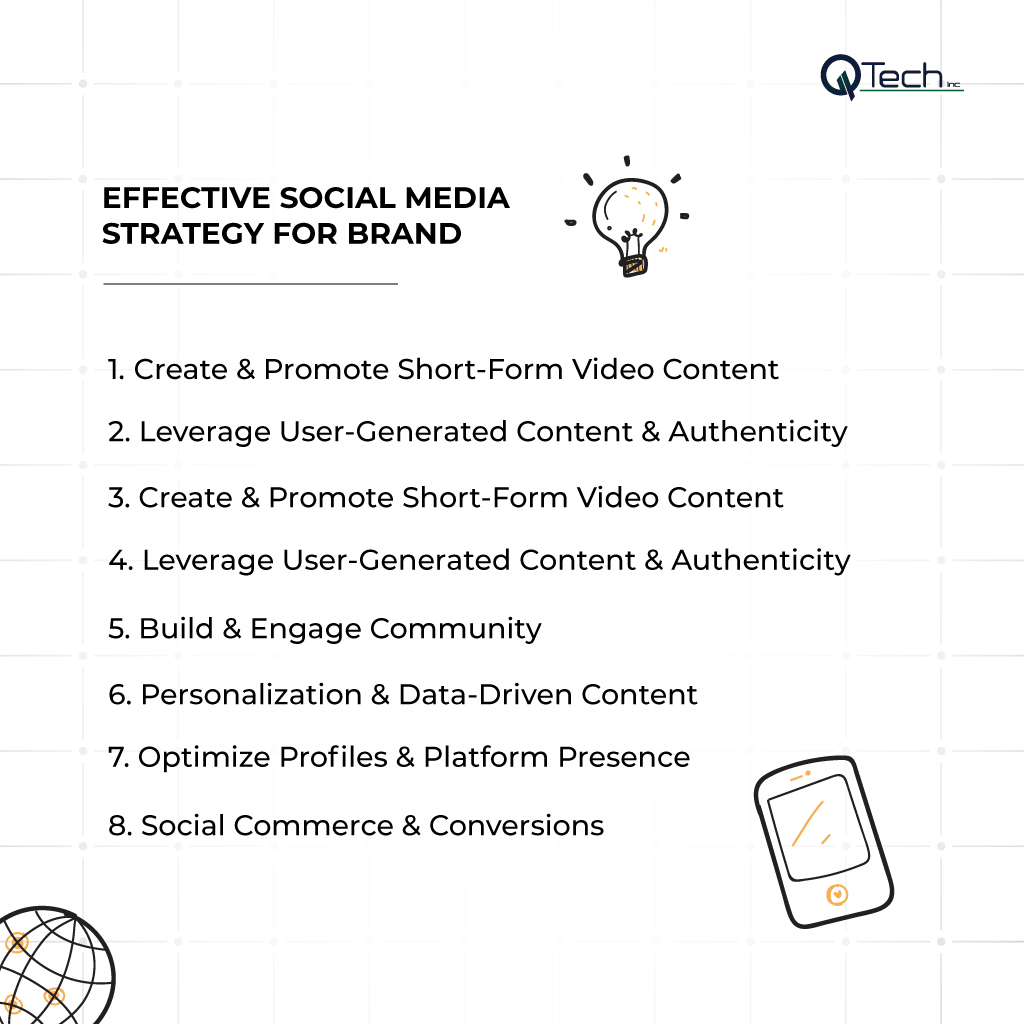
Strategy #1: Create & Promote Short-Form Video Content
Video content has taken over. It’s dynamic, engaging, and offers a human face to your brand. Short-form videos, in particular, are now the fastest-growing form of content across platforms.
Platform Differences (TikTok, Reels, Shorts, etc.)
- TikTok thrives on trends, humor, and creativity.
- Instagram Reels emphasize aesthetics and lifestyle appeal.
- YouTube Shorts benefit from integration with search engines, making them discoverable long after publishing.
Understanding these differences allows you to adapt your social media content strategy for maximum impact.
Hooks, Captions, Editing Style That Grabs Attention Early
The first few seconds of a video determine whether viewers keep watching. Use bold captions, eye-catching visuals, or intriguing questions as hooks. Subtitles not only improve accessibility but also boost audience engagement—especially since many users scroll with sound muted. Editing should be quick and snappy, reflecting the pace of today’s digital world.
Repurposing Content Across Platforms
A single video can become multiple assets. For example, a TikTok tutorial can be trimmed into an Instagram Reel and then republished as a YouTube Short. Repurposing saves time and ensures consistency across digital marketing channels.
Strategy #2: Leverage User-Generated Content & Authenticity
Customers trust other customers more than they trust brands. That’s why user-generated content (UGC) is so powerful—it delivers authenticity that polished ads can’t replicate.
Encourage Customers to Share Their Experiences & Tag Your Brand
Run campaigns asking customers to post reviews, photos, or stories using your products. A simple incentive—like a discount or feature on your page—can encourage participation. This not only increases brand visibility but also drives organic lead generation.
Branded Hashtags and UGC Campaigns
Create branded hashtags that encourage content sharing. For example, fitness brands use campaign hashtags to collect transformation stories. These hashtags gather social proof while keeping your content strategy organized.
Share Behind-the-Scenes, Real Stories, Unfiltered Content
Audiences connect with realness. Share raw, unfiltered content such as behind-the-scenes clips, employee spotlights, or customer testimonials. Showing the human side of your company helps build a strong brand identity that feels authentic.
Strategy #3: Build & Engage Community
Community is the backbone of effective social media marketing. Building strong communities turns casual followers into loyal customers and long-term advocates.
Niche Groups / Private Communities (Discord, Facebook Groups, etc.)
Platforms like Discord or Facebook Groups allow brands to build smaller, more intimate communities where community members can interact, share ideas, and build relationships. This adds value beyond one-way content delivery.
Two-Way Communication: Polls, Q&A, Live Sessions
Social media is a conversation, not a broadcast. Hosting polls, Q&A sessions, or live videos provides direct interaction. This real-time communication shows that you value feedback and strengthen customer service.
Influencer and Micro-Influencer Partnerships with Aligned Values
Partnering with influencers—especially micro-influencers with niche audiences—provides authentic exposure. Their endorsement feels more like a recommendation from a friend, driving stronger audience engagement than generic ads.
Strategy #4: Personalization & Data-Driven Content
Today’s audiences expect personalization. Delivering the right content to the right person at the right time is key to keeping attention.
Segmenting by Behavior, Demography, Interest
Group your target audiences based on their demographics or online behaviors. A campaign aimed at Gen Z gamers should look very different from one aimed at corporate executives.
AI Tools for Content Suggestions & Optimizing Posting Times
AI-driven tools can recommend posting times, suggest trending topics, and evaluate which formats resonate most. These tools save time and help refine marketing strategy in real time.
Use of Analytics to Refine What Content Works Best
Social media metrics such as click-through rates, reach, and shares reveal what works and what doesn’t. Use this data to guide future content creation and optimize campaigns.
Strategy #5: Optimize Profiles & Platform Presence
Your profile is your storefront. It must immediately communicate who you are and why people should care.
Consistency in Brand Voice, Visuals, Bio Across Platforms
Consistency builds recognition. Whether someone finds you on LinkedIn, Instagram, or TikTok, they should encounter the same brand voice and visuals. Services like social media branding can help maintain a unified identity.
SEO in Social Profiles: Keywords, Hashtags, Descriptions
Profiles should be optimized with keywords and hashtags. This not only improves in-platform search but also boosts ranking on external search engines.
Make Use of Platform-Specific Features: Stories, Live, Shops
Take advantage of each platform’s unique features. Instagram Shops, LinkedIn Articles, or YouTube Live allow you to diversify your content and reach audiences where they are most active.
Strategy #6: Social Commerce & Conversions
The line between social media and e-commerce has blurred. Social commerce enables businesses to convert interest into sales without leaving the platform.
Use Shoppable Posts, In-App Checkout
Shoppable posts on Instagram or TikTok reduce purchase friction. With in-app checkout, buyers complete transactions instantly, boosting sales and improving user experience.
Collaborations & Promotions That Drive Both Awareness & Sales
Collaborating with complementary brands or running limited-time promotions not only increases awareness but also drives immediate action. Affiliate marketing partnerships can further expand reach.
Tracking Conversion Paths from Social Engagement to Purchase
Track how clicks, comments, or video views contribute to purchases. By mapping the customer journey, you connect social media marketing with business outcomes.
Best Practices & Common Mistakes to Avoid
Even the strongest strategies can fail if brands ignore best practices.
Over-Posting vs Under-Posting
Posting too often overwhelms audiences, while posting too little damages visibility. Find the balance that keeps your audience engaged without fatigue.
Ignoring Feedback or Comments
Ignoring comments signals poor customer service. Responding promptly not only builds trust but also strengthens audience engagement.
Lack of Consistency in Content Style & Brand Voice
Inconsistent visuals or tone confuse audiences. Consistency builds a strong brand that people remember.
Not Measuring ROI or Tracking the Right Metrics
Measuring vanity metrics like followers is not enough. Evaluate meaningful social media metrics like conversions, leads, or website clicks to ensure your social media strategy drives results.
Conclusion: How Q-Tech Inc. Can Help Brands Implement These Strategies
Implementing these strategies requires more than inspiration—it takes structure, tools, and expertise. That’s where Q-Tech Inc. comes in.
We help brands develop a tailored social media content strategy, backed by data and designed to create content that connects. From community building to lead generation, our team ensures that every post, campaign, and ad aligns with your business goals.
Through services like visual content and integrated email marketing, we connect your social media marketing efforts with the rest of your digital marketing ecosystem. By combining creativity with analytics, we help businesses build a strong brand, grow community members, and increase conversions.
The future of marketing is digital, personal, and social. Let us guide your brand toward effective social media strategies that deliver measurable growth, foster a sense of belonging, and turn audiences into loyal advocates.
FAQ
How often should a brand post on social media?
Answer – Quality and consistency matter more than frequency. A good rule of thumb is:
- Instagram: 3-5 times per week
- LinkedIn: 3-5 times per week
- Facebook: 3-5 times per week
- TikTok: 3-7 times per week
- X (Twitter): 1-3 times per day
The key is to find a sustainable rhythm where you can maintain quality without burning out.
What type of social media content gets the most engagement?
Answer – Content that provides value, emotion, or connection performs best. This includes:
- Authentic video (behind-the-scenes, tutorials, live Q&As)
- Interactive content (polls, questions, quizzes)
- User-generated content and customer testimonials
- Storytelling that aligns with your brand values
- Educational content that solves your audience’s problems
What’s the difference between social media engagement and reach?
Answer – Reach is the number of unique users who saw your content (visibility). Engagement is how people interacted with it (likes, comments, shares, clicks). A high reach with low engagement means your content is being seen but isn’t resonating. A lower reach with high engagement means your content is effective for the audience that sees it.
How do I measure the ROI of my social media efforts?
Answer – ROI goes beyond likes. Track metrics that tie to business goals:
- For Awareness: Reach, impressions, brand mentions
- For Engagement: Engagement rate, shares, comments
- For Conversions: Click-through rate, conversion rate, lead form completions
- For Revenue: Use UTM parameters and tracking pixels to attribute sales to social campaigns