Google search isn’t just “ten blue links” anymore. Today’s search engine tries to understand real-world things—brands, people, locations, services—and then chooses the best format: a knowledge panel, featured snippets, or classic listings.
In this guide we’ll explain what the knowledge graph is, how it reshapes visibility, and how businesses can respond with better content creation, smarter technical SEO, and clearer entity signals.
What Is Google’s Knowledge Graph?
The knowledge graph helps Google move from matching words to understanding meaning. When someone searches “Apple,” Google tries to identify the right entity—company, fruit, or music label—by using context and connections to other entities.
Definition of Knowledge Graph
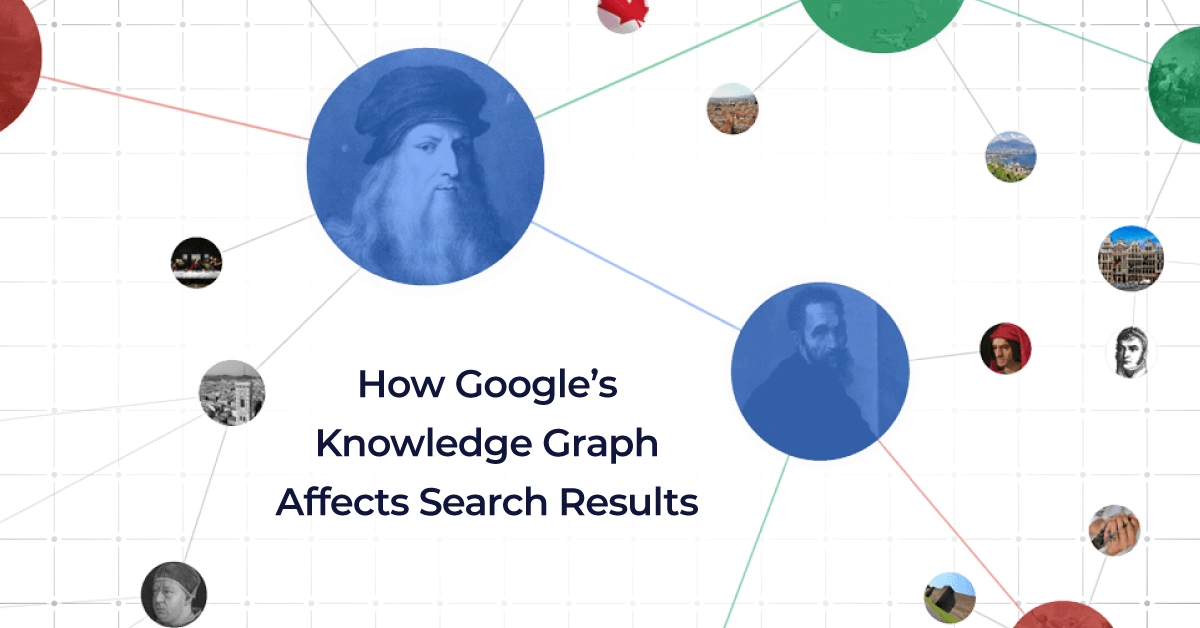
The Google Knowledge Graph is an entity database that stores facts and relationships about people, places, brands, and concepts. Those connections power key information boxes and support accurate answers when Google can trust the signals behind an entity.
How Knowledge Graph Influences Search Results
When Google can recognize entities, it can reorganize search results around intent. That’s why visibility now includes more than rankings—it includes how your brand appears across enhanced modules and answer formats.
Answering Direct Questions
Entity understanding enables Google to respond in real time to direct questions such as “What is…?” or “How does…?”. If your page explains a concept clearly and consistently, it can become a supporting source for these on-SERP answers—even when the user doesn’t click through.
Featured Snippets and Rich Results
Featured snippets sit above organic listings and summarize the best answer. There are different types of featured snippets (paragraphs, lists, tables, and videos), and they’re often won by pages that define terms, show steps, and organize content cleanly.
That same clarity can also feed a rich snippet or other rich results, which add details like FAQs, ratings, or pricing. To qualify, you usually need to add structured data and validate it with tools like Google’s rich results test tool.
Entity-Based Search
Entity-based search changes how authority is evaluated. The links build context: internal links connect topic clusters, and external mentions reinforce that your entity is consistent. This is why knowledge graph features can appear for many queries, including local services, products, and even a job posting—because Google can tie the query to a recognized entity and surface useful context fast.
Knowledge Graph & SEO: What You Need to Know
Knowledge Graph visibility sits at the intersection of strategy and implementation. You need content that answers intent and a technical foundation that helps Google interpret your site without guessing—an approach that improves both rankings and user experience.
Semantic Search and Natural Language
Semantic search means Google interprets intent beyond exact-match terms. Write the way customers speak, answer follow-up questions, and use natural language that reflects how buyers evaluate solutions. AI SEO can support research and drafting, but it should elevate clarity—not flood your site with vague pages that don’t resolve intent.
Content Optimization for Entities
To optimize content for knowledge graph discovery, build pages around entities and relationships. Name the “thing,” define it, and connect it to adjacent entities your customers also search: services, locations, industries, tools, and outcomes. This is how you produce optimized content that people and algorithms can trust, and it’s where AI optimization helps most—tightening structure, consistency, and coverage.
Structured Data and Schema Markup
Schema markup labels your content so Google can interpret it precisely. Using structured data markup (Organization, LocalBusiness, Service, Article, FAQPage, and more) reduces ambiguity and can improve eligibility for rich results. Treat structured data markup as a technical SEO asset, not a shortcut.
Google’s knowledge graph documentation and schema guidance reinforce a practical truth: adding structured data must match what’s actually on the page and across your brand footprint.
How AI & Knowledge Graph Interact in Modern Search
Modern search blends entity databases with AI systems that interpret language and context. The Knowledge Graph anchors facts and relationships, while AI helps predict intent and summarize meaning as interfaces become more conversational.
AI Models & Entity Understanding
AI models identify entities, disambiguate terms, and connect related concepts. That makes structure critical: clear headings, consistent naming, and definitions before deep detail. Many teams use powered tools to speed publishing, but quality wins when those tools are paired with human expertise and verifiable signals.
Personalized and Contextual Search
Search is increasingly contextual—location, device, and query history can influence what appears. The Knowledge Graph helps keep personalization grounded in entities, so results remain accurate even as they’re tailored. For brands, the takeaway is consistency across service pages, FAQs, reviews, and articles.
Best Practices to Optimize Content for Knowledge Graph
If you want dependable visibility, treat Knowledge Graph optimization as a system: content, credibility, and implementation working together.
Use Schema and Structured Data
Start by implementing schema markup where it genuinely applies, and keep it updated as pages evolve. Mark up your organization, services, locations, and frequently asked questions, then test and correct issues regularly. This foundation makes it easier to earn rich results and communicate entity facts without friction.
Build Authority and Trust
Authority is an evidence game. Publish helpful content, earn reputable citations, keep business details consistent, and build a review footprint that validates your entity. Strong Search Engine Optimization fundamentals also make it easier for Google to crawl, interpret, and rank your pages.
Create Clear Entity Relationships
Make relationships obvious on the page: who you serve, what you offer, where you operate, and how topics connect. Use internal links to show clusters, add “about” context that supports a knowledge panel, and avoid inconsistent naming that fragments your entity. When relationships are clear, it becomes easier to appear in featured snippets and enriched layouts.
Conclusion — Smarter Search Strategies Powered by Q-Tech Inc.
The shift to entity-driven search is a structural change, not a fad. When Google understands entities and relationships, it can reorganize search results around what people need most—often before they ever reach a website.
The businesses that win are the ones that make meaning easy to extract: clear entities, clean structure, and trustworthy signals across content and code. If you’re ready to turn Knowledge Graph insight into predictable visibility and demand, Q-Tech Inc. can help you align SEO, content, and conversion strategy through our Digital Marketing Strategies programs.
FAQ
Q: What is Google’s Knowledge Graph?
A: Google’s Knowledge Graph is a semantic database that understands entities (people, places, things) and their relationships, allowing Google to provide direct answers, rich results, and contextually relevant information in search results.
Q: Can I manually submit my site to the Knowledge Graph?
A: No. You cannot manually submit your site. However, you can influence inclusion by using structured data (Schema), maintaining a consistent presence on authoritative sites like LinkedIn and Wikipedia, and claiming your Google Business Profile.
Q: Why did my Knowledge Panel disappear?
A: Google’s automated systems constantly re-evaluate the authority and relevance of an entity. If your brand’s mentions decrease or your data becomes inconsistent across major web directories, Google may determine the entity is no longer “prominent” enough to trigger a panel.
Q: How does the Knowledge Graph affect AI-generated answers like those in ChatGPT?
A: While ChatGPT is a Large Language Model (LLM), it is increasingly integrated with real-time “Knowledge Graph” data through Retrieval-Augmented Generation (RAG). Being a verified entity in Google’s graph makes your brand more likely to be cited as a “trusted source” by AI agents.