

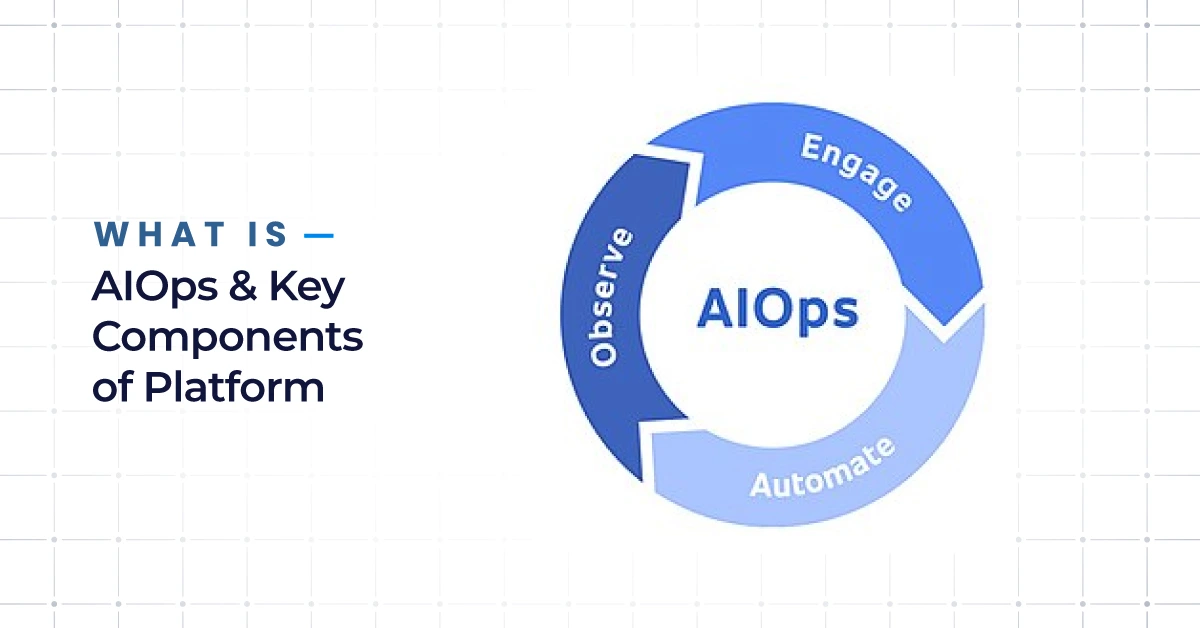
In today’s fast-paced digital landscape, businesses rely heavily on complex IT infrastructures that operate around the clock. Managing these systems manually can be overwhelming, leaving operations teams constantly chasing performance issues and unexpected disruptions. This is where AIOps, or Artificial Intelligence for IT Operations, comes into play. By integrating artificial intelligence (AI), machine learning (ML), and automation workflows, AIOps platforms are redefining how businesses monitor, analyze, and optimize their IT environments.
AIOps Definition
AIOps, short for Artificial Intelligence for IT Operations, is the application of machine learning models, big data analytics, and automation tools to streamline and enhance IT operations. At its core, AIOps helps organizations detect anomalies, automate repetitive tasks, and reduce human intervention in system management.
In simpler terms, AIOps uses real-time data to identify potential problems before they affect performance. Instead of IT teams manually scanning dashboards, AIOps automatically analyzes metrics, logs, and events across the infrastructure to deliver actionable insights. It enables faster incident response, improves system reliability, and enhances decision-making by making IT processes data-driven.
The Problem AIOps Solves
Modern IT environments generate massive amounts of real-time data from servers, networks, applications, and security events. Traditional monitoring tools struggle to make sense of this complexity, forcing operations teams to rely on manual processes that are time-consuming and error-prone.
AIOps solves this by automating analysis and correlation. Instead of reacting to issues after they cause downtime, AIOps enables proactive monitoring—predicting and resolving incidents before users even notice. It transforms how businesses handle incident detection, root cause analysis, and performance optimization by reducing the time and effort required to keep systems healthy.
In essence, AIOps turns chaotic streams of operational data into intelligence for IT operations, allowing organizations to make smarter, faster, and more accurate decisions.
Key Components of an AIOps Platform
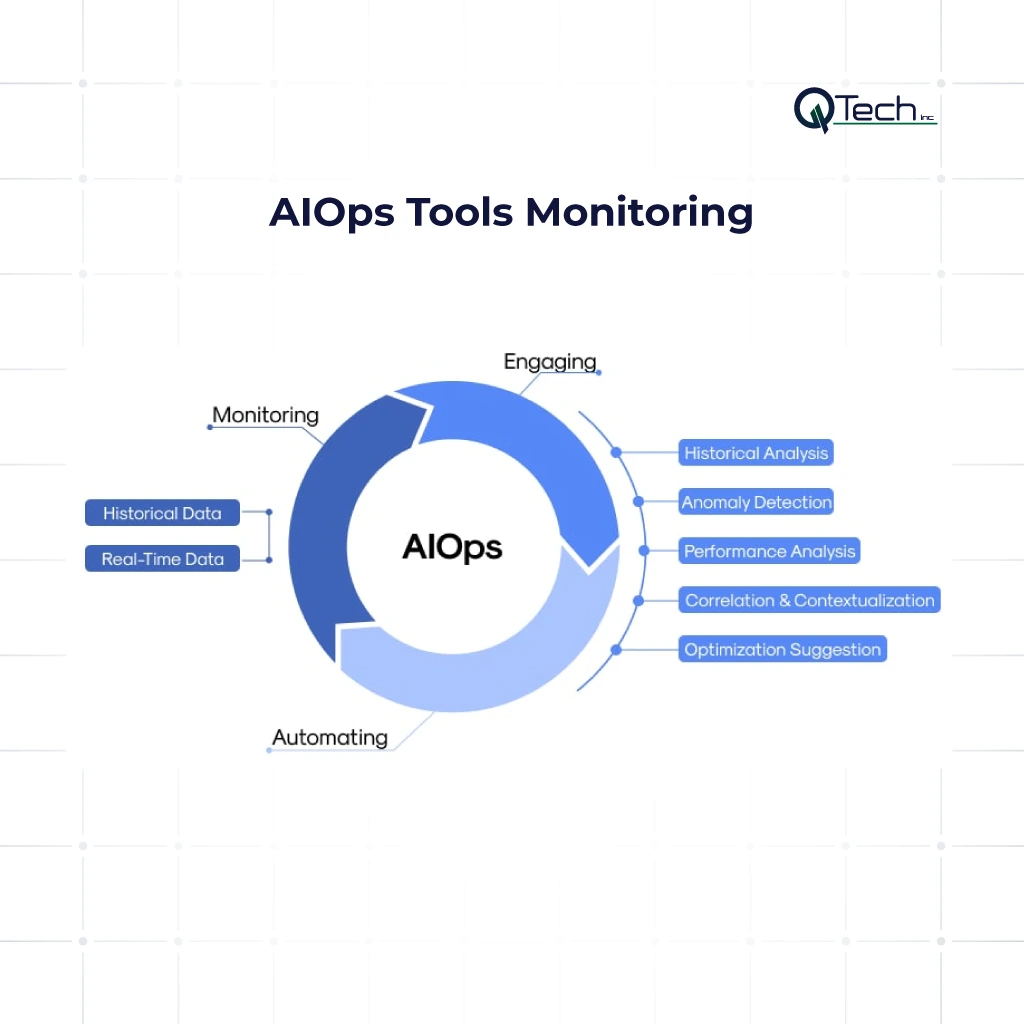
To fully understand what is AIOps, it’s essential to explore the AIOps key components that make up its architecture. A complete AIOps platform integrates five main elements working together to automate and optimize IT operations.
1. Data Aggregation & Normalization
Every AIOps journey begins with data. From logs and metrics to security events, IT environments produce vast amounts of information daily. AIOps tools collect, aggregate, and normalize this data into a single, consistent format. This ensures the system can compare and analyze data accurately, regardless of its source.
By creating a unified view of infrastructure health, businesses gain real-time visibility into network and application performance, setting the stage for automation and intelligent analysis.
2. Big Data Processing
Once data is collected, it must be processed efficiently. Big data engines within AIOps platforms handle massive volumes of structured and unstructured data. This component ensures that insights are generated from the full scope of operational activity, not just isolated systems.
The ability to process and analyze real-time data empowers organizations to identify trends, predict anomalies, and respond rapidly. This transforms how operations teams approach performance management.
3. Machine Learning & Pattern Recognition
At the heart of AIOps lies machine learning. Through machine learning models, AIOps continuously learns from historical and live data to identify normal patterns and detect anomalies automatically.
This enables accurate anomaly detection, helping prevent outages and performance issues before they escalate. As the models improve, the platform becomes more intelligent, adapting to changes in workloads, infrastructure, and user behavior—reducing human intervention and eliminating repetitive manual checks.
4. Automation & Orchestration
Automation is where AIOps truly transforms IT operations. With built-in automation workflows, the platform can perform predefined actions—such as restarting a failed service, reallocating resources, or opening a support ticket—without human input.
By orchestrating these automated processes, organizations eliminate repetitive tasks, streamline incident response, and enhance efficiency. The integration of an automation platform within AIOps ensures that insights translate into action, improving uptime and reducing operational costs.
5. Visualization & Reporting
Finally, effective visualization and reporting turn data into clarity. Dashboards display performance metrics, anomaly detection results, and incident response timelines in easy-to-read formats. This transparency allows decision-makers to track KPIs, measure the benefits of AIOps, and identify areas for further AIOps implementation.
Building a Successful AIOps Strategy
Implementing AIOps isn’t just about technology—it’s about transformation. To achieve meaningful results, organizations need a clear roadmap for success.
Assess IT and Data Readiness
Before launching an AIOps project, assess your IT environment and data quality. Fragmented, incomplete, or inaccurate data can limit performance. Evaluate your monitoring tools, data sources, and automation systems to ensure they integrate smoothly.
Define Goals and KPIs
Set clear objectives for what AIOps should achieve—whether it’s faster incident response, reduced downtime, or lower operational costs. Defining measurable KPIs helps track progress and align AIOps initiatives with broader business outcomes.
Pick The Right Tools
Choose AIOps tools that align with your infrastructure’s complexity and business goals. Look for platforms that support real-time data ingestion, automated processes, and seamless integration with existing IT systems. Tools that combine artificial intelligence with strong automation workflows deliver the most impactful results.
Pilot, Improve, and Scale
Start small—launch a pilot in one department or use case. Monitor outcomes, refine your machine learning models, and adjust your automation workflows based on insights. Once validated, scale across departments to maximize organizational impact.
Drive Change and Adoption
The success of AIOps depends on people as much as technology. Encourage collaboration across teams and train staff to trust and utilize AI-driven insights. When operations teams embrace automation and data-driven decision-making, the transition becomes smoother and more effective.
Common Pitfalls & How to Avoid Them
While the potential of AIOps is vast, certain pitfalls can undermine success. Recognizing and avoiding these challenges ensures smoother adoption.
Bad or Isolated Data
Data silos or inconsistent data sources can compromise results. Ensure that your AIOps solution has robust data aggregation capabilities to unify real-time data streams and eliminate gaps.
Ignoring Human Workflows
Automation doesn’t replace humans—it enhances them. Overlooking the human element can cause friction. Integrate AIOps into existing processes, ensuring automation tools complement daily workflows rather than disrupt them.
Automating Without Context
Blindly automating manual processes can lead to unexpected consequences. Always apply automation with context and validation to avoid triggering unnecessary automated processes that may escalate incidents instead of resolving them.
Picking Tools Without Goals
Selecting tools without clear objectives is one of the most common mistakes. Define your AIOps implementation roadmap and desired outcomes before investing in any automation platform or AIOps tools.
Conclusion & How Q-Tech Inc. Helps You Adopt AIOps
AIOps represents a new era of intelligence for IT operations, blending artificial intelligence, machine learning, and automation workflows to revolutionize how businesses manage technology. From improving incident response and reducing downtime to eliminating repetitive tasks, the benefits of AIOps are clear: greater efficiency, speed, and scalability.
For organizations looking to enhance their digital ecosystem, Q-Tech provides expert guidance and support in AIOps strategy, integration, and management. Our AIOps support services empower businesses to modernize IT operations, while our incident detection solutions ensure round-the-clock protection and performance optimization.
By partnering with Q-Tech, you gain a trusted team committed to helping you implement a future-ready AIOps platform that drives innovation, reduces operational complexity, and delivers measurable business impact. AIOps isn’t just a technology upgrade—it’s the foundation for smarter, faster, and more resilient IT systems.
FAQ
Q: What is AIOps in simple terms?
A: AIOps, or Artificial Intelligence for IT Operations, is the use of artificial intelligence (AI) and machine learning (ML) to automate and improve traditional IT operations tasks. In simple terms, it’s like giving your IT team a smart assistant that can analyze vast amounts of data, spot problems before they cause outages, and automatically fix many issues without human intervention.
Q: What is the difference between AIOps and DevOps?
A: DevOps is a cultural and procedural philosophy that breaks down silos between development (Dev) and operations (Ops) teams to ship code faster. AIOps is a technological approach that uses AI to support and automate the ‘Operations’ part of DevOps. AIOps is a powerful tool that enables DevOps teams to manage complex systems more effectively.
Q: What are the benefits of using AIOps?
A: The primary benefits of AIOps include: a significant reduction in IT downtime through proactive problem detection, a massive decrease in alert noise (by up to 90-99%), faster root cause analysis, automated remediation of common issues, and improved cost efficiency by optimizing resource utilization.
Q: Do I need AIOps for my business?
A: AIOps becomes crucial when your IT environment becomes too complex and data-rich for humans to monitor effectively. If you are using cloud services, microservices, and containers, and your IT team is overwhelmed by alerts and manual tasks, then your business can greatly benefit from implementing an AIOps strategy.