
In today’s digital-first business environment, video is no longer a nice-to-have—it’s a game changer. As attention spans shrink and decision-makers crave authenticity, video content for B2B has become one of the most effective ways to attract, educate, and convert potential clients.
Whether you’re showcasing a product demo, sharing a success story, or highlighting your expertise, mastering how to use video content to convert business clients proven strategies can elevate your entire marketing funnel. This guide will break down exactly how to do it.
Why Video is the Ultimate B2B Conversion Tool
Video’s Impact on Information Retention and Trust
When it comes to business video marketing, data consistently proves that people remember visuals better than text. Viewers retain 95% of a message when it’s watched in a video compared to just 10% when read. For B2B companies, this retention translates into better comprehension of complex ideas, stronger credibility, and a direct boost in brand awareness. A well-crafted client testimonial video or case study video gives your audience tangible proof of success, helping them build trust with your brand before even speaking to your sales team.
Defining the Video Sales Funnel: Awareness to Decision
A strategic video sales funnel mirrors the buyer’s journey, starting with awareness, moving through consideration, and ending at the decision stage. Awareness videos like explainer videos or industry overviews draw attention and position your company as an expert. Consideration-stage videos, such as demos or webinars, help prospects evaluate your product or service, while decision-stage videos like testimonials or personalized sales videos seal the deal by humanizing your brand and reinforcing credibility.
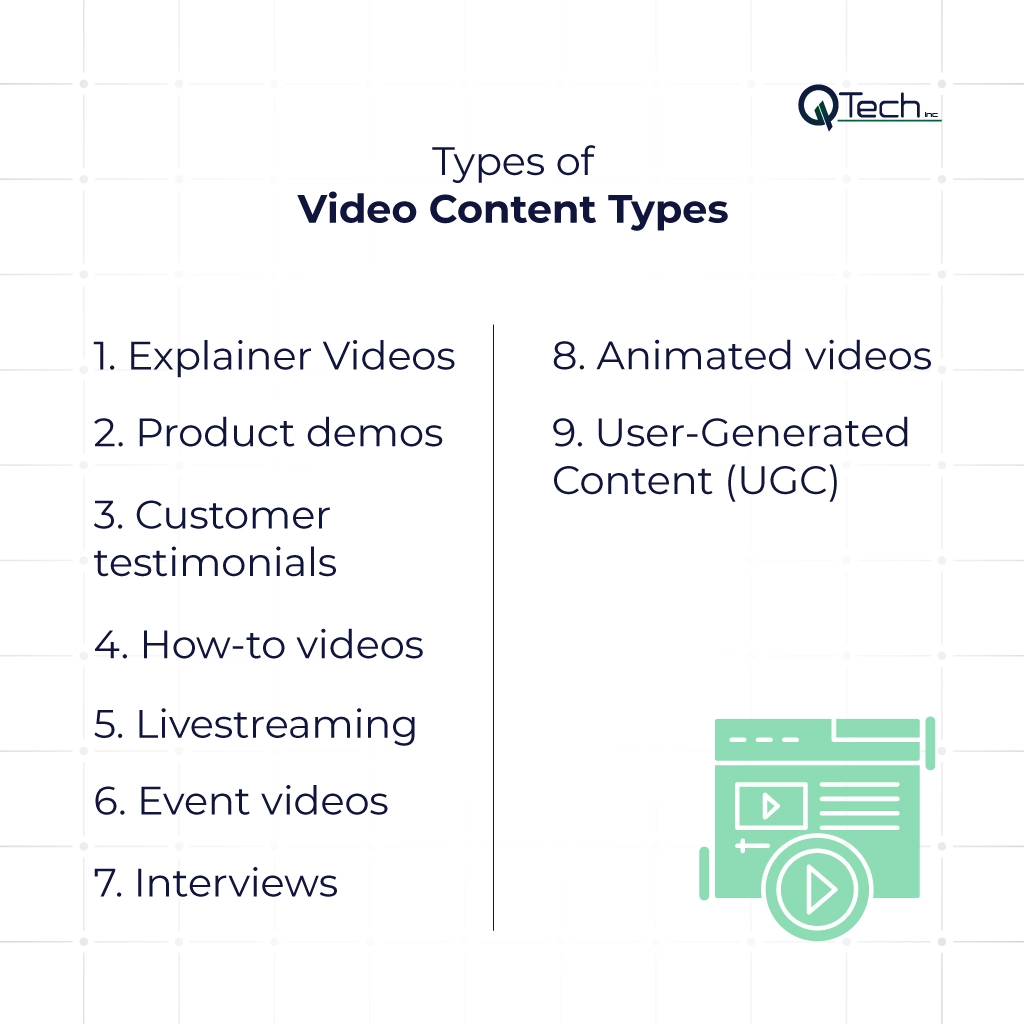
Types of Video Content That Convert in B2B
- Explainer videos
- Product demos
- Customer testimonials
- How-to videos
- Livestreaming
- Event videos
- Interviews
- Animated videos
- User-Generated Content (UGC)
Explainer Videos
An explainer video simplifies complex topics into digestible, visual stories. When you create an explainer video, focus on answering your target audience’s biggest questions while showing how your solutions make their work easier. This form of video content helps boost conversions by clarifying your value proposition quickly.
Product Demos
Product demos let prospects see your solution in action. Demonstrating real use cases reduces skepticism and shortens the buying cycle. Adding demos to your landing pages can increase your video conversion rate dramatically, especially when the content aligns with your audience’s industry-specific needs.
Customer Testimonials
A client testimonial video brings your satisfied customers to life. Hearing a peer share their success story is more persuasive than any sales pitch. Testimonials should include metrics and authentic stories to strengthen emotional appeal and trust.
How-To Videos
These videos serve as valuable educational tools. By teaching prospects how to use your product or service, you position your brand as a trusted advisor and thought leader. They’re especially powerful for B2B companies selling technical or software-based solutions.
Livestreaming
Live video humanizes your brand. Hosting live Q&A sessions, webinars, or industry discussions fosters connection and real-time engagement, creating a sense of accessibility and transparency.
Event Videos
Whether it’s a trade show recap or a corporate seminar, event videos capture your company’s thought leadership and networking power. They also provide reusable content for marketing campaigns.
Interviews
Interview videos with experts, partners, or clients create authority and foster trust. They demonstrate your brand’s involvement in the industry ecosystem while providing valuable insights.
Animated Videos
Animated explainer or study videos simplify abstract concepts through visuals and storytelling. They’re ideal for presenting data or processes that might be too technical for a traditional video format.
User-Generated Content (UGC)
Encouraging clients to submit videos about their experience is a powerful authenticity tool. UGC amplifies social proof and demonstrates genuine customer satisfaction across your digital channels.
Video Placement & Funnel Strategy
Use Video on Landing Pages Above the Fold
Positioning a short, engaging video at the top of your landing pages captures attention immediately. A brief video ad or demo placed above the fold can improve engagement time and boost form submissions.
Incorporate Video in Email Campaigns, Nurture Sequences, and Retargeting
Embedding videos into marketing campaigns, especially email sequences and retargeting ads, keeps your message top of mind. Personalized thumbnails and short clips can double click-through rates, while creating personalized videos for key accounts can improve sales outreach.
Use Video Snippets or Previews on Social Media and Embed in Blogs
Short, captioned clips perform exceptionally well on social platforms. LinkedIn video marketing is particularly effective for B2B because it targets professionals already in a business mindset. Embedding videos within blogs or content hubs increases dwell time and enhances search engine visibility, especially when paired with video SEO optimization.
How to Make Quality Video Marketing Content
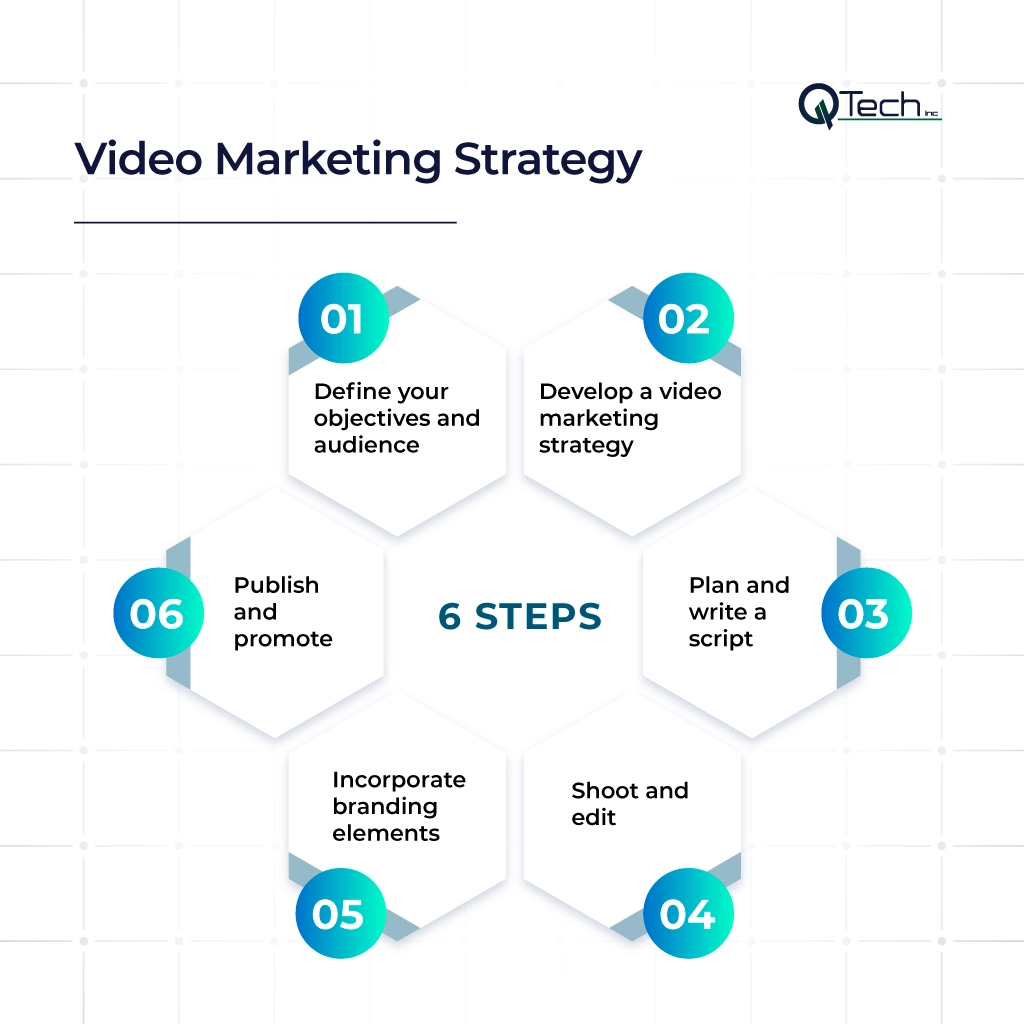
1. Define Your Objectives and Audience
Start by identifying what you want your video to achieve—awareness, engagement, or conversions—and who it’s meant for. Knowing your target audience ensures every frame resonates with the right decision-makers.
2. Develop a Video Marketing Strategy
A strong video marketing strategy aligns video production with your broader business goals. Map out your content types, publishing cadence, and distribution channels—your website, video platform, and social media.
3. Plan and Write a Script
A solid script ensures clarity and focus. Keep it conversational, benefit-driven, and aligned with your sales team’s messaging. Always emphasize how your solution solves real-world pain points.
4. Shoot and Edit
Invest in professional video production or train your internal team to shoot quality footage. Use clear lighting, crisp audio, and consistent branding visuals. Remember, poor quality undermines credibility; even the best ideas fail without a professional presentation.
5. Incorporate Branding Elements
Subtle branding, like your logo, colors, and typography, builds familiarity and reinforces brand awareness. Keep it clean and avoid overloading the viewer with visual clutter.
6. Publish and Promote
Once finalized, publish videos across your video platform, website, and social media. Amplify reach through paid ads or collaborations, and don’t forget to include calls-to-action and tracking links for performance analysis.
Measuring Video Success & Conversion KPIs
Video View Rates, Watch Time, Drop-Off Points
Metrics like view rate and watch time indicate whether your content holds attention. Drop-off analytics highlight where you lose viewers, helping you refine messaging and visuals.
Conversion Rate (Form Submissions, Demo Requests, Contact Us)
Your video conversion rate shows how effectively videos drive desired actions—whether that’s scheduling demos or requesting quotes. When possible, tie metrics directly to video viewership on landing pages.
Lead Quality and Follow-Up Metrics
Measure how many leads generated from videos become qualified opportunities. This helps you determine which video formats or topics bring in the most valuable prospects.
A/B Testing Video vs Non-Video Landing Pages
Compare performance between video-enhanced and static pages. Testing variations of your create videos strategy helps identify the best-performing elements for engagement and conversion.
Common Pitfalls to Avoid
Overly Long Videos with Too Much Technical Jargon
B2B audiences appreciate depth, but not unnecessary complexity. Keep videos concise and focused on solutions rather than internal terminology.
Poor Production Quality
Low-quality visuals, shaky footage, or distorted audio damage credibility. Always prioritize professional video production or hire specialists for editing and post-processing.
Videos Not Tailored to the Audience’s Pain Points
Generic content fails to connect. Focus each video on a specific target audience segment, addressing their challenges and desired outcomes.
Not Optimizing for Mobile or Slow Networks
Ensure your videos are mobile-responsive and compressed properly. Many decision-makers view content on mobile during commutes or downtime.
Ignoring Hosting and Bandwidth Issues
Avoid embedding public YouTube videos that show unrelated ads or competitor suggestions. Instead, use controlled hosting solutions or professional video platforms for a distraction-free experience.
Conclusion: How Q-Tech Inc. Can Help You Use Video to Convert More Business Clients
At Q-Tech Inc., we understand that video can transform your brand’s visibility and sales process. From strategy and scripting to post-production and optimization, our team delivers end-to-end business video marketing solutions tailored for B2B companies. Whether you need to create personalized videos, build trust through case studies, or craft high-impact demos we helps you harness the power of visual storytelling to drive conversions.
Partner with us to unlock the full potential of your video marketing strategy through our B2B content strategy services and advanced video SEO optimization solutions. Together, we’ll help you turn views into leads—and leads into lasting business relationships.
FAQ
What kind of video content converts best in the B2B space?
Answer – Product demos, case studies/testimonials, explainer videos, and personalized outreach videos tend to convert well. They address trust, clarify complex solutions, and help prospective clients see how your offering solves their problem.
How long should a B2B conversion video be?
Answer – Length depends on the funnel stage:
- Top of Funnel: 60–90 seconds (quick, valuable insights)
- Middle of Funnel (Case Studies): 2–3 minutes (detailed enough to build trust)
- Bottom of Funnel (Personalized): 60–90 seconds (respectful of the busy decision-maker’s time)
The key is to provide value proportionate to the commitment you’re asking for.
How does video content improve SEO for a B2B website?
Answer – Video content significantly improves SEO by increasing dwell time (time spent on page), which signals high quality to search engines. Videos also generate video rich snippets in Google search results, providing an additional path to rank for your B2B keywords and dominate the SERP.
Where should I place videos to maximize conversion?
Answer – Key placements include landing pages (above the fold), email campaigns, product/service pages, social media, nurture sequences, and embedded within blog content or case studies. Positioning video close to forms or CTAs helps guide action.