
Introduction: The Shift to Remote Work and Its Cybersecurity Implications
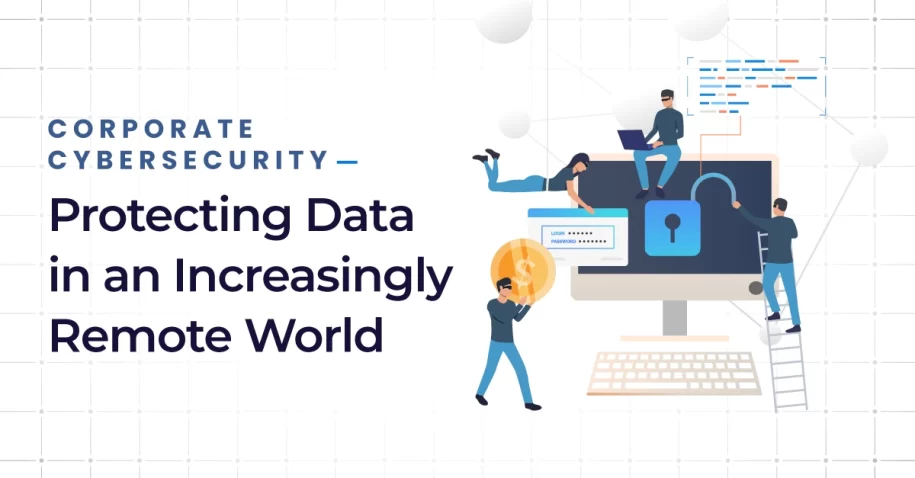
The workplace has undergone a dramatic transformation. What began as a necessity during global disruptions has now become the new standard: working remotely. As more businesses adopt flexible models, they are also encountering a growing wave of cybersecurity threats unique to this landscape.
A traditional corporate office once offered physical and digital perimeters that were easier to control. Now, organizations must ensure the same level of data integrity and protection across hundreds,if not thousands,of distributed endpoints. This guide to corporate cybersecurity in a remote-first world serves as a roadmap to help you understand the evolving threat landscape and implement scalable, effective security measures that align with this shift.

Understanding the Risks: Cyber Threats in a Remote Work Environment
Remote work environments introduce a new breed of vulnerabilities. Without centralized oversight, every device and connection becomes a potential point of entry for attackers. Let’s explore the most pressing threats businesses face today.
Phishing Attacks and Social Engineering
Phishing remains the top cyber threat for remote teams. These deceptive campaigns trick employees into handing over credentials, often through what appears to be legitimate emails or instant messages. With no IT personnel nearby to verify suspicious activity, employees may unknowingly fall prey to scams. Social engineering tactics manipulate human behavior, often exploiting fear, urgency, or curiosity.
Real-world tip: Encourage employees to hover over links, verify sender addresses, and avoid urgent download requests. Implement password management systems to reduce password reuse and improve your response to breaches. Additionally, knowing how to create a data breach response plan ensures your team can react instantly if phishing credentials are compromised.
Unsecured Home Networks
Most home Wi-Fi networks lack commercial-grade firewalls or intrusion detection systems. A hacker who gains access to an employee’s personal router can eavesdrop on corporate communications, inject malware, or pivot into company systems,especially if the vpn connection is weak or misconfigured.
Example: A remote employee working from a coffee shop without a vpn service unknowingly connects to a rogue hotspot set up by a cybercriminal. The attacker captures login credentials in real-time.
Use of Personal Devices (BYOD)
Personal devices often lack the necessary updates or antivirus protection. If an employee downloads company data onto their personal laptop or mobile phone without data encryption, a stolen or compromised device could expose sensitive information.
Actionable tip: Establish clear BYOD policies and deploy endpoint management tools to monitor, update, and secure non-corporate devices accessing your network.
Essential Cybersecurity Strategies for Corporate
Combatting these threats requires a layered defense. Implementing the key components of a robust cybersecurity strategy—including strong authentication, secure connections, and continuous employee training—ensures your organization maintains complete visibility and control over distributed endpoints.

Implementing Strong Authentication Measures
Relying solely on usernames and passwords is no longer enough. Multi-factor authentication (MFA) significantly enhances access control by requiring additional verification, such as a code sent to a mobile device or a fingerprint scan.
Why it matters: If a hacker steals a password through phishing, they’re still locked out without the second authentication factor. Enhance this further with digital signatures for sensitive transactions.
Utilizing VPNs and Secure Connections
A VPN encrypts your internet traffic, ensuring that data is protected even on public Wi-Fi or untrusted networks. It’s vital that employees use a trusted vpn service with high key length encryption.
Tip: Ensure your vpn connection is always active when accessing work systems. Automate VPN start-up with system logins and use kill-switch features to prevent accidental exposure.
Regular Employee Training and Awareness
Cybersecurity is everyone’s job. While IT teams can build systems and defenses, the daily decisions made by employees often determine whether an attack succeeds or fails.
What to do: Conduct regular phishing simulations, create security checklists for employees, and provide ongoing education about evolving cybersecurity risks. Employees should know how encryption works, how to spot fraud, and how to safely handle sensitive information.
Data Encryption and Secure File Sharing
Data encryption ensures that even if data is intercepted, it cannot be read without the right encryption keys. It’s essential to encrypt both stored files and those in transit. Educate your team on how to decrypt the data securely and the role of key length in determining encryption strength.
Tools: Use secure platforms for collaboration, such as encrypted cloud storage, and prohibit data transfers via unencrypted personal emails or messaging apps.
Q-Tech Inc.’s Approach to Enhancing Remote Work Security
At Q-Tech Inc., we understand the intricacies of securing businesses in a distributed environment. Our services are designed to offer peace of mind while enhancing productivity,no matter where your team is located.
Customized Cybersecurity Solutions
Not every business faces the same threats. Through our specialized Cybersecurity Services In Miami, we tailor each protection model based on your unique infrastructure, operational workflows, and regulatory compliance needs. Whether you’re a healthcare provider with HIPAA concerns or a financial firm safeguarding transaction data, we ensure your systems are fortified.
24/7 Monitoring and Support
Cybercriminals don’t clock out at 5 p.m.,and neither do we. Our team provides round-the-clock monitoring to detect anomalies, mitigate breaches, and restore systems if incidents occur.
With automated alerts, real-time analysis, and immediate incident response, we keep your digital environment secure even when your office lights are off.
Compliance with Industry Standards
From GDPR to SOC 2, compliance is no longer optional,it’s expected. We help you document policies, maintain secure audit trails, and implement controls that meet regulatory requirements. This includes deploying secure remote access solutions, managing device-level permissions, and documenting how vpn encrypts remote traffic.
Outcome: Avoid fines, satisfy cyber insurance policy mandates, build client trust, and create a secure infrastructure that scales as your company grows.
Conclusion: Building a Resilient Cybersecurity Framework for the Remote Era

As the remote workforce expands, so too does the responsibility to protect corporate systems, employees, and customer data. A one-size-fits-all solution doesn’t work in this complex digital age. What’s needed is a comprehensive, flexible, and proactive strategy.
Quick Checklist for Remote Work Cybersecurity
- Enable MFA on all platforms
- Use enterprise-grade vpn service with high key length
- Enforce encryption on all files, emails, and messages
- Conduct monthly phishing awareness training
- Prohibit use of unauthorized personal devices
- Encrypt traffic over public Wi-Fi
- Use secure, cloud-based remote access solutions
- Implement robust password management systems
- Stay compliant with industry standards
At Q-Tech Inc., we provide comprehensive IT support in Miami to help organizations implement these best practices, equipping remote work environments with complete technical defenses. Whether you’re new to remote work or evolving your existing infrastructure, our solutions are built to support your journey.
Reach out to us today,because securing your digital future starts now.