

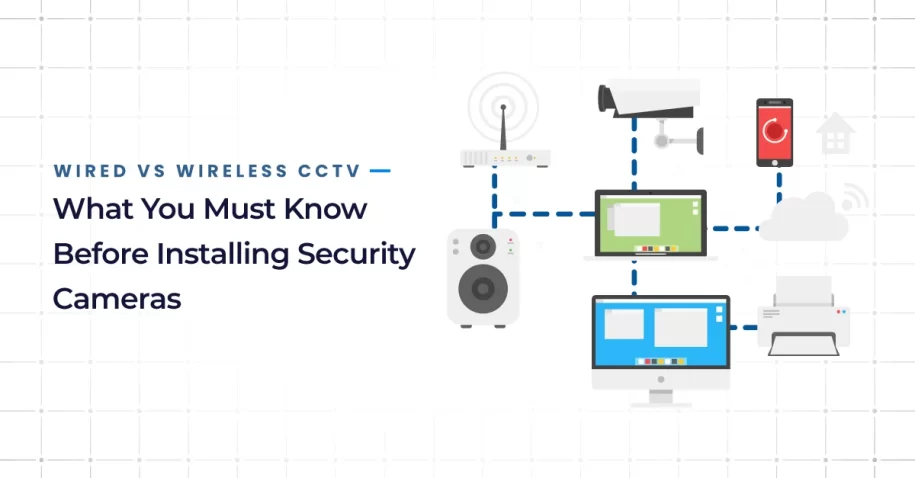
When businesses think about security cameras, the conversation usually starts with wired and wireless security cameras. WiFi cameras promise flexibility and convenience, while hardwired CCTV offers stability and control. But when you look deeper at wired vs wireless CCTV, what you must know before installing security cameras, the long-term picture changes.
Your choice affects not just safety, but your network reliability, compliance, brand reputation, and even customer trust. For many organizations, the safest investment is a system designed and supported by an IT partner who understands infrastructure, cybersecurity, and real-world business needs.
Understanding the Basics — What Are WiFi Cameras and Hardwired CCTV Systems
Before you decide, it’s important to understand how WiFi cameras and hardwired CCTV systems fit into modern security solutions. WiFi cameras are wireless security cameras that connect over wi fi or sometimes cellular networks, often managed via a mobile app or mobile application on a mobile device. Hardwired CCTV systems, on the other hand, use physical cabling and often Power over Ethernet (PoE) to send power and data through the same wire.
In many environments, you’ll see a mix of both: wifi cameras monitoring flexible or temporary areas, and hardwired cameras protecting critical zones like entrances, server rooms, warehouses, and cash-handling locations. Understanding the strengths and weaknesses of each approach is the foundation for choosing the right architecture.
How WiFi (Wireless) Security Cameras Work
If you’ve ever wondered how wifi cameras work, think of them as smart edge devices. These wireless systems connect through your local router using wi fi or sometimes cellular networks. That’s how wireless security cameras work with little or no cabling. Once online, they stream footage to a recorder, cloud storage, or local storage, often managed through apps developed by camera vendors or third-party providers.
From your phone or laptop, you can view real-time feeds, download clips, and control settings through a mobile application. Modern wifi cameras often include night vision, microphones, and AI-based detection. These cameras offer features like alerts when cameras capture motion or when a door is opened. Many also provide flexible options around video quality, from low-bandwidth modes to HD or even 4K.
Because they run on wireless systems, some models rely on battery life instead of wired power. That can be useful for short-term setups, but it adds maintenance overhead and risk if batteries die at the wrong time.
How Hardwired / Wired / PoE CCTV Cameras Work
Hardwired CCTV systems use physical cabling—usually Ethernet or coax—to send power and data from each camera to a central recorder or network switch. With PoE, connecting the cameras is simplified: one network cable handles both power and data. This design gives you stable bandwidth, predictable performance, and easier control over segmentation and security.
For business owners comparing options and asking how hardwired CCTV cameras perform against WiFi cameras, the answer is clear: in most professional environments, hardwired CCTV vs WiFi CCTV comes down to long-term reliability, resilience, and security. Cabling may take more effort up front, but it dramatically reduces the risk of dropouts, interference, or compromised feeds.
Common Advantages of WiFi Security Cameras
It’s important to acknowledge the advantages of wifi security cameras. They shine in smaller spaces, temporary setups, or locations where running cable is difficult or cost-prohibitive.
WiFi cameras can be a helpful piece of a larger ecosystem, especially when integrated with professional security solutions and managed IT support that monitors network health and performance.
Easy & Quick Installation
One of the biggest advantages of wifi security cameras is how quickly they can be deployed. There’s no need to run cables through walls or ceilings. You mount the camera, power it up, connect it to wi fi, and you’re up and running.
For small offices, retail spaces, or pop-up locations, this speed matters. If you need visibility today and a permanent solution later, WiFi cameras can fill that gap.
Flexibility & Ease of Repositioning
WiFi cameras are ideal when your layout changes often. If you rearrange workstations, open new areas, or shift inventory, you can relocate cameras with minimal effort.
This flexibility is especially useful for growing businesses that aren’t ready to commit to permanent infrastructure in every location. You can test angles, refine coverage, and adjust as your business changes.
Lower Initial Setup
For small environments, the initial cost of a couple of WiFi cameras can be lower than installing a full hardwired CCTV system. You don’t need network drops or extensive cabling, which reduces up-front labor and materials.
However, as you add more cameras, subscriptions, and upgrades, that cost advantage can disappear. That’s when many organizations start to see limitations of wifi security cameras and begin planning a transition to hardwired infrastructure.
Key Limitations and Risks of WiFi Security Cameras
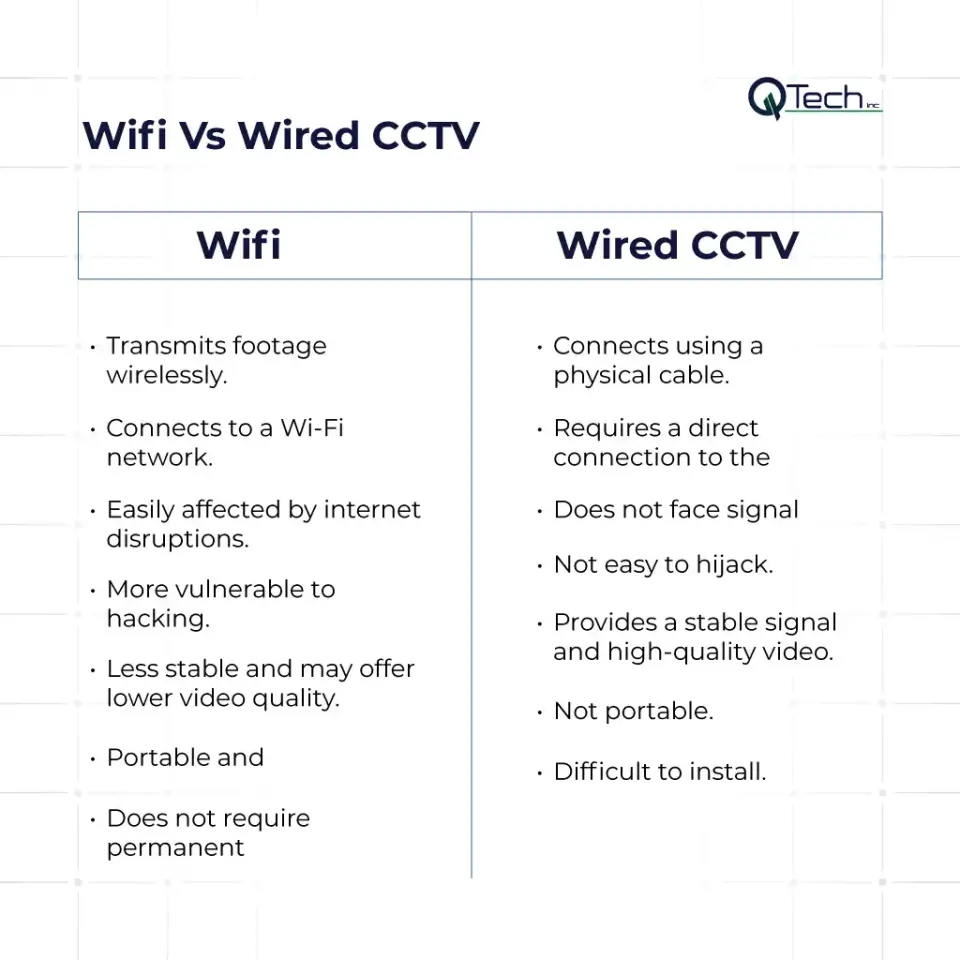
Despite their benefits, the limitations of wifi security cameras become more serious as your installation grows or your security requirements increase. WiFi cameras are highly dependent on signal strength, network stability, and cloud services that may carry recurring costs.
For organizations that must protect sensitive data, maintain uptime, or comply with industry regulations, these limitations can move WiFi cameras from “good enough” to “too risky.”
Reliance on WiFi / Internet Connectivity & Network Stability
WiFi cameras need a stable network connection to stream footage, send alerts, and maintain real-time visibility. Congested networks, poor router placement, or outdated access points can cause latency, buffering, or dropped footage.
If your internet connection fails and your design relies solely on cloud recording, you may lose critical evidence at the exact moment you need it.
Signal Interference and Data Dropouts
WiFi signals are vulnerable to interference from walls, other devices, and neighboring networks. Microwave ovens, wireless speakers, and even other wireless systems can degrade performance.
As you add more wireless security cameras, the risk of signal contention increases, leading to lower video quality, skipped frames, and unreliable archives. This can be unacceptable for high-risk areas like cash registers, entrances, or loading docks.
Security & Privacy Risks
Any device exposed to the internet can be targeted. Poorly configured WiFi cameras, weak passwords, unpatched firmware, and unsecured cloud storage create openings for attackers. Remote hackers can try to access feeds, disable cameras, or pivot into other parts of your network.
Ongoing Costs
WiFi camera platforms often rely on paid cloud storage, AI features, or advanced alerts that renew monthly or annually. As your system grows, those fees can exceed the cost of an on-premises recorder with predictable storage.
Add in the time spent managing battery life, troubleshooting network issues, and supporting many different apps developed by vendors, and the “cheap and easy” solution can become expensive and complex.
Why Hardwired CCTV Is Often the Safer, More Reliable Choice
When you step back and consider risk, resilience, and total cost of ownership, hardwired cctv safer than wifi becomes more than a slogan. It’s a practical conclusion. A well-designed hardwired CCTV system reduces uncertainty: consistent bandwidth, predictable power, and closed network paths are easier to secure and maintain over time.
Stable, Uninterrupted Data & Power
Hardwired cameras deliver stable streams, even in high-density deployments. With PoE switches, you’re connecting the cameras directly into your network infrastructure, avoiding the noise and interference of crowded wireless channels.
This stability is crucial when you need clean recordings for investigations, HR incidents, or legal matters.
Better Video Quality & Consistency
Because they’re not competing for wireless bandwidth, hardwired systems are better at maintaining consistent video quality. You can configure higher bitrates without worrying that another device on the WiFi network will force your streams to drop.
This consistency ensures your cameras capture the details you care about—faces, license plates, badges, and subtle movements—without artifacts and blur.
Higher Security & Lower Risk of Remote Hacking
Hardwired systems are easier to isolate on their own VLANs or dedicated networks, especially when designed as part of a broader security solutions strategy. This reduces the exposure of camera interfaces to the open internet.
Continuous Power Supply
Instead of relying on battery life, hardwired cameras are powered through cabling, often backed by UPS systems. If the power flickers, your cameras can keep running long enough to capture what happened.
This is essential for wireless system replacements in areas like server rooms, financial offices, and healthcare facilities, where visibility during outages is critical.
More Suitable for Large Installations & 24/7 Surveillance
When you scale up to many cameras across floors, buildings, or campuses, hardwired infrastructure becomes the only realistic option. It delivers capacity, predictability, and centralized management.
What To Consider Before Choosing CCTV
There is no one-size-fits-all answer. The right balance of WiFi and hardwired CCTV depends on your risk profile, budget, and future plans. The key is to make a deliberate choice—not just install whatever is on sale.
Purpose (Home vs Business vs Large Property)
Homes and very small offices may benefit more from flexible wireless security cameras, while multi-site businesses, schools, warehouses, and healthcare facilities need hardwired reliability.
Define your critical areas, your must-have coverage, and your tolerance for downtime before choosing a technology.
Connectivity & Power Reliability
If your wi fi is unstable or your power grid is prone to outages, relying solely on WiFi cameras is risky. In these scenarios, hardwired CCTV with PoE and UPS backup is the smarter choice.
Security & Data Privacy Requirements
Industries that handle sensitive data or face strict regulations need tighter control. Here, the question isn’t just how wifi cameras work, but whether that model fits your compliance requirements.
Long-Term Costs vs Convenience
WiFi cameras can look cheaper up front. But subscriptions, upgrades, and troubleshooting time add up. In contrast, hardwired systems involve a larger initial investment but often lower long-term operational costs.
Balancing convenience today with resilience tomorrow is a key part of any serious CCTV strategy.
Maintenance & Storage
Regardless of technology, you’ll need a plan for updates, hardware refresh cycles, and storage growth. As more cameras offer higher resolution and smarter analytics, your storage needs will expand.
Planning for scalable local storage, cloud storage, or hybrid models from day one ensures your system can grow with your business.
Conclusion — Long-Term Safety Powered by Q-Tech Inc
Choosing between WiFi and hardwired CCTV isn’t just about gadgets—it’s about risk, reliability, and the long-term health of your business. WiFi cameras have a place, especially for small, flexible deployments. But when safety, compliance, and uptime are on the line, a well-designed hardwired system remains the safer, more strategic investment.
At Q-Tech Inc., we combine infrastructure design, IT services, and managed security to build CCTV architectures that align with your goals. Whether you’re exploring wireless systems, planning a full hardwired deployment, or blending both, our team will help you design, deploy, and support a solution that protects your people, your assets, and your reputation—from the ground up.
FAQ
Q: Can WiFi-enabled CCTV systems be made more secure?
A: They can — if you ensure strong encryption, secure passwords, firmware updates, secure local or cloud storage, and network security measures (firewalls, VPNs). But even then, they may still be more vulnerable than hardwired solutions.
Q: For business or commercial properties, is wired CCTV always better than wireless?
A: In most cases — yes. For large properties, 24/7 surveillance, multiple cameras, and reliability requirements (e.g., for liability, compliance, evidence) — wired CCTV is preferred. Wireless may be used only for low-sensitivity or temporary coverage.
Q4: Does hardwired CCTV offer better video quality than WiFi cameras?
A4: Yes. Because data is transmitted through cables (not compressed over WiFi), hardwired CCTV generally provides more stable, higher-resolution video with less latency, which is critical for surveillance and evidence quality.
Q: What are the main disadvantages of WiFi cameras compared to wired CCTV?
A: Key drawbacks include dependence on WiFi/internet stability (signal loss can interrupt video), potential security vulnerabilities (hacking, interception), possible poorer video quality or lag due to network bandwidth, and recurring costs like cloud storage subscriptions.