

In 2026, search engines reward brands that pair helpful content with strong technical fundamentals and credible authority signals. That is why the best teams do not “wing it”—they run SEO with a disciplined tool stack that turns data into clear decisions.
This guide is written as “5 essential seo tools every expert uses: a complete list,” but with business outcomes in mind. A practical seo tools list 2026 helps you plan with evidence, execute faster, and measure what is working—so SEO supports leads, revenue, and long-term brand trust. Just as importantly, the right tools reduce rework: you spend less time guessing, fixing preventable issues, or rebuilding content that never matched intent in the first place.
Why Every SEO Expert Needs a Strong Toolset
SEO is not one tactic; it is an operating system that touches content, site health, and authority. Without dependable seo tools, teams lose time debating opinions, miss silent technical issues, and struggle to prove ROI. With the right stack, you can identify priorities, assign work, and validate impact.
A strong toolset also improves collaboration. Marketing needs keyword research and competitor analysis, development needs specific technical requirements, and leadership needs reporting that connects effort to results. When everyone shares the same data source, execution becomes far more predictable.
How Tools Improve Accuracy & Efficiency
Tools improve accuracy by reducing guesswork. A reliable research tool shows what people search for, how intent differs across queries, and where demand is strong enough to justify investment. This is how you avoid publishing content that sounds good internally but does not align with actual search behavior, and it helps you forecast which themes are most likely to generate qualified traffic.
They also improve efficiency by quickly flagging issues and opportunities. You can surface slow pages, broken links, duplicate metadata, and structural problems through repeatable website audits—then prioritize fixes based on impact.
Balancing Manual Skill With Automation
Automation is useful, but it is not a strategy. AI can accelerate research, summarize patterns, and support drafting; humans still need to define positioning, quality standards, and conversion goals. The winning approach is to use AI-powered workflows for speed, while keeping expert judgment in control of what gets published and what gets changed.
Tool #1: Keyword Research & Competitive Analysis Tool
What It Does
A keyword research platform helps you understand demand, group topics into themes, and map content to intent. It turns “what should we write about?” into a plan rooted in evidence rather than assumptions.
It also supports competitor analysis by showing which domains and pages currently win for your priority topics, where competitors have content gaps you can exploit, and which formats appear to perform best.
Why It’s Essential
If you want the best keyword research tool, choose one that supports decisions—not just exports. The right platform helps you prioritize keywords by business value, difficulty, and intent, so your team spends time on opportunities that can realistically move results.
This is also where content marketing becomes more strategic. Instead of publishing generic posts, you can build clusters that answer related questions, strengthen topical authority, and guide prospects toward the next step.
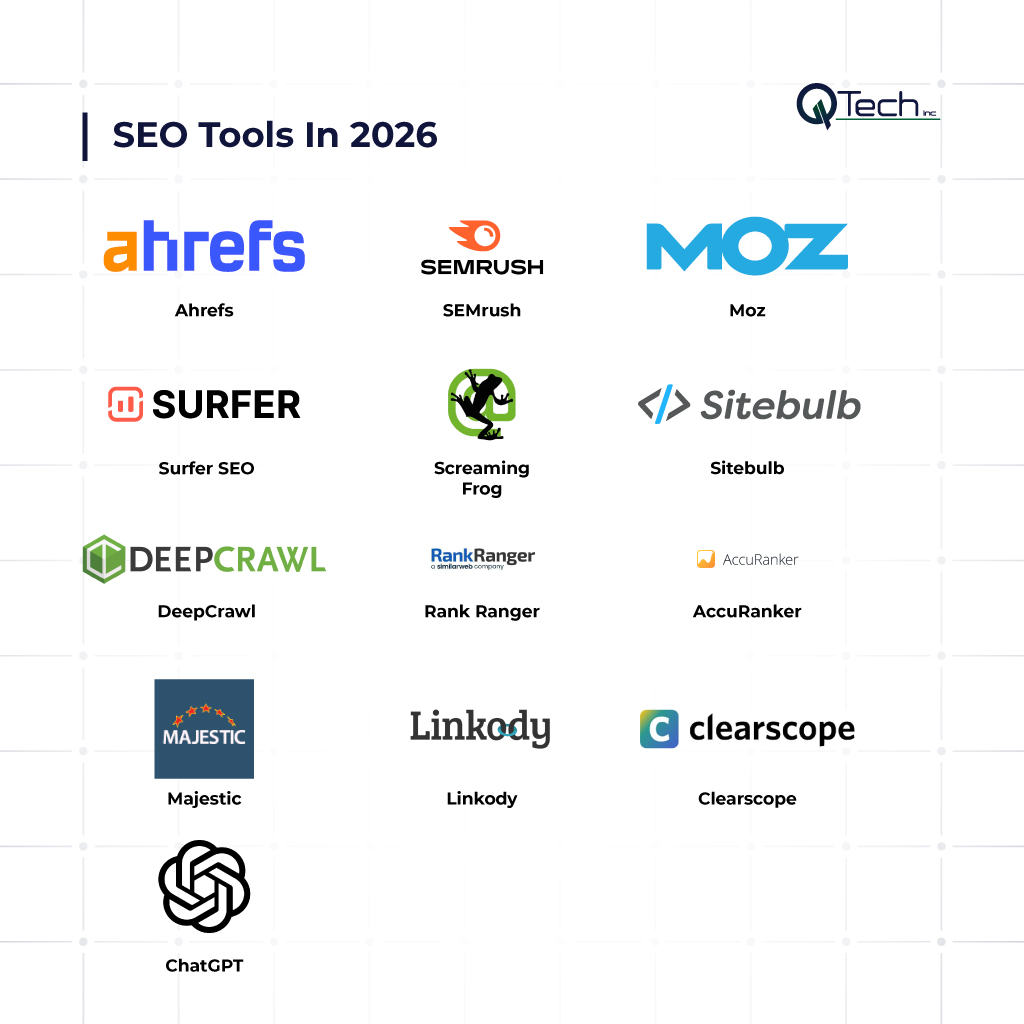
Recommended Platforms – Ahrefs, SEMrush, Moz
Ahrefs is widely used for competitive insights and link intelligence, SEMrush is popular for integrated research and reporting workflows, and Moz offers a streamlined approach with clear metrics. The key is consistency: pick a platform, define a weekly cadence, and turn insights into actions.
Tool #2: SEO Audit & Site Health Checker
What It Does
A technical seo audit tool crawls your site the way search engines do and highlights issues that limit visibility: indexation problems, crawl errors, redirects, broken links, thin pages, and weak internal linking. It also helps validate foundational elements such as XML sitemaps, so discovery and indexing are reliable.
Because many issues are invisible to non-technical teams, audit tooling is what converts “we think something is wrong” into a prioritized list of fixes, with re-crawls that confirm progress. It is also one of the fastest ways to catch page-speed regressions and other slow pages that can degrade both rankings and conversion rates.
Why It’s Essential
Technical health is the foundation for performance. Even strong writing underperforms when templates are broken, pages are hard to crawl, or load times damage user experience. Regular website audits reduce risk, protect rankings, and remove friction that lowers conversion.
Audit reporting also aligns departments by providing specific URLs, issue types, and severity—making development work easier to scope and faster to validate.
Recommended Platforms – Screaming Frog, Sitebulb, DeepCrawl
Screaming Frog remains a go-to crawler for deep technical work, Sitebulb adds visualization that supports clearer prioritization, and DeepCrawl is often used for larger sites that need ongoing monitoring at scale.
Tool #3: Rank Tracking & Performance Monitoring
What It Does
Rank tracking tools monitor keyword positions over time across devices and locations. They show which pages gain traction, where declines are happening, and how visibility changes after updates.
Strong monitoring also connects rank tracking to engagement signals, helping you see whether higher positions lead to clicks and meaningful actions. Many teams also track SERP features (maps, snippets, “people also ask”) to understand share-of-voice beyond a single blue-link ranking.
Why It’s Essential
SEO is iterative, and you cannot improve what you do not measure. Rank tracking tools create a feedback loop that supports continuous refinement and stronger seo performance, especially in competitive categories where SERPs change quickly.
Monitoring also improves response speed. When teams can spot changes in near real time, they can investigate technical issues, indexing problems, or competitor moves before they turn into long-term setbacks.
Recommended Platforms – Rank Ranger, AccuRanker
Rank Ranger is often chosen for flexible reporting, while AccuRanker is known for speed and precision. Regardless of platform, define a rhythm: review weekly, diagnose declines, and assign fixes to specific pages and keywords.
Tool #4: Backlink & Link Building Tools
What It Does
Backlink analysis tools assess the links pointing to your site and how those links contribute to authority. They measure your backlink profile against competitors and help you track new and lost links.
They also analyze anchor text patterns and quality indicators, which is critical for understanding how search engines interpret relevance and trust. For teams running outreach, these tools can support prospect discovery, link reclamation, and reporting on what was earned from specific campaigns.
Why It’s Essential
Backlinks remain a strong credibility signal, particularly in competitive markets. Effective backlink analysis helps you understand what competitors are earning links for, then build stronger assets that deserve attention—rather than chasing volume.
These tools also help you detect low-quality patterns early, so link building stays aligned with reputation and long-term stability.
Recommended Platforms – Majestic, Linkody
Majestic is widely used for deep link intelligence and historical context, while Linkody supports monitoring and alerts. The practical goal is controlled growth: earn relevant links, protect quality, and track the impact on authority and rankings.
Tool #5: AI-Driven Content Optimization & Analytics
What It Does
A content optimization tool uses AI-powered analysis to identify common topic coverage among top-ranking pages and highlight gaps in your draft. It supports seo optimized content that better matches intent while staying original and brand-consistent.
When paired with analytics, content optimization becomes a continuous process: measure engagement, identify friction, update pages, and improve internal linking. With basic governance—templates, checklists, and review standards—you can scale production without sacrificing clarity or accuracy.
Why It’s Essential
For many businesses, content is the most scalable growth lever. AI SEO reduces research time, improves consistency, and helps teams iterate faster—especially when resources are limited, and the publishing pace needs to increase.
Used correctly, ai seo tools support experts rather than replacing them: humans define strategy and differentiation, while AI helps accelerate structure and refinement.
Recommended Platforms – Surfer SEO, Clearscope, ChatGPT
Surfer SEO is commonly used for on-page guidance, Clearscope for topic coverage and grading, and ChatGPT for ideation, outlining, and clarity-focused rewrites. A strong workflow is research, write, optimize, publish, and iterate based on performance.
How to Choose the Right SEO Tools for Your Strategy
Business Goals, Budget & Team Skillset
Start with business goals. Are you focused on lead generation, e-commerce, or local seo growth? Your objective should drive tool selection and success metrics. Then match tools to your team’s capability; the best platform is the one your team can operationalize consistently.
If your priority is stronger online visibility, you will typically need both technical auditing and content execution—supported by monitoring that proves progress.
Integrating Tools for Maximum Impact
The highest-performing teams connect the workflow: keyword research informs content planning, audits protect site health, rank tracking validates results, and backlink analysis supports authority. Integration prevents tool silos, reduces duplicated effort, and improves decision speed. When possible, standardize dashboards and reporting so stakeholders can see progress monthly and the team can set a quarterly roadmap based on what the data proves.
Conclusion.
In 2026, SEO rewards disciplined execution supported by reliable data. This “5 essential seo tools every expert uses a complete list” is not about collecting software—it is about building a repeatable system that improves performance over time.
When you combine the best keyword research tool for planning, a technical seo audit tool for stability, rank tracking tools for measurement, backlink analysis tools for authority, and a content optimization tool powered by AI, you create an SEO operation that is practical, scalable, and defensible—one that drives real business outcomes. With consistent reviews and clear ownership, the tool stack makes SEO less reactive and far more predictable for the business.
FAQ
Q: Is Google Search Console considered an SEO tool?
A: Yes, Google Search Console (GSC) is a vital, free SEO tool provided directly by Google. It is essential for monitoring your site’s presence in Google Search results. It provides unique data you can’t get elsewhere, like your top-performing queries, click-through rates, core web vitals reports, and alerts on indexing issues. It should be used in conjunction with third-party tools.
Q: Can I do SEO without expensive paid tools?
A: You can start with free tools, but there are limitations. A basic SEO toolkit using Google’s free suite (Search Console, Analytics, Keyword Planner) combined with a free crawler like Screaming Frog (500 URL limit) is a strong start. However, as you scale, paid tools provide more comprehensive data, competitor insights, automation, and efficiency that are necessary for professional results.
Q: What’s the difference between an SEO tool and a digital marketing platform?
A: An SEO tool is specialized for search engine optimization tasks (rank tracking, backlinks, technical audits). A digital marketing platform (like Semrush or Ahrefs) often bundles SEO tools with features for other channels like paid advertising (PPC), social media, and content marketing, providing a unified view of your online marketing efforts.
Q: How do I choose between Ahrefs, Semrush, and Moz?
A: All three are excellent. The choice often depends on your primary focus:
- Ahrefs is often favored for its unparalleled backlink database and explorer.
- Semrush is known for its breadth of features, including strong advertising and content research tools.
- Moz is praised for its user-friendly interface and great foundational tools like Link Explorer and the MozBar.
Most offer free trials; test them against your most frequent tasks to see which fits your workflow best.