
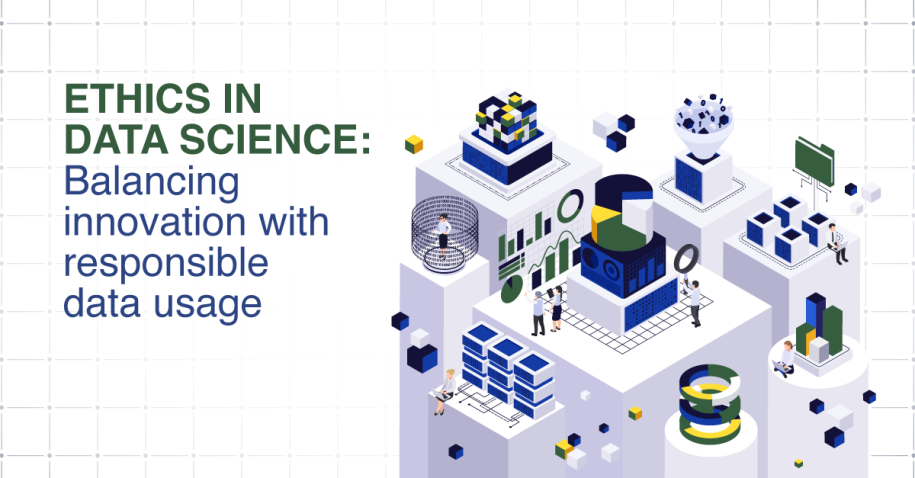
The digital economy runs on data. Businesses rely on insights from personal information, advanced analytics, and artificial intelligence to innovate and remain competitive. But with great opportunity comes great responsibility.
As organizations process sensitive data at scale, ethical challenges around fairness, transparency, accountability, and privacy are impossible to ignore. Striking the right balance is not just about achieving gdpr compliance or aligning with state laws,it’s about establishing ethical data practices that build trust with customers while fostering innovation.
Ethics in data science, balancing innovation with responsible data usage, is no longer optional; it is a strategic imperative. Companies that fail to implement robust data protection principles risk not only reputational harm but also regulatory fines under data privacy laws such as the General Data Protection Regulation (GDPR), the Gramm-Leach-Bliley Act, and other global frameworks. At Q-Tech Inc., we believe that embracing data ethics is the key to unlocking innovation while ensuring responsible stewardship of information.
The Core Pillars of Data Ethics: A Breakdown
The core pillars of data ethics serve as a blueprint for organizations navigating the complexities of data-driven transformation. Data scientists and leaders alike must understand how these principles affect everything from algorithms to customer trust.
- Privacy
- Fairness
- Transparency
- Accountability

Privacy & Informed Consent: Beyond GDPR Compliance
Data privacy regulations such as the GDPR apply to all organizations that process personal information belonging to EU residents, regardless of where they are located. These laws emphasize transparency in how data is collected, processed, and stored. But compliance alone is not enough. Companies must move beyond a checkbox mentality to adopt ethical data practices that prioritize informed consent.
For example, appointing a data protection officer ensures oversight of processes that handle sensitive data. Ethical data use also means clearly communicating to users how their information will be used, stored, and shared. By embracing responsible practices that go beyond baseline gdpr compliance, businesses not only meet legal requirements but also demonstrate a commitment to respecting individuals’ rights.
Fairness & Mitigating Algorithmic Bias
Algorithmic bias represents one of the greatest ethical challenges facing modern artificial intelligence systems. When algorithms are trained on skewed or incomplete datasets, they may unintentionally discriminate against specific groups. Bias in hiring systems, financial lending models, or healthcare diagnostics can have real-world consequences that undermine fairness and equity.
To address this, organizations must integrate tools that monitor and mitigate bias across data practices. Conducting algorithmic impact assessments, diversifying datasets, and ensuring robust data collection are crucial steps toward ethical AI. Businesses must recognize that fairness is not a one-time fix,it requires ongoing evaluation and governance.
Transparency & Explainability (The “Black Box” Problem)
One of the core pillars of data ethics is transparency. Many artificial intelligence models function as “black boxes,” making decisions that even their creators struggle to explain. This lack of explainability raises significant concerns about accountability and trust.
By prioritizing explainable AI (XAI), organizations can create models that provide clarity on how decisions are made. Transparent systems not only support data protection law requirements but also empower customers to understand and challenge outcomes that affect them. Embedding data privacy and protection into transparency strategies ensures that innovation remains ethical and aligned with user expectations.
Accountability: Who is Responsible When an AI Fails?
When an AI system fails,whether by misclassifying data, making biased decisions, or violating privacy,who is held accountable? Responsibility can lie with the data controller, the developers, or even the organization as a whole. Clear accountability structures are necessary to enforce ethical IT governance and align with international data protection principles.
Accountability also means preparing for regulatory scrutiny. Member states across the EU, alongside U.S. state laws, expect organizations to demonstrate ethical governance frameworks. By embedding accountability into governance models, companies can minimize risks and build confidence in their digital solutions.
How Data Ethics Impacts Business Innovation
Data ethics does not hinder innovation,it enhances it. When organizations respect privacy and fairness, they create a foundation for sustainable growth.
Building Customer Trust and Brand Reputation
Trust is the currency of the digital era. Customers are more likely to share personal information when they believe their data will be treated responsibly. Ethical data practices demonstrate respect for customer privacy, helping businesses build trust and maintain brand loyalty.
Incorporating data ethics into business models signals a commitment to transparency and fairness, making it easier to attract new clients and retain existing ones. Ethical challenges become opportunities to strengthen customer relationships and position the brand as a leader in responsible innovation.
Navigating Legal and Regulatory Compliance
Ethics in data science also provides a strategic advantage in navigating the complex landscape of data privacy laws. From GDPR to the Gramm-Leach-Bliley Act, businesses face a maze of regulations that govern how they process personal information.
Understanding how gdpr applies to your organization, or how state laws interact with federal regulations, is essential. Ethical AI governance ensures compliance across multiple jurisdictions while reducing the risk of penalties. Organizations that embed ethical considerations into their operations position themselves ahead of competitors who treat compliance as an afterthought.
Building an Ethical Data Science Framework for Your Organization
Creating a culture of ethical responsibility requires more than policies,it requires actionable steps that data scientists and leaders can implement across their organizations.
Step 1: Conduct an Algorithmic Impact Assessment
Before deploying AI models, organizations should assess potential impacts on fairness, privacy, and accountability. These assessments evaluate how a system processes personal data, detects risks of algorithmic bias, and aligns with data protection law requirements.
Step 2: Implement Technical Tools for Bias Detection
Bias detection tools allow businesses to monitor and adjust models throughout their lifecycle. By leveraging advanced analytics, data scientists can ensure robust data collection and mitigate risks tied to sensitive data mismanagement. These tools strengthen governance structures and ensure that ethical challenges are proactively addressed.
Step 3: Establish an Ethics Review Board
An ethics review board serves as an oversight body that evaluates data practices and ensures compliance with ethical data standards. This board should include diverse stakeholders, from technical experts to legal professionals, who can assess risks under multiple frameworks, including international data privacy regulations.
Step 4: Prioritize Explainable AI (XAI) Models
Explainable AI models reinforce transparency and support trust-building with customers. By choosing models that are explainable, organizations demonstrate their commitment to data transparency and ethical governance. Integrating ethical IT governance ensures that accountability and fairness are embedded at every level.
Conclusion & How Q-Tech Inc. Supports Ethical Data Science
The future of innovation lies in balancing cutting-edge artificial intelligence with responsible governance. Data ethics ensures that organizations can innovate without compromising customer trust, compliance, or accountability. By addressing algorithmic bias, prioritizing explainable AI, and aligning with data protection principles, businesses can transform ethical challenges into opportunities.
Q-Tech Inc. supports businesses by helping them establish frameworks that align with data privacy laws, data protection principles, and international compliance standards. From appointing a data protection officer to guiding companies through GDPR, state laws, and sector-specific requirements, Q-Tech Inc. provides tailored solutions that safeguard sensitive data.
Through our integrated IT and digital services, we empower businesses to implement ethical data practices, strengthen AI governance, and build trust with customers. At Q-Tech Inc. we believe that ethics in data science is not a barrier to innovation,it is the foundation of a responsible, forward-looking digital strategy.
FAQ
Q1 What are ethics in data science?
Answer – Ethics in data science is a field of study that evaluates moral issues related to data. It involves applying ethical principles to the collection, analysis, and use of data. The core goal is to ensure that data-driven technologies are used responsibly, fairly, and transparently to avoid harm, prevent bias, protect privacy, and build trust, all while enabling beneficial innovation.
Q2 What is the difference between data privacy and data security?
Answer – Data privacy is about the right to control how your personal data is collected and used. Data security is about the measures taken to protect that data from unauthorized access or breaches. A business can have excellent security but still violate privacy if it uses data without consent.
Q3 What are common ethical issues in data science?
Answer – Key concerns include data privacy violations, algorithmic bias, lack of transparency, and surveillance misuse.
Q4 How can we prevent bias in AI and machine learning?
Answer – Preventing bias requires a multi-faceted approach:
1) Diverse Data: Audit training datasets for representation gaps.
2) Diverse Teams: Include people from different backgrounds in the development process.
3) Technical Solutions: Use bias-detection and mitigation toolkits (e.g., IBM’s AIF360).
4) Continuous Monitoring: Regularly test models in production for discriminatory outcomes.
5) Transparency: Document the data and processes used to build models.