
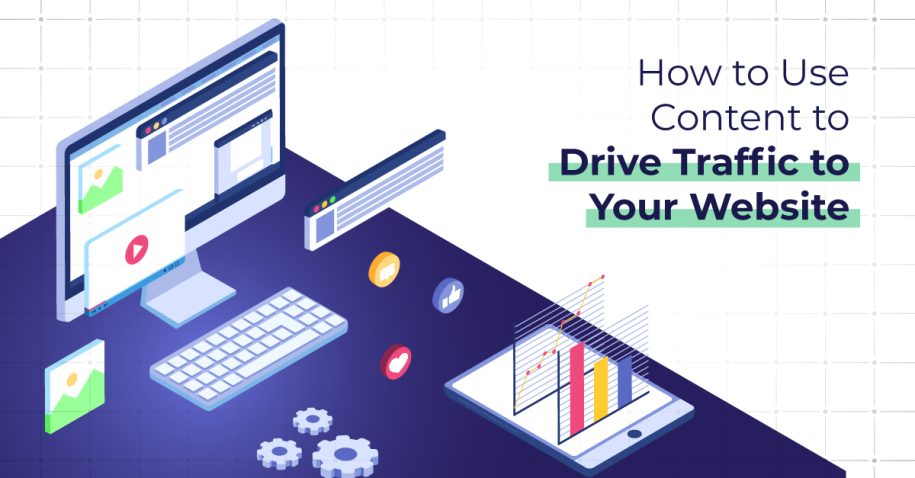
In today’s highly competitive digital world, driving traffic to your website is a crucial aspect of growing your business. Increased website traffic leads to greater brand visibility, more engagement, and, ultimately, higher conversions. One of the most effective ways to achieve this is by leveraging content marketing strategies.
Content plays a vital role in attracting your target audience, improving search engine rankings, and establishing your brand as a thought leader. With the right approach, well-crafted content can help you tap into new markets and improve overall website performance. But how exactly does content influence traffic, and what strategies should you employ to see significant results?
In this guide, we’ll explore how to use content to drive traffic to your website effectively. Whether you’re new to content marketing or looking to refine your approach, these strategies will help you generate more visits and enhance your online presence.
Why Content Marketing Still Works for Traffic Growth
In 2025, the digital landscape is more competitive than ever, yet content marketing for website traffic remains one of the most reliable strategies. Businesses can no longer rely solely on paid ads or traditional outreach; instead, they must create content that builds long-term trust. When you invest in a strong content marketing strategy, you provide potential customers with resources that educate, inform, and inspire them to take action.
The foundation of this approach lies in creating lead generation content that resonates with your target audience. By aligning content with both immediate needs and long-term goals, businesses can attract qualified leads, establish credibility, and increase website traffic consistently.
Aligning content with search intent and long-term value
Search intent is at the core of every successful content marketing funnel. When your content answers questions people are already asking on a search engine, you’re meeting them where they are. A blog post that solves a specific problem is not only useful but also builds loyalty. This means that businesses must create content with both short-term and long-term marketing objectives in mind, ensuring each piece can support broader campaigns while remaining relevant over time.
The compounding effect of evergreen content
Evergreen content,content that remains useful year after year,creates a compounding effect. Unlike ads that stop working once the budget dries up, evergreen blog posts, videos, or infographics continue attracting traffic to your website long after publishing. Optimizing your content with the right keyword ideas ensures your work remains visible as search volume evolves. Over time, a library of evergreen pieces becomes a powerful content strategy that drives continuous traffic to your site and supports your sales team by providing qualified leads.
How to Use Content Marketing to Drive Website Traffic
- Step 1: Research & Plan Your Content
- Step 2: Create High-Quality, SEO-Friendly Content
- Step 3: Optimize & Publish Strategically
- Step 4: Distribute Content Effectively
- Step 5: Measure, Adjust & Scale

Step 1: Research & Plan Your Content
No content marketing plan succeeds without strong preparation. Before diving into content creation, you need to know what your target market is searching for, who your competitors are, and how your products or services can solve specific problems.
Keyword research/topic discovery
Keyword research helps you discover what your audience is actively searching for. By identifying keyword ideas with high search volume, you ensure your content matches demand. This process not only guides your content strategy but also helps position your brand as an authority. Tools like SEMrush, Ahrefs, or Google Keyword Planner allow you to see trends, estimate competitiveness, and map out opportunities for blogging for business.
Competitor content audit
Your competitors are already publishing content,and their performance offers valuable insights. A competitor content audit identifies what’s working for them, what gaps exist, and where you can outperform. By studying their most engaging blog posts, you can refine your own marketing plan and develop strategies to increase website traffic through originality and relevance.
Defining audience personas
Audience personas bring clarity to your efforts. A persona is a fictional but research-backed profile of your target audience, detailing their pain points, goals, and buying behaviors. When you create content that directly addresses these needs, you generate qualified leads and build trust. Personas ensure that every blog post or piece of lead generation content speaks to a real-world challenge faced by your potential customers.
Step 2: Create High-Quality, SEO-Friendly Content
Once the groundwork is complete, it’s time to create content that blends storytelling, strategy, and technical precision. A strong content marketing funnel relies on producing valuable resources in formats your audience prefers.
Format choices: blogs, infographics, video, audio
Different audiences consume information differently. Blogs are powerful for detailed explanations, while infographics summarize data visually. Videos and podcasts engage those who prefer auditory or visual learning. A robust content marketing strategy often involves experimenting with multiple formats to maximize traffic to your site. The right mix ensures you meet your target audience where they are.
On-page SEO: headings, metadata, internal links
Your content must be optimized for both readers and search engines. Elements like H1, H2, and H3 headings, meta descriptions, and on-page SEO practices boost visibility. Internal links guide readers to related resources, extending session duration and strengthening your site’s authority. When you optimize every blog post, you increase the likelihood of ranking high on a search engine results page.
Use visuals & multimedia to improve engagement
Visual storytelling is a critical part of content creation. From high-quality images to interactive charts, multimedia enhances the user experience and helps explain complex ideas. These elements not only keep readers engaged but also signal to search engines that your content is valuable and comprehensive.
Step 3: Optimize & Publish Strategically
Great content is wasted if it isn’t properly optimized and published with intention. Every detail matters in ensuring your efforts bring measurable results.
URL structure & canonical tags
Clean, keyword-rich URLs make your content easier for both users and search engines to understand. Canonical tags prevent duplicate content issues, ensuring that your traffic is directed to the correct page. This improves your site’s overall SEO health and ensures your content marketing funnel delivers consistent results.
Mobile-responsive design & page speed
Most users now access content through mobile devices. A mobile-responsive design ensures your blog posts look professional across screens. Pairing this with fast page speeds reduces bounce rates and creates a smoother experience for potential customers exploring your products or services.
Schema markup & featured snippet optimization
Schema markup tells search engines more about your content, improving your chances of appearing in rich snippets. Optimizing for featured snippets helps you capture prime real estate at the top of results, boosting visibility and driving more traffic to your website.
Step 4: Distribute Content Effectively
Publishing is just the beginning. Distribution is where your efforts start turning into measurable results.
Social media & content syndication
Sharing content on social media platforms extends its reach, allowing you to tap into conversations and communities that align with your target market. Content syndication on partner websites also introduces your brand to new audiences, supporting your marketing objectives and driving additional traffic to your website.
Email newsletters & drip campaigns
Email remains one of the most effective ways to nurture relationships. By sending regular newsletters, you provide consistent value to your audience. Automated drip campaigns guide potential customers through the content marketing funnel, building trust over time until they’re ready to connect with your sales team.
Partnerships, guest posting, influencer outreach
Collaborations can amplify your reach. Partnering with industry peers, contributing guest posts, or leveraging influencer outreach exposes your content to audiences already interested in related topics. This not only generates qualified leads but also strengthens your brand’s authority within your niche.
Step 5: Measure, Adjust & Scale
Without measurement, you can’t improve. Analytics show whether your content is performing and where adjustments are needed.
Metrics to watch: organic traffic, session duration, top pages
Tracking organic traffic reveals whether your content is ranking and attracting new visitors. Session duration and top-performing pages provide insights into engagement levels and content effectiveness. These metrics inform whether your content marketing strategy is meeting expectations.
A/B testing headlines, CTAs, formats
Experimentation is key to optimizing your content. A/B testing headlines, calls-to-action, and formats shows what resonates most with your audience. Even small adjustments can dramatically increase website traffic and improve lead generation content performance.
Repurpose high-performing content
Don’t let great content sit idle. Repurposing high-performing blog posts into videos, infographics, or podcasts maximizes their lifespan and reach. This approach helps you create a content marketing ecosystem where every piece works together to support long-term growth.
Common Pitfalls to Avoid
Even the best strategies fail if common mistakes aren’t avoided.
Spreading resources too thin
It’s tempting to do everything at once, but spreading resources across too many channels dilutes impact. Focus on a content strategy that aligns with your marketing objectives and scale once results are proven.
Ignoring SEO basics
Even the most creative content will fail without SEO fundamentals. Forgetting to optimize headings, metadata, or internal links limits visibility and weakens your overall strategy. Ensure every blog post follows content marketing and SEO best practices.
Not updating old content
Search engine algorithms reward freshness. Neglecting to update older posts risks losing rankings and relevance. Regularly revisiting and optimizing your content keeps it aligned with current keyword ideas and ensures continued traffic to your site.
Ready to Build a Traffic-Generating Machine? Partner with Q-Tech Inc.
Content marketing is no longer optional,it’s a necessity for businesses serious about growth. By developing a marketing plan that emphasizes keyword research, content creation, and consistent optimization, you create a system that brings in qualified leads and supports your sales team long-term.
At Q-Tech Inc., we specialize in helping businesses create a content marketing strategy that delivers real results. From blogging for business to advanced SEO content campaigns, our digital marketing experts can help you increase website traffic, generate potential customers, and strengthen your brand authority.
It’s time to transform your approach. Let’s create a content marketing system that drives measurable results. Partner with Q-Tech Inc. today and start building your traffic-generating machine.
FAQ
Q1 How long does it take for content marketing to drive traffic?
Answer – Content marketing is a long-term strategy, not a quick fix. It typically takes 3 to 6 months of consistent effort to begin seeing significant organic traffic results. This timeline allows for Google to discover, index, and rank your content. The key is consistency and quality; publishing regularly and creating comprehensive, authoritative content will accelerate the process and build a sustainable traffic stream over time.
Q2 What is a content marketing funnel?
Answer – A content marketing funnel is a strategic model that maps out the customer journey and provides content for each stage. It typically includes three phases:
1) Top of Funnel (Awareness): Blogs, articles, and social media posts that attract new visitors.
2) Middle of Funnel (Consideration): E-books, whitepapers, and webinars that build trust and showcase expertise.
3) Bottom of Funnel (Decision): Case studies, product demos, and consultations that convert leads into customers.
Q3 How does content marketing help with SEO?
Answer – Content marketing and SEO are deeply linked. High-quality content provides valuable information that search engines like Google want to show users. By targeting relevant keywords, building authority through consistent posting, and earning backlinks, content marketing directly improves your site’s search engine rankings and drives organic traffic.
Q4 How do I promote my content to get more traffic?
Answer – Key tactics include:
1) Social Media: Share your content multiple times across different platforms.
2) Email Newsletters: Share new content with your subscribed audience.
3) Community Engagement: Share insights in relevant online forums (Reddit, LinkedIn groups, Quora) and link back to your full article when it provides value.
4) Outreach: Email influencers or other websites in your niche to let them know about your content, which can earn valuable backlinks.