

In a world where customer attention is the most valuable currency, having a clear digital marketing plan can mean the difference between growing your brand and getting lost in the noise. A structured plan helps businesses stay organized, define objectives, and make smarter investments across channels. In this guide, we’ll walk through how to create a digital marketing plan: the ultimate guide — from research and audience segmentation to execution, measurement, and optimization — so your business can achieve sustainable, data-driven growth.
Why You Need a Digital Marketing Plan
A successful digital marketing plan for a business is not just a checklist; it’s a blueprint for success. It aligns every campaign, post, and advertisement with your broader business objectives, ensuring consistent results across multiple channels.
Aligning Marketing Efforts with Business Goals
Every digital initiative should connect directly to your organization’s core mission. Setting clear goals marketing ensures your strategy isn’t just about creating noise but driving measurable impact — such as higher conversion rates, more qualified leads, and stronger customer relationships. A clear marketing plan defines how every activity — from email marketing to SEO — contributes to growth.
Avoiding Wasted Budget and Channel Fragmentation
Without a defined roadmap, brands risk overspending on platforms that don’t reach their target audiences. A digital plan helps allocate budgets wisely, streamline messaging, and prevent duplicate efforts across teams. It allows for strategic marketing channel selection, ensuring resources are focused on areas with the highest ROI — whether it’s content marketing, social media management for business, or paid advertising.
Enabling Measurable Results & Accountability
When your campaigns are backed by a plan, you gain visibility into performance through metrics and dashboards. Tracking success via a kpi dashboard provides clarity on what’s working, where adjustments are needed, and how results tie back to business objectives. This approach fosters accountability and continuous improvement.
Step 1 — Situation Analysis & Research
Before building a strategy, it’s crucial to understand your current digital footprint. This stage helps identify strengths, weaknesses, and opportunities that shape your marketing direction.
SWOT Analysis (Strengths, Weaknesses, Opportunities, Threats)
Start by conducting a SWOT analysis to evaluate internal and external factors. Recognizing your competitive advantages, challenges, and market trends ensures you’re not creating a plan based on assumptions but on insight. This foundation will influence your marketing strategy, helping you make informed decisions across campaigns.
Audit Existing Digital Presence (Website, Social, SEO, Content)
Next, assess your current digital performance. Review website analytics, social media engagement, SEO rankings, and past blog posts to see what resonates most with potential customers. Check for content gaps, broken links, or outdated assets that need optimization. This process allows you to refine your content marketing strategy and identify new opportunities.
Competitive Analysis & Market Trends
A thorough competitive analysis helps benchmark your efforts against industry leaders. Examine competitors’ messaging, visuals, and ad strategies. Identify which search engines they dominate and which keywords they’re ranking for. Understanding these trends provides clarity on where your business can innovate and gain an edge.
Step 2 — Define Goals & KPIs (SMART Goals)
Once your baseline is clear, define objectives that are realistic, trackable, and aligned with your company’s mission.
What Does Success Look Like? (Traffic, Leads, Revenue)
Success metrics will differ based on your goals. For an e-commerce brand, it might mean increasing monthly sales by 15%. For a B2B company, it could be doubling qualified leads in six months. Setting SMART goals (Specific, Measurable, Achievable, Relevant, and Time-bound) ensures your marketing actions have purpose.
Choose Relevant Key Performance Indicators
Decide which KPIs reflect success for each channel — website traffic, click-through rates, or lead quality. Use your kpi dashboard to track KPIs regularly, ensuring campaigns remain aligned with business outcomes. This stage allows you to connect actions to results in a measurable way.
Step 3 — Audience Research & Segmentation
Knowing who you’re speaking to is at the heart of every effective marketing plan. Understanding customer behaviors, motivations, and pain points allows for precise targeting and personalized messaging.
Build Buyer Personas
Create detailed buyer personas that reflect your ideal customers. Include demographics, goals, challenges, and even job titles. Understanding your customer personas helps you design campaigns that resonate with real needs. You can use a buyer persona template to visualize audience profiles and guide your content calendar and messaging.
Map Customer Journey & Touchpoints
Outline the complete journey — from awareness to post-purchase. This helps you identify every touchpoint where your audience interacts with your brand, whether through social media posts, email marketing, or search. By understanding these paths, you can craft a consistent experience that turns leads into loyal customers.
Identify Audience Pain Points, Platforms, Behaviors
Gather insights from analytics tools, surveys, and social listening to identify where your target audiences spend their time and what problems they’re trying to solve. Addressing pain points directly in your content — from FAQs to tutorials — positions your brand as the trusted solution.
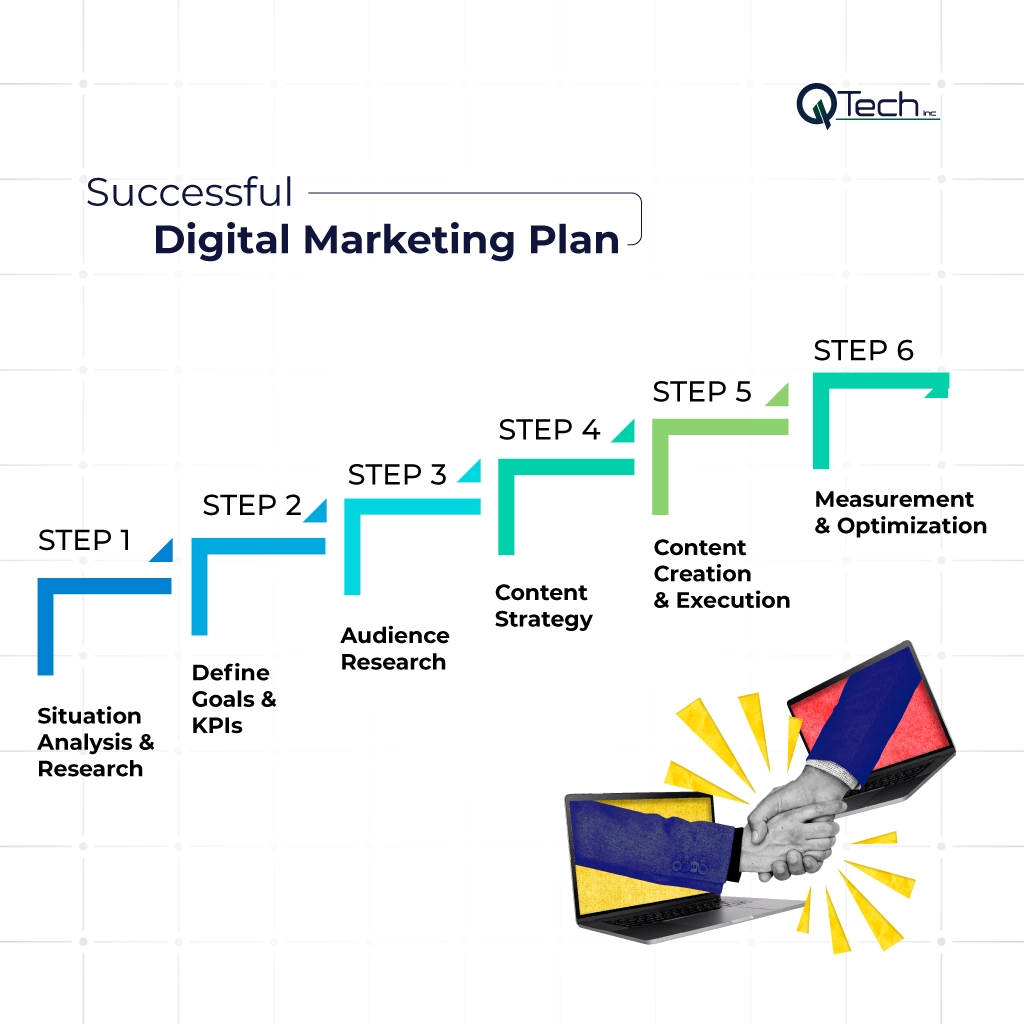
Step 4 — Strategy & Channel Mix
This phase transforms insight into execution by choosing the right platforms, tools, and approaches to meet your goals.
Owned, Earned, Paid Media
A balanced approach combines owned media (your website and blog), earned media (press and organic mentions), and paid media (advertising). Each serves a unique function — together, they form a powerful ecosystem. By leveraging multiple channels, you enhance visibility and authority.
Content Strategy: Blog, Video, Social, Email
An integrated content marketing approach builds credibility and drives traffic. Create blog posts, videos, and newsletters that deliver value to potential customers. Use content marketing to position your brand as an expert in your field. Blend your efforts with engaging social media content and email marketing campaigns that nurture leads through consistent communication.
SEO vs PPC vs Social Channels vs Email — Selecting the Right Mix
Each marketing channel selection depends on your business goals and audience. SEO helps increase organic visibility in search engines, PPC provides instant traffic, and social media builds engagement. Meanwhile, email marketing strengthens long-term relationships. Finding the right balance ensures maximum impact while staying within your marketing budget allocation.
Step 5 — Tactics & Execution Plan
With a strategy in place, it’s time to organize and execute. This stage is about turning ideas into action with timelines, tools, and structure.
Calendar & Campaign Planning
A content calendar or social media content calendar helps schedule campaigns, ensuring consistent posting and alignment across departments. Using social media calendar templates makes it easier to plan visuals, captions, and CTAs while maintaining a cohesive message.
Content Creation, Design, Messaging
Craft engaging content that reflects your brand’s personality. Focus on storytelling that connects emotionally and intellectually with your audience. Every social media post and email should reinforce your brand’s promise and values, while your visuals maintain professional consistency.
Budget Allocation per Channel
Strategic marketing budget allocation prevents overspending and allows you to invest in what works best. Allocate resources to channels showing the highest ROI, such as SEO or PPC, while maintaining funds for creative experimentation.
Tools, Automation, and Resource Planning
Leverage digital tools and automation to streamline your workflow. Use CRM systems, analytics platforms, and content schedulers to manage marketing strategy execution efficiently. These resources help your team remain agile, scalable, and results-focused.
Step 6 — Measurement, Reporting & Optimization
No marketing plan is complete without evaluation. Measuring results and making improvements ensures sustainable performance over time.
Analytics Setup: Dashboards, Tracking
Set up a central kpi dashboard to track analytics across campaigns. Measure key data such as traffic, engagement, and sales. This transparency makes it easier to identify strengths and fix underperforming areas.
Test & Iterate (A/B Tests, Experiments)
Continuous testing is essential for growth. Use A/B testing to refine landing pages, subject lines, and calls-to-action. Small improvements can lead to big gains in conversion rates, allowing your marketing to evolve intelligently.
Reporting Cadence & Feedback Loops
Create regular reports — weekly or monthly — to evaluate results, share insights, and update the team. Transparent reporting fosters collaboration and accountability, making sure everyone stays aligned toward common goals.
Conclusion: How Q-Tech Inc. Can Help You Build & Execute Your Plan
Creating an effective digital marketing plan takes strategy, insight, and execution. From defining objectives to managing analytics, every step plays a role in achieving growth. We specialize in helping businesses develop comprehensive plans that turn strategy into measurable success.
Our experts design data-driven campaigns, optimize content marketing, and build customer personas that align with your goals. Whether you need help designing a content marketing strategy, building a buyer persona, or managing a social media campaign, Q-Tech Inc. provides the expertise and tools to transform ideas into results.
FAQ
How is a digital marketing plan different from a strategy?
Answer – A strategy is the high-level thinking and choices about your target market and value proposition. A plan is the document that outlines the specific steps, tactics, resources, and timeline to execute that strategy. The strategy is the “why,” the plan is the “how, who, and when.”
How much should a small business budget for digital marketing?
Answer – A common rule of thumb is to allocate 7–8% of gross revenue for marketing, with a portion of that going to digital. However, a more strategic approach is to base it on your Customer Acquisition Cost (CAC) and Lifetime Value (LTV). Start with what you can afford to test and measure, then scale what works.
What is the most important part of a marketing plan?
Answer – The most critical part is defining your target audience and their buyer journey. Without a deep understanding of who you’re selling to and what they need at each stage, even the most well-funded plan will fail to connect. Everything else—channels, messaging, content—flows from this understanding.
How often should I update my digital marketing plan?
Answer – You should review performance monthly and conduct a formal plan update quarterly. The digital landscape changes too quickly for an annual plan to remain effective. A quarterly review allows you to double down on what’s working, cut what isn’t, and adapt to new opportunities or competitive threats.


