
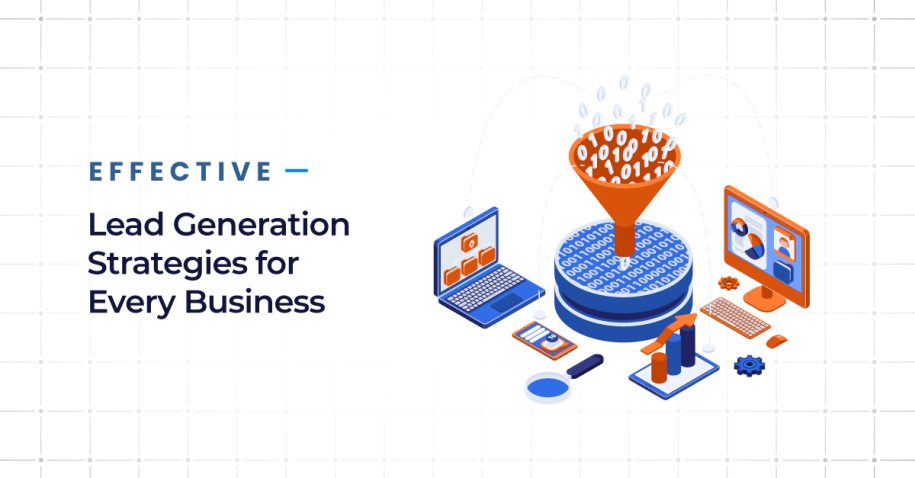
In 2026, buyers do more research, compare more options, and expect faster answers than ever. That means the companies winning new opportunities aren’t necessarily the loudest—they’re the clearest, the most helpful, and the easiest to do business with. This guide breaks down strategies for every business in 2026, with practical steps you can apply whether you sell locally, nationally, B2B, or direct-to-consumer.
The best lead generation tactics don’t come from a single channel. They come from aligning your marketing strategies, your website, your content, and your follow-up into one system. When your message matches your target audience, your offer is valuable, and your handoff to the sales team is clean, lead generation stops feeling like “random wins” and starts becoming predictable.
Lead Generation Strategies for Every Business
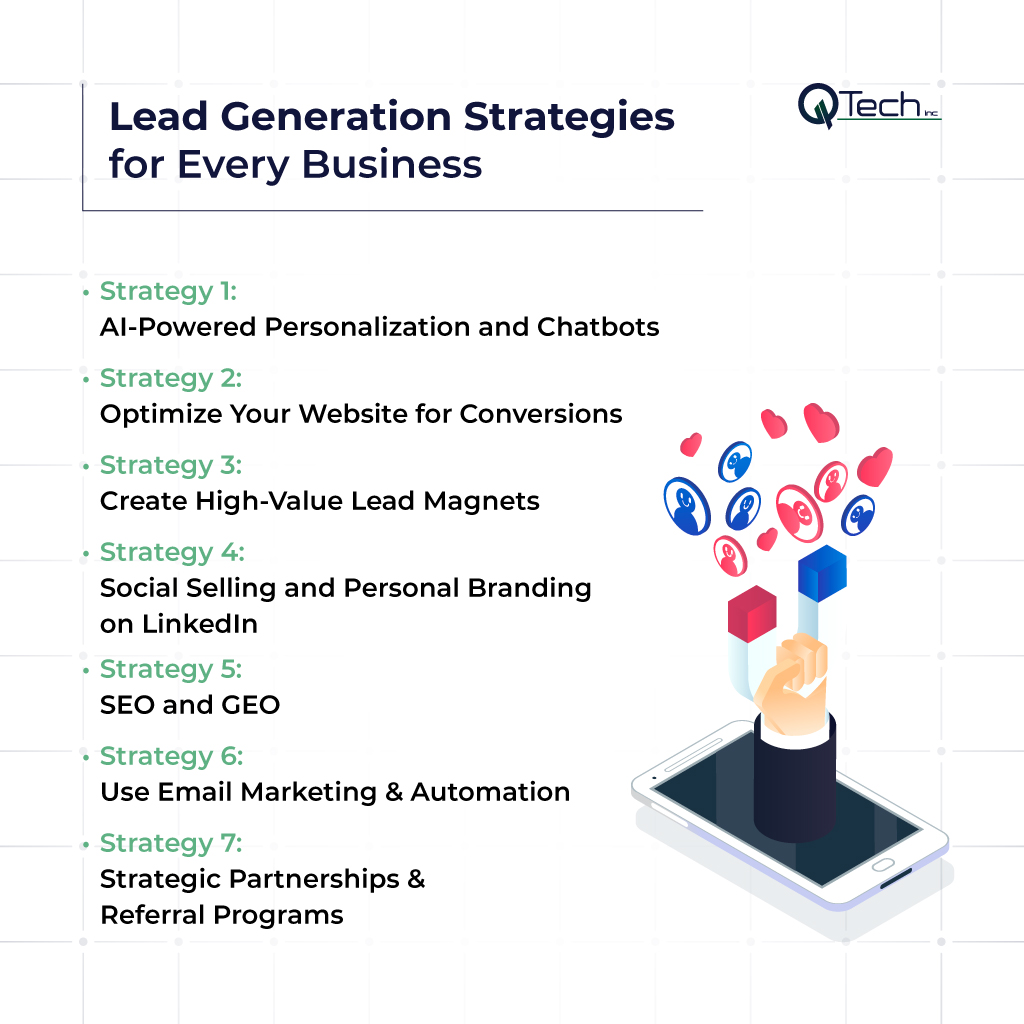
Strategy 1: AI-Powered Personalization and Chatbots
AI-powered personalization is about relevance at scale. Instead of one generic message for everyone, you use behavior (pages visited, services viewed, past engagement) to tailor what a visitor sees next. Done well, it improves conversion rates because people feel like you “get” their problem quickly, without making them hunt.
A practical starting point is a chatbot that answers common questions and routes inquiries to the right place. In 2026, chatbots aren’t just scripted pop-ups; they can qualify intent, share resources, and collect key details before a human ever steps in. Pair that with marketing automation—like follow-up emails, lead scoring, and meeting scheduling—and you create a smooth path from first visit to booked call.
Personalization also means designing choices. If someone is reading about cybersecurity, show a short checklist offer. If they’re comparing web services, show a portfolio snippet and a case study. These micro-moments reduce friction, build trust, and turn browsing into action—especially when ai powered search is surfacing “best answers” instead of just blue links.
To keep personalization credible, balance automation with transparency. Let people know when they’re chatting with AI, provide a clear “talk to a person” option, and capture only the details you need to help. When you respect privacy and shorten time-to-answer, you earn trust—and trust is the fuel behind modern b2b lead generation.
Strategy 2: Optimize Your Website for Conversions
Your website is not a brochure; it’s your main conversion engine. Even strong digital marketing for lead generation will underperform if the site is slow, confusing, or unclear about what happens next. Optimization starts with the fundamentals: clear value proposition, clean navigation, fast load times, and mobile-first design.
Next, focus on the mechanics of lead capture. Place an opt-in form where intent is highest—service pages, pricing explanations, and “how it works” sections. Keep the form short, but ask what you need to qualify the lead and route it correctly. Then make the next step obvious: schedule a call, request a quote, or get an audit.
This is where custom web development for lead capture becomes a competitive advantage. The best-performing sites are tuned to your audience, offers, and conversion paths, with clear CTAs, smart routing, and integrations that reduce manual work. For example, a form can trigger an internal notification, assign the lead in your CRM, and start a tailored follow-up sequence automatically.
Finally, treat every page like a conversation. Use proof (reviews, short results bullets, logos), reduce anxiety (FAQs, security badges, guarantees where appropriate), and remove distractions. Track scroll depth, form drop-off, and call clicks, then run small tests—headline changes, simpler layouts, stronger CTAs—so your conversion rate improves steadily instead of relying on one big redesign.
Strategy 3: Create High-Value Lead Magnets
A lead magnet is a value exchange: you give something genuinely useful, and the visitor shares an email address. The fastest way to strengthen lead generation strategies is to stop offering “generic PDFs” and start offering something that saves time, reduces risk, or helps someone make a decision.
Start with types of content that fit your buyer stage. Early-stage prospects may want a checklist or a quick calculator. Mid-stage prospects may want comparison guides, templates, or short video walkthroughs. Late-stage prospects often respond to case studies, pricing explainers, and “what to expect” guides.
For many b2b lead generation efforts, white papers still work—when they’re specific, skimmable, and tied to a measurable business outcome. The key is not the format; it’s the promise. “Reduce onboarding time by 30%” beats “Industry Trends Report” because it speaks to urgency and impact.
Make the offer match the page. If someone is reading about managed IT, offer a “30-point IT readiness assessment.” If they’re reading about marketing, offer a “90-day content marketing strategy outline.” This is content marketing for leads in action: the content teaches, the offer deepens trust, and the follow-up nurtures the conversation without pressure.
Strategy 4: Social Selling and Personal Branding on LinkedIn
LinkedIn remains one of the most efficient channels for relationship-driven growth, especially in B2B. But social selling isn’t about spamming DMs; it’s about showing up consistently with expertise, proof, and a point of view that attracts the right people.
A simple rhythm works well: publish helpful social media posts that answer real questions, comment thoughtfully on industry conversations, and share client wins without overhyping them. Keep your social media content focused on outcomes, lessons learned, and “how we solved it” stories. When prospects see you solve problems publicly, they trust you privately.
Tie your presence back to conversion with clarity. Use a strong profile headline, add a pinned post with your best lead magnet, and link to a simple landing page that matches what you talk about. When your personal brand and your offer are aligned, LinkedIn becomes a steady source of warm conversations, not a numbers game.
Strategy 5: SEO and GEO (Generative Engine Optimization)
Search is evolving. Traditional seo still matters—technical health, relevance, and authority—but more discovery is happening through AI summaries and answer engines. That’s why geo for lead generation is becoming a serious differentiator: your content must be understandable, quotable, and structured for both humans and machines.
A solid geo strategy starts with intent-based pages. Build service pages that answer “who it’s for, what it includes, what it costs, and what happens next.” Then support them with blogs that address specific problems and use cases. Add schema markup so search engines can interpret your content accurately (reviews, FAQs, services, and organization details), which can improve visibility and click-through.
To align with generative engine optimization geo, write with clarity and evidence. Use definitions, step-by-step processes, and real examples. Include short summaries, simple comparisons, and FAQ sections that reflect how people actually search. The goal isn’t to “game” the algorithm; it’s to become the most useful answer, consistently.
Strategy 6: Use Email Marketing & Automation
Email marketing for leads works because it follows the buyer’s timing, not yours. A prospect may be interested today, busy tomorrow, and ready next month. Email keeps you present with value, so when the window opens, you’re the first call they make.
Start with a welcome sequence that delivers the lead magnet, sets expectations, and offers a clear next step. Then segment based on behavior: what they downloaded, what pages they visited, and what services they viewed. Use email automation to personalize timing and messaging without manual effort, and test subject lines so your best insights actually get opened.
Keep the content helpful and specific. Share short lessons, quick audits, common mistakes, and “before/after” improvements. This is content marketing for leads delivered in a more personal channel, and it works best when every email has one purpose: educate, build trust, or move the conversation forward.
Strategy 7: Strategic Partnerships & Referral Programs
Partnerships create leverage because they connect you with trust you didn’t have to build from scratch. The key is to partner with businesses that share your audience but don’t compete with you—think accountants with IT providers, real estate brokers with photographers, or SaaS consultants with implementation teams.
Build a referral program that is simple, ethical, and easy to remember. Define what a qualified referral looks like, how you’ll follow up, and how you’ll communicate status back to partners. Offer shared assets—landing pages, one-pagers, co-branded webinars—so partners can introduce you confidently.
These generation strategies often outperform paid ads because the lead begins with credibility. They also compound over time: one strong partner can become a repeat source of introductions, joint events, and co-marketing opportunities that strengthen your brand in a market.
Conclusion — From Strategy to Leads with Q-Tech Inc.
Lead generation in 2026 is less about chasing clicks and more about earning trust quickly, then making the next step effortless. When you combine conversion-focused web experiences, meaningful lead magnets, LinkedIn credibility, and search visibility across both classic and AI-driven discovery, you build a system that produces qualified leads consistently.
The role of content marketing is to turn expertise into clarity, and clarity into action. When marketers lead generation aligns with operations and sales follow-up, prospects feel supported instead of pushed—and that’s when pipeline becomes predictable.
If you want to tighten this into a measurable funnel—from first touch to qualified call—Q-Tech Inc. can help you design, implement, and optimize the full journey. With the right lead generation strategies, a modern GEO approach, and automation that respects the buyer, you can turn strategy into momentum—and momentum into growth.
FAQ
Q: How can a small business generate leads without a huge ad budget?
A: Focus on Content Authority. By answering the specific, long-tail questions your customers ask on Google and Reddit, you can rank in AI Overviews and Featured Snippets. This “zero-cost” traffic builds trust and drives leads through organic credibility.
Q: What’s the difference between lead generation and brand awareness?
A: Brand awareness is about making your target audience familiar with your company name and what you do. Lead generation is the specific process of converting that awareness into identifiable potential customers (leads) by capturing their contact information. Awareness is top-of-funnel; lead generation is the crucial middle step that turns interest into a measurable, actionable contact for your sales team.
Q: Which social media platform is best for B2B lead generation?
A: LinkedIn remains the gold standard. In 2026, the focus has shifted from “Company Pages” to Employee Thought Leadership.
Q: Is email marketing still effective for lead generation in 2026?
A: Yes, but only if it is Segmented. Blast emails are dead. The most effective 2026 campaigns use behavioral triggers—sending an email only after a prospect has visited a specific pricing page or downloaded a tool, ensuring the message is timely and relevant.