
As the new school year begins, teachers and administrators are once again tasked with finding effective ways to integrate technology into their classrooms. Educational technology (EdTech) is no longer a novelty; it’s an essential part of modern learning environments. When done well, integrating EdTech in the classroom best practices for the new school year can transform lesson plans, empower students, and create lasting outcomes.
However, successful integration requires strategy, intentionality, and a focus on both student learning and data privacy. This blog outlines proven strategies for integrating EdTech best practices and highlights how Q-Tech supports schools across the United States in their digital transformations.
Why EdTech Integration Matters Now
Preparing students for 21st-century skills: digital literacy, collaboration, problem-solving
Today’s students need more than subject knowledge; they must develop digital literacy, problem-solving skills, and collaboration strategies to thrive in tomorrow’s workforce. Integrating EdTech best practices ensures that students are exposed to real-time scenarios, interactive projects, and digital tools that mirror the workplace. By embedding technology integrations into the curriculum, educational institutions can prepare learners to assess student progress and build essential 21st-century skills.
Flexibility & resilience: hybrid/hybrid-online or in-person models
The recent years have proven that schools must adapt quickly to different learning environments. Hybrid, blended, and fully online models are now standard parts of the educational landscape. EdTech in classroom integration provides flexibility, ensuring that students can continue learning seamlessly, whether they are at home or in person. By leveraging the right EdTech tools, schools can create resilience against disruptions while enhancing learning experiences across diverse settings.
Key Practices for Smooth EdTech Integration
Set Clear Learning Objectives & Outcomes Before Choosing Any Tool
One of the most critical steps in EdTech classroom strategies is setting clear learning objectives. Technology should serve the curriculum, not the other way around. Teachers must first define what outcomes they want—such as improving collaboration, increasing timely feedback, or boosting comprehension—before selecting digital tools. This alignment ensures that lesson plans remain purposeful and student-centered.
Choose User-Friendly Tools That Align With Curriculum
Technology integrations succeed only when they are intuitive and align with the curriculum. Tech for teachers must reduce complexity, not add to it. Schools should select EdTech tools that are easy to implement, adaptable to different grade levels, and capable of supporting both teachers and students. When tools fit seamlessly into classroom workflows, they allow more time for enhancing learning instead of troubleshooting.
Ensure Teacher Training, Ongoing Support, and Professional Development
Even the best educational technology falls short without confident teachers. Ongoing professional development and IT support for schools are essential for sustainable adoption. Training helps teachers understand how to maximize digital tools, protect sensitive information, and provide real-time insights to assess student performance. Institutions that invest in training create empowered educators capable of leading technology-driven classrooms.
Boosting Student Engagement with EdTech
Interactive Tools: AR/VR, digital whiteboards, simulations
Interactive EdTech tools like AR/VR, digital whiteboards, and simulations bring concepts to life. By creating immersive experiences, these tools allow students to explore history, science, and math beyond textbooks. Such approaches make learning more engaging and help students retain knowledge longer.
Gamification & Game-Based Learning
Gamification has become a powerful method for keeping students motivated. Incorporating points, levels, and rewards into lesson plans adds a sense of play and competition that resonates with today’s learners. Game-based learning helps assess student progress in fun and meaningful ways, encouraging participation and perseverance.
Personalized / Adaptive Learning Platforms
Adaptive platforms personalize education by adjusting content to each student’s pace and needs. This type of educational technology allows teachers to deliver differentiated instruction while receiving timely feedback on performance. Personalized platforms help ensure no student falls behind, making education more inclusive and effective.
Infrastructure, Access & Inclusivity
Reliable Internet, Device Access, Connectivity Issues
A strong infrastructure is the backbone of EdTech for new school year initiatives. Schools must guarantee reliable internet, sufficient devices, and ongoing technical support. Without these foundations, even the most promising EdTech classroom strategies cannot succeed.
Ensuring Accessibility for All Students
EdTech in classroom integration must include accessibility for all students, regardless of disability, learning style, or socio-economic background. Digital tools should support screen readers, closed captions, and other accessibility features. Educational institutions must also provide offline alternatives to ensure continuity of learning when connectivity is limited.
Equitable Distribution of Resources & Offline Fallback
Equity is vital. Schools need clear strategies for distributing devices and ensuring that students without internet access can still complete lesson plans. Providing offline fallbacks, such as downloadable assignments, ensures inclusivity and minimizes gaps in student learning.
Data Privacy, Security, and Compliance in EdTech
Protecting Student Data & Complying with Regulations
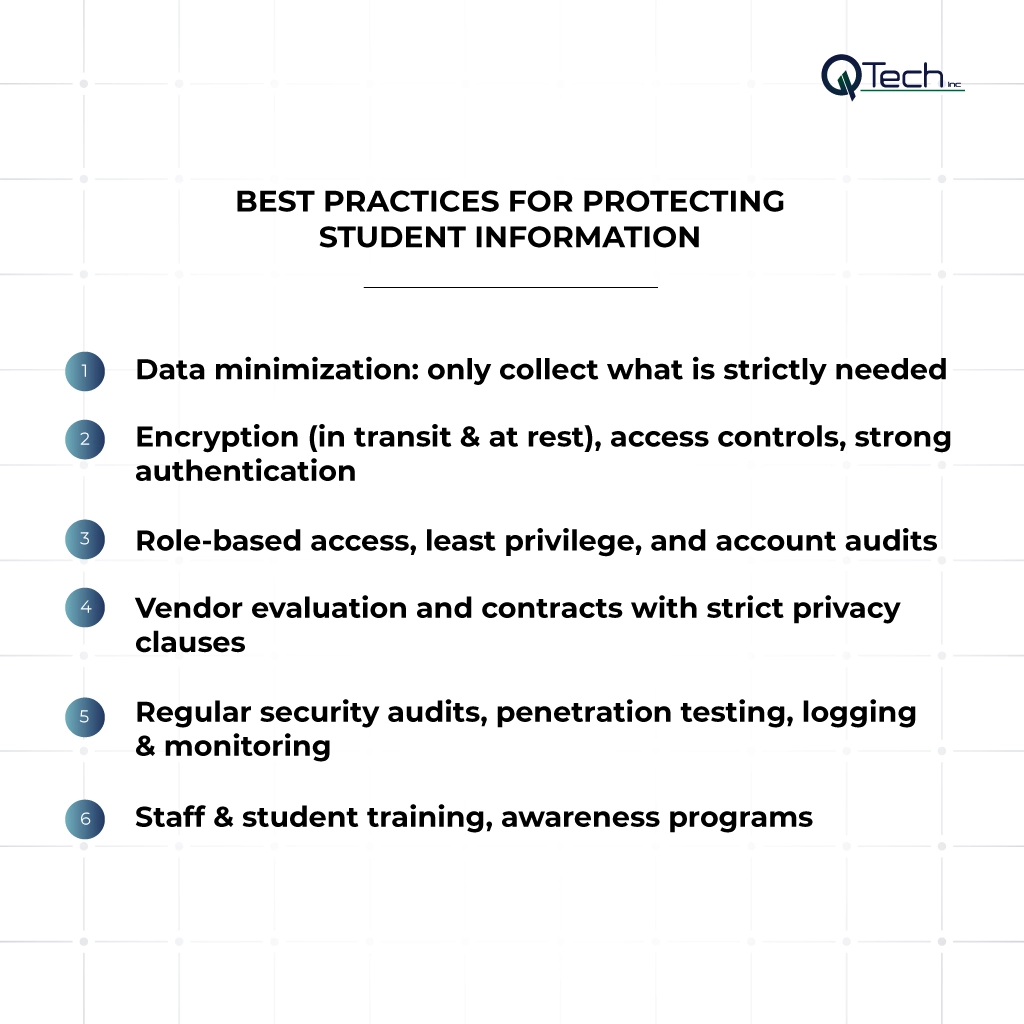
The rise of EdTech brings new responsibilities around data privacy. Schools must protect sensitive information such as grades, addresses, and even Social Security numbers. Compliance with data privacy laws—including FERPA in the United States and data protection regulation GDPR in Europe is mandatory to prevent data breaches and safeguard students.
Vetting EdTech Tools: Privacy Policies, Encryption, User Permissions
Not all tools handle data responsibly. Schools must carefully vet vendors by reviewing privacy policies, encryption standards, and user permission settings. By prioritizing security in EdTech, institutions build trust with parents, students, and educators.
Monitoring, Assessment & Iteration
Collect Feedback from Teachers & Students
Feedback is the foundation of improvement. Schools should gather input from both teachers and students to understand how tools impact learning environments.
Use Analytics & Dashboards to Track Tool Usage & Learning Outcomes
Analytics dashboards help administrators assess student engagement, tool adoption, and overall learning objectives. This real-time insight enables quick adjustments and supports data-driven decision-making.
Iterate: Pilot, Evaluate, Refine
EdTech integration is not a one-time event. Schools should adopt a continuous improvement cycle: pilot tools, evaluate results, and refine strategies. This iterative approach ensures that technology integrations remain effective year after year.
Trends Shaping EdTech in 2025
- Microlearning & Bite-Sized Content
- Hybrid & Blended Learning Models
- Augmented Reality (AR) / Virtual Reality (VR)
- AI-Driven Platforms for Personalized Learning
Microlearning & Bite-Sized Content
Short, focused lessons make it easier for students to absorb information. Microlearning is becoming a key strategy for enhancing learning retention.
Hybrid & Blended Learning Models
Blended learning remains essential for accommodating diverse learning environments. The mix of in-person and digital instruction strengthens both flexibility and resilience.
Augmented Reality (AR) / Virtual Reality (VR)
AR and VR are rapidly transforming education, creating immersive and interactive ways for students to explore concepts and practice skills.
AI-Driven Platforms for Personalized Learning
AI platforms are becoming central to education. They analyze performance, provide timely feedback, and create adaptive pathways tailored to each student’s needs.
How Q-Tech Inc. Helps Schools Integrate EdTech Successfully
At Q-Tech Inc., we specialize in helping educational institutions adopt and scale EdTech solutions. From infrastructure setup and IT support for schools to advanced EdTech services, we ensure seamless technology integrations tailored to your unique learning environments. Our experts also provide cybersecurity solutions that protect against data breaches and ensure compliance in EdTech. By partnering with us, schools can focus on what matters most: student learning.
Conclusion
Integrating EdTech in the classroom, best practices for the new school year, is about more than simply adopting new tools. It’s about aligning technology with learning objectives, protecting student data, and creating inclusive, engaging environments. With the right approach and the right partner, educational technology becomes a powerful force for enhancing learning. As schools prepare for the 2025 school year, Q-Tech Inc. stands ready to help guide institutions toward safe, innovative, and effective EdTech integration.
FAQ
What is the difference between “Technology in Education” and “Educational Technology”?
Answer – Technology in Education refers to the use of technology as a tool to facilitate learning, like using a projector or a tablet. Educational Technology is a broader field that focuses on the systematic design, development, and evaluation of instructional methods and resources to improve the learning process, with or without technology.
How can AI be used to personalize learning for students?
Answer – AI can personalize learning by adapting the difficulty and pace of content to each student’s needs. AI-powered tutoring systems, for example, can identify a student’s knowledge gaps and provide targeted exercises, ensuring they master concepts before moving on.
What is a Learning Management System (LMS)?
Answer – An LMS is a software application for the administration, documentation, tracking, reporting, and delivery of educational courses or training programs. Common examples include Google Classroom, Canvas, and Moodle, which help teachers manage assignments, track student progress, and facilitate communication.
What privacy and security issues should schools consider when integrating EdTech?
Answer – Confirm tool’s privacy policies, data storage policies, compliance with local/regional regulations (like FERPA or GDPR), ensure data encryption, permission controls, user authentication, and vendor reliability.