
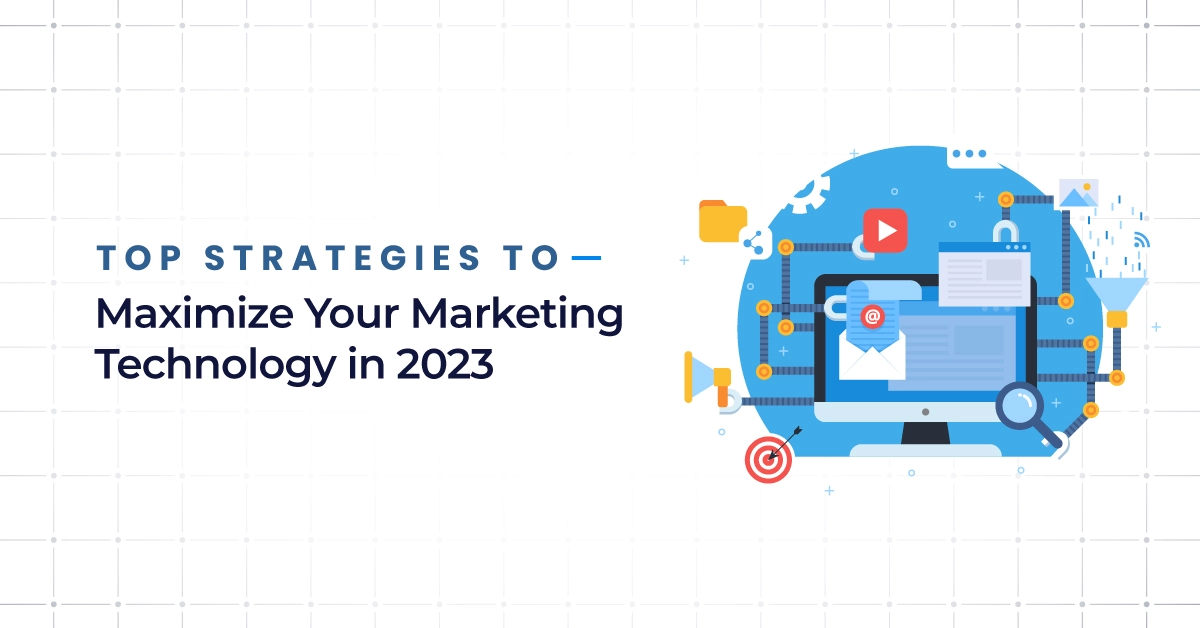
Marketing has more power than ever. It also has more noise. In 2023, the brands that win are not the ones that shout the loudest. They are the ones that use smart systems to learn what customers need, respond fast, and keep improving.
A modern stack is not “more tools.” It is a clear system that supports your marketing efforts every day. It includes data analytics that explain results, marketing automation that runs workflows on time, and personalization in marketing that makes messages feel relevant. When these parts work together, you get stronger customer engagement, cleaner reporting, and marketing campaigns that keep getting better.
Why Modern Marketing Technology Matters in 2023
Customer behavior has changed. People research on phones, compare options on laptops, and ask for proof before they buy. Traditional marketing still helps with awareness, but it often breaks when buyers move fast across channels. If your tools are not connected, your team guesses. You also lose time pulling reports and fixing gaps.
Modern marketing technology strategies 2023 focus on relevance and speed. You learn what each customer segment cares about, then you deliver the right next step. That could mean using purchase histories to spot repeat buyers, or building customer segments based on intent and value. It also means matching messages to your target audience, so your spend goes to the people most likely to act.
Strategy #1: Integrate AI Across Your Marketing Stack
AI is most useful when it sits inside daily work. That is why integrating AI in martech stack workflows matters. It helps teams move faster in planning, targeting, testing, and reporting. AI does not replace a good strategy. It helps you execute that strategy with more speed and less guesswork.
Start with two or three use cases you can measure. For many brands, that includes lead scoring, smarter segmentation, and content ideas that match search intent. Many AI marketing tools use machine learning to learn from clicks, form fills, and sales results.
Good AI adoption starts small, with clear goals, then expands once the wins are proven. Over time, AI systems can highlight patterns that humans miss, especially when data grows.
AI needs guardrails. Set rules for what it can change and what needs a human review. Keep your brand voice guide close. Protect privacy and consent. Done right, you get speed without losing trust.
Strategy #2: Leverage Data Analytics for Insights
Data is not the finish line. Insight is. Strong data analytics shows what is driving results and what is wasting budget.
This is the base for data-driven marketing strategies that you can explain to leadership with confidence. It also keeps teams aligned, because everyone is looking at the same truth.
A good setup starts with clean tracking and clear goals. From there, data analytics can reveal which channels assist conversions, which pages create drop-offs, and which offers convert best. You can also compare customer behavior across customer segments to see who buys fast and who needs more education. When you act on those findings, you build driven marketing strategies that scale, not one-off spikes.
Quality beats quantity. Clean, consent-based first-party data is worth more than a messy pile of guesses. If dashboards are wrong, decisions are wrong. Invest in tracking basics, then let insights guide budget and creative.
Strategy #3: Personalization at Scale
Personalization at scale means more than a first name. It means shaping messages around context. A strong personalization strategy uses behavior, purchase histories, and preferences to create personalized experiences that feel helpful. The goal is to guide, not to stalk.
Email is a great place to start because it is measurable and flexible. With smart rules, email marketing can send personalized emails based on cart actions, product interest, and lifecycle stage. You can also personalize landing pages and product recommendations to match intent. These personalization strategies for marketing work best when the same logic appears across channels, so customers feel one consistent brand.
Strategy #4: Automate & Orchestrate Campaigns
Automation turns strategy into action. Marketing automation removes manual steps, reduces delays, and prevents leads from slipping through cracks. It also helps teams run many campaigns at once without chaos. The key is orchestration, where email, ads, CRM tasks, and site content all work as one flow.
Think in simple triggers. If a lead asks for pricing, route them to sales and start a short nurture series. If a customer buys, trigger onboarding and support tips. If they go quiet, trigger a win-back offer.
Strategy #5: Align Marketing Tech With Customer Experience (CX)
Technology should make the journey smoother. If it makes the journey harder, it is doing damage. Customer Experience (CX) is the test that matters. When CX is aligned, people move from discovery to purchase without repeating the same details again and again.
Start by mapping the journey you want. Then map each tool to a step in that journey. For example, if someone downloads a guide, your next message should match that interest.
You might offer a case study, an invite to a short call, or a product comparison. When your MarTech supports CX, it builds trust. Trust lowers friction and improves conversion.
Strategy #6: Measure & Optimize Continuously
Great teams treat optimization as a routine, not a rescue. They test, learn, and adjust every week. Continuous improvement means you run small experiments on ads, emails, landing pages, and offers. Then you keep the winners and cut the losers.
This work is easier when dashboards connect marketing efforts to the pipeline and revenue. You can ask simple questions: What improved? What dropped? What changed in customer behavior? The answers guide your next tests. Over time, the process becomes a flywheel. Each cycle makes your marketing campaigns more efficient and more resilient.
How to Build a Future-Ready MarTech Stack
A future-ready stack is connected, flexible, and governed. Start with a core CRM, analytics, and consent setup that you trust. Then add tools that solve clear problems, without creating new silos. Prioritize integrations, shared naming rules, and access controls, so teams can work together with confidence.
Also plan for what is next. Leaders are already preparing for AI in marketing 2025, where real-time prediction and personalization become expected. The best move now is to invest in clean data, define where AI technology fits your brand, and choose platforms that can evolve.
Conclusion — Smarter Marketing Technology with Q-Tech Inc.
The best marketing technology strategies 2023 are not about chasing shiny tools. They are about building a system that learns. When you combine data analytics, marketing automation, and personalization in marketing, you get clearer decisions and better customer engagement at every stage.
Use three words: clarity, connection, and cadence. Clarity means you can measure what matters. Connection means your tools share data. Cadence means you optimize often.
And if you want a practical roadmap for “marketing technology strategies 2023 how AI data,” Q-Tech Inc. can help you plan the stack, implement the workflows, and keep improving results.
FAQ
Q: What are the top marketing technology strategies in 2023?
A: The top strategies include integrating AI for personalization, leveraging data analytics, automating campaigns, enhancing customer experience through CX tools, and continuous measurement and optimization of campaigns.
Q: How can AI improve marketing technology performance in 2023?
A: AI improves performance by enabling personalized content at scale, predicting customer behavior, automating repetitive tasks, and powering advanced analytics and forecasting.
Q: Why is personalization important in marketing technology?
A: Personalization increases engagement, conversions, and customer satisfaction by delivering contextually relevant content and messaging across customer touchpoints.
Q: How does data analytics help marketing technology?
A: Data analytics provides insights into customer behavior, campaign performance, and trend patterns, enabling smarter decisions and precise targeting.
Q: What role does automation play in marketing strategies?
A: Automation streamlines repetitive tasks, triggers actions based on customer behavior, and improves operational efficiency — freeing teams to focus on strategy and creativity.