

What Is Social Commerce?
Social commerce is revolutionizing the way people shop online. Unlike traditional e-commerce, which redirects users to a separate website, social commerce lets customers discover, browse, and buy products or services directly on a social media platform. This integration simplifies the shopping experience, eliminates extra steps, and helps businesses capture attention right where their audiences already spend most of their time.
At its core, social commerce merges social interaction with buying behavior. From shoppable posts on Instagram to in-app checkout on TikTok or Facebook, brands now have powerful tools to build trust and create seamless, interactive customer experiences. As people engage with brands through likes, shares, and comments, these moments of interaction become sales opportunities — turning followers into loyal customers.
This blog is a complete guide to selling on social media, helping you understand the fundamentals, identify the right platforms, and craft an effective commerce strategy to grow your business through social media shopping.
Why Social Commerce is the Future
The rise of social commerce platforms signals a shift in how consumers connect with brands. According to market research, over 50% of online shoppers now prefer discovering products on social apps rather than search engines. That means your next sale could come from an Instagram story, a TikTok live stream, or a Facebook shop, rather than a Google search.
What makes this evolution so powerful is its focus on relationships. Social media isn’t just a marketing tool; it’s a trust-building environment. People want authenticity and community, not just ads. By selling directly on social media, brands can foster a real connection with their audience, offer quick customer service, and build genuine relationships that translate into long-term loyalty.
This model is especially impactful for small to mid-sized businesses looking to level up their digital marketing strategy. When combined with optimized storefronts, media creation, and a robust social commerce plan, it positions your brand for scalable, sustainable growth.
What is Social Commerce and How is it Different from E-commerce?
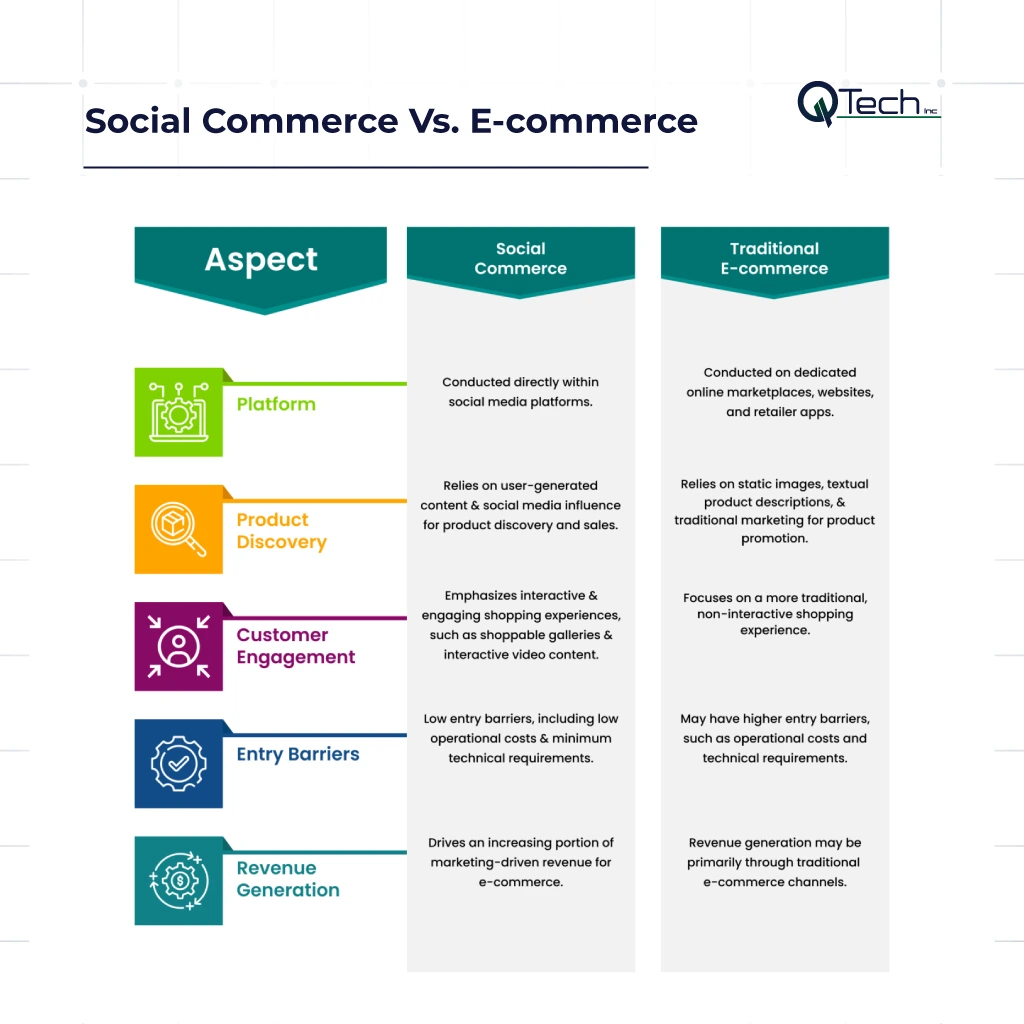
While both social commerce and e-commerce involve selling products online, the key difference lies in the buying journey. Traditional e-commerce requires users to leave their social apps to complete a purchase on an external website. Social commerce, on the other hand, keeps the buyer within the social ecosystem from discovery to checkout.
In the debate of social commerce vs e-commerce, the advantage of social commerce is convenience. With just a few taps, customers can move from seeing an item in a story to checking out without ever leaving the app. For businesses, this means higher conversion rates and fewer abandoned carts.
Moreover, social commerce platforms come equipped with built-in analytics, advertising tools, and social proof mechanisms such as reviews, likes, and shares that enhance credibility and influence purchasing behavior. These integrations help brands understand how to sell on social media more effectively while maintaining control over branding and engagement.
Top Platforms for Social Commerce & How to Choose Them
Not all social media platforms are created equal when it comes to selling. Choosing the right one depends on your products or services, audience demographics, and social media strategy. Below are the leading platforms dominating the commerce platform space and how each supports social selling.
Instagram Shopping
Instagram has become a visual marketplace where shoppable posts and reels drive discovery. Businesses can tag products directly in photos and videos, making it easy for users to explore pricing and purchase without leaving the app. Instagram’s strength lies in its visual storytelling — perfect for brands that rely on lifestyle imagery or influencer collaborations.
TikTok Shop
TikTok is redefining influencer marketing. The TikTok Shop feature allows creators to link products directly in their videos, blending entertainment and commerce seamlessly. Short-form videos, user-generated content, and algorithmic reach make it a powerful tool for potential customers who enjoy discovering products organically.
Facebook Shops
Facebook remains a powerhouse in online shopping with its native Shops feature. It integrates easily with Instagram and provides a unified shopping experience across both platforms. Facebook Shops are ideal for brands that want to manage product catalogs, offer customer service, and advertise through targeted campaigns in one place.
Pinterest Product Pins
Pinterest’s Product Pins transform visual inspiration into actionable shopping. Users exploring mood boards or design ideas can instantly purchase items tagged within pins. It’s particularly effective for home decor, fashion, and lifestyle brands looking to target customers in the discovery phase of their shopping experience.
Setting Up Your Social Commerce Strategy
Building a successful commerce strategy requires more than just setting up a profile. Here’s how to establish a robust foundation that attracts, converts, and retains your audience.
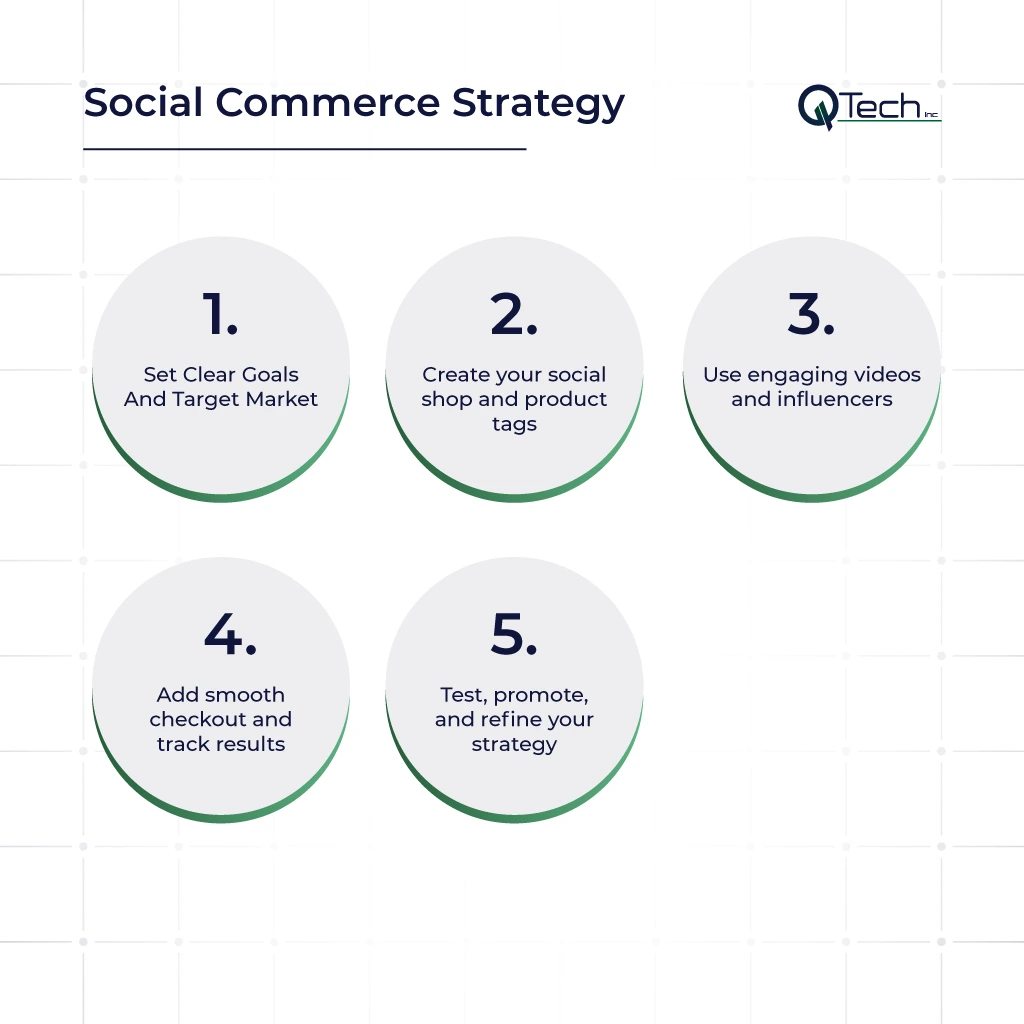
Set Clear Goals And Target Market
Start with clarity. Define what success looks like for your business. Are you looking to drive direct sales, increase brand awareness, or test new product lines? Understanding where your audience spends time and how they interact ensures that your social media content aligns with your goals.
Create Your Social Shop and Product Tags
Set up your shop within your chosen social platform. Upload your product catalogs, ensure descriptions are optimized for search, and use relevant hashtags. Adding product tags to posts or reels makes your content instantly shoppable, shortening the path from discovery to purchase.
Use Engaging Videos and Influencers
Visual storytelling is the heartbeat of social commerce strategies. Collaborate with micro and macro influencers to showcase your products in authentic ways. Through influencer marketing, brands gain exposure to trusted audiences and boost social proof. Videos and live streams not only entertain but also demonstrate your product’s value in real-time.
Add Smooth Checkout and Track Results
A frictionless checkout process is critical. Enable in-app purchases and payment options that feel secure and fast. Use built-in analytics to measure performance metrics like click-through rate, conversions, and ROI. Regularly monitor your results to refine your social media strategy.
Test, Promote, and Refine Your Strategy
Social commerce thrives on adaptability. Test different content types, promotional offers, and post times to see what resonates most. Encourage customer feedback to improve customer experiences, and adjust campaigns based on performance data. Continuous optimization ensures your approach remains competitive and relevant.
Best Practices & Tactics to Drive Social Commerce Sales
Create Eye-Catching and Interactive Content
The first step to driving sales is to create content that captures attention instantly. Whether it’s a carousel post, reel, or story, make visuals clean, engaging, and consistent with your brand identity. Use storytelling techniques to connect emotionally with your audience and showcase how your products or services improve their lives.
Use Influencers and Customer Posts
Authenticity drives conversions. Encourage customers to share their experiences and tag your brand. Repurpose these posts to create social proof that reinforces trust. Combine this with influencer marketing campaigns to reach new audiences and generate genuine excitement around your brand.
Host Live Shopping and Product Launches
Live shopping events are the digital equivalent of in-store demos. Use them to introduce new collections, answer questions, and demonstrate your products. Platforms like TikTok and Instagram Live make this easy, fostering real-time engagement and helping customers make confident purchasing decisions.
Simplify Checkout for Mobile Users
Most social media shopping happens on mobile devices. Keep checkout forms short, payment options accessible, and navigation simple. Every second saved during checkout reduces cart abandonment and improves overall conversion rates.
Monitor Sales and Performance Metrics
Data is your best friend in social commerce. Track engagement, conversion rates, and audience behavior regularly. Use these insights to tweak your social media strategy, refine ad targeting, and optimize customer experiences.
Challenges & Pitfalls to Avoid
Launching Without a Clear Strategy or Audience Fit
Jumping into social commerce without a plan is one of the biggest mistakes brands make. Define your objectives, know your target demographics, and test your content before investing heavily. A well-structured commerce strategy ensures sustainable growth.
Messy Catalogs and Checkout Issues
Disorganized product catalogs or broken links frustrate users and kill conversions. Keep your listings up-to-date with clear descriptions, accurate pricing, and professional visuals. Test your checkout experience regularly to prevent glitches that could hurt sales.
Weak Customer Service and Delivery
Customers expect quick responses on social media. Delayed replies or poor handling of inquiries can damage your reputation. Implement efficient customer service workflows and ensure reliable delivery partners to maintain satisfaction and loyalty.
Overlooking Platform Rules and Privacy Laws
Each social platform has its own commerce policies and data protection standards. Failing to comply with them could lead to account suspension or loss of customer trust. Stay informed on privacy laws, ad regulations, and best practices for secure transactions.
Conclusion: How Q-Tech Inc. Can Help with Your Social Commerce Journey
Embracing social commerce isn’t just about staying trendy; it’s about evolving your business to meet modern consumer expectations. Whether you’re new to selling directly on social media or refining your approach, having the right partner can make all the difference.
At Q-Tech Inc., we specialize in integrating digital strategies that connect your brand to your ideal audience. Our team combines optimized storefronts, compelling media creation, and advanced digital marketing expertise to help you navigate the future of social commerce confidently.
From crafting your social media strategy to optimizing your commerce platform, we’ll help you transform followers into customers and engagement into measurable growth. Partner with us today and build a brand that not only stands out online but thrives in the ever-evolving world of social media shopping.
FAQ
Q: Is social commerce safe for customers?
A: Reputable social commerce platforms have built-in security features for payments, similar to standard e-commerce sites. Customers should always check for verified seller badges, read reviews, and ensure they are using the platform’s official payment system (like Meta Pay) rather than transferring money directly to a seller.
Q: Do I need a website to start with social commerce?
A: Not necessarily. Platforms like Instagram Shopping, TikTok Shop, and Facebook Shops allow you to create a full storefront without a standalone website. However, having a website provides a central hub for your brand and is recommended for long-term growth and credibility.
Q: How does Generative AI fit into Social Commerce strategy?
A: Generative AI tools (like ChatGPT) can be used to automate product descriptions for social listings, create personalized ad copy based on user segmentation, and quickly analyze conversational commerce feedback.
Q: What is “Conversational Commerce”?
A: Conversational Commerce is the use of chat-based tools (like DMs, Facebook Messenger, or WhatsApp) to facilitate shopping by allowing customers to ask questions and complete a purchase directly within the chat interface, often driven by chatbots or live human agents.