
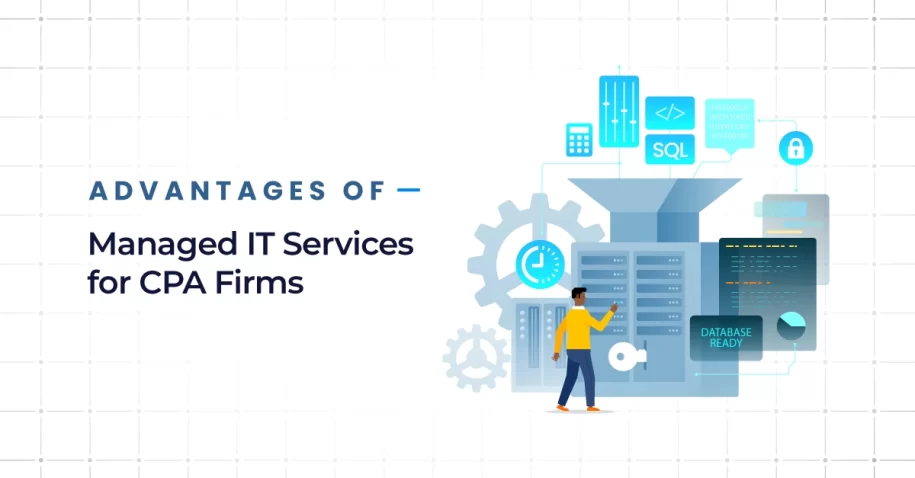
For modern CPA firms, technology is no longer “back-office plumbing.” It’s the backbone of how you manage client data, run your accounting software, generate financial reports, and ultimately serve clients with speed and accuracy. When systems slow down or go offline, work stops, deadlines slip, and client trust takes a hit. That’s why many forward-thinking firms are turning to managed IT services as a strategic advantage rather than a last-minute fix.
The advantages of managed it services for cpa firms go far beyond troubleshooting laptops. With the right technology partner, you can strengthen data security, streamline operations, control costs, and build a more scalable and profitable practice. Instead of juggling servers, updates, and security patches on your own, you gain a dedicated team focused on keeping your systems stable—so your partners and staff can stay focused on billable work and high-value advisory services.
What Are Managed IT Services?
At a basic level, you might still be asking, “what are managed it services” and how are they different from traditional IT support. In simple terms, managed IT services are an ongoing, subscription-based model where a managed service provider MSP takes proactive responsibility for your technology environment. Rather than waiting for something to break and calling a technician, your MSP monitors your systems around the clock, applies updates, patches vulnerabilities, and ensures core tools such as accounting software, email, and file storage run smoothly.
For CPA firms, a managed IT engagement typically includes secure cloud services, network management, backup and disaster recovery, and support for remote and hybrid teams. Services include monitoring for cyber threats, managing user access, and ensuring that key applications and databases remain available when you need them most. Instead of a reactive “break fix” approach, you partner with a managed team that anticipates issues, aligns technology with your firm’s goals, and helps you plan for future growth.
Key Benefits for CPA / Accounting Firms
Managed IT is more than an IT line item—it’s a business strategy. Below are the core benefits for CPA and accounting firms that want to modernize operations, protect sensitive client data, and strengthen profitability while building a future-ready practice.
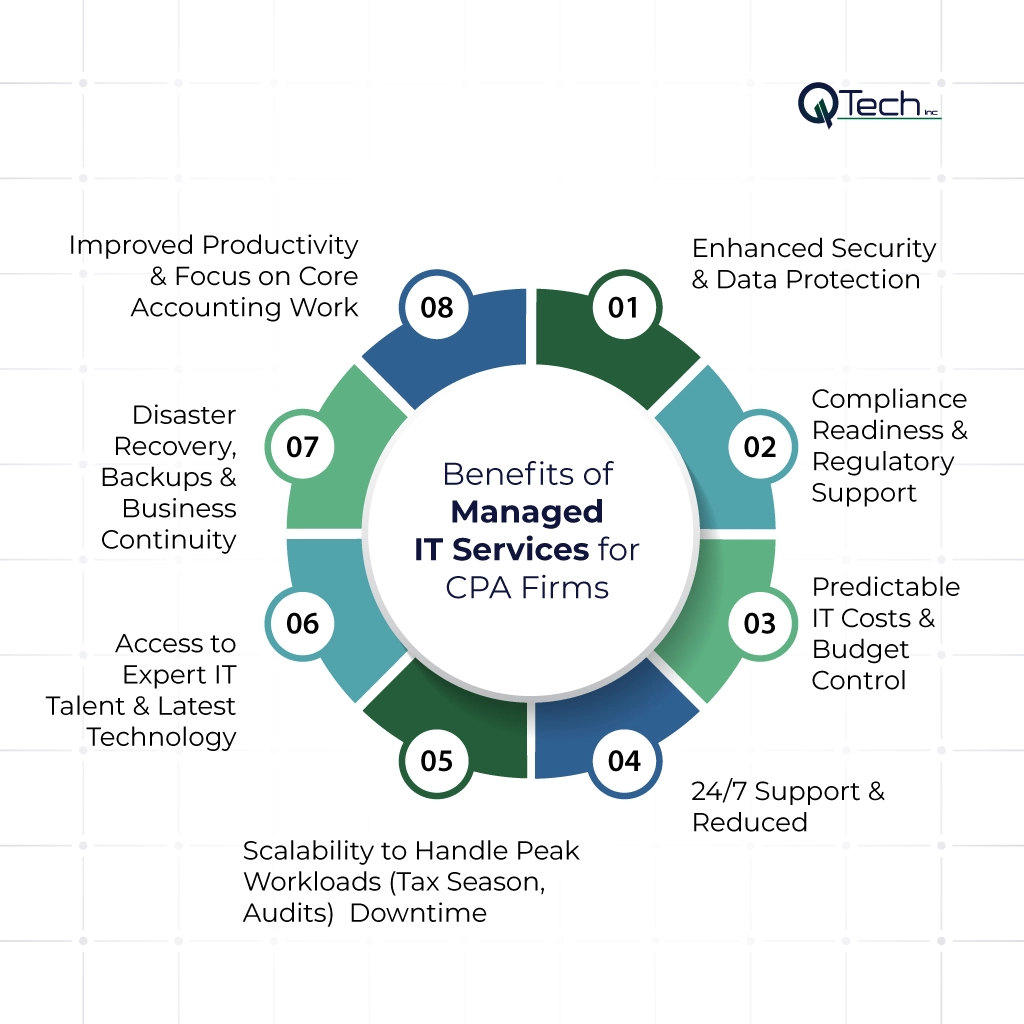
Enhanced Security & Data Protection
Data is your most valuable asset—and your greatest risk. CPA firms work with detailed financial reports, bank account information, tax records, and accounts receivable data that cybercriminals actively target. A strong managed IT partner designs security from the ground up, combining firewalls, endpoint protection, multi-factor authentication, and advanced monitoring to protect this high-value information.
With a proactive mindset around data security, your MSP implements encryption, access controls, and security awareness training for your staff. Whether your systems are on-premises or cloud based, you gain the assurance that client records, workpapers, and archived files are guarded against ransomware, phishing, and internal misuse. That level of protection is essential not just for regulators, but for long-term client trust.
Compliance Readiness & Regulatory Support
CPA firms must navigate complex compliance requirements, from IRS standards and state regulations to privacy rules and industry guidelines. A misconfigured system or poorly secured file share can create serious exposure. Managed IT services help you align technology policies and controls with the frameworks your practice needs to follow.
A knowledgeable provider supporting professional services firms will help standardize how you store, retain, and protect information related to audits, tax returns, and advisory work. They can assist with documentation, user-access logs, and audit trails so you can demonstrate that data is handled appropriately. When examiners or clients ask how you protect sensitive information, you can answer confidently and back it up with clear evidence.
Predictable IT Costs & Budget Control
Unplanned outages and emergency IT calls wreak havoc on cash flow and firm leadership’s peace of mind. Traditional break fix support often means expensive, unpredictable invoices arriving at the worst possible times—right when you’re dealing with a system failure or looming filing deadlines.
By contrast, a managed IT model turns technology into a predictable operating expense. Your provider bundles monitoring, maintenance, and support into a fixed monthly fee that supports better expense management and budgeting. Instead of guessing at your IT spend, you can forecast it alongside staffing and marketing costs. That stability gives you room to invest strategically in new tools, training, and growth initiatives instead of constantly putting out fires.
24/7 Support & Reduced Downtime
Busy firms don’t live inside a simple 9-to-5 schedule—especially during tax season and major audit cycles. Partners and staff may log in early or work late, and your clients expect your systems to be ready whenever they call. Managed IT services provide responsive help desk support and proactive monitoring that reduce downtime and keep your team productive around the clock.
If a staff member can’t log in, a shared drive goes offline, or a remote office loses connectivity, your MSP steps in quickly. They can troubleshoot network issues, restore remote access, and escalate problems before they become full-blown outages. The result is more billable hours, fewer last-minute panics, and a calmer, more professional client experience when deadlines are tight.
Scalability to Handle Peak Workloads (Tax Season, Audits)
Every CPA firm knows the surge that hits during tax season and major audit engagements. File volumes skyrocket, workloads spike, and more users need simultaneous access to core applications. Without scalable infrastructure, performance slows to a crawl, frustrating employees and slowing down client delivery.
Managed IT services make it easier to adjust resources up or down as needed. Whether it’s boosting compute capacity for a cloud based application, adding secure workstations for temporary staff, or expanding storage for historical client files, your MSP helps you scale with confidence. When the busy season ends, you can dial resources back and avoid over-investing in hardware you don’t need year-round.
Access to Expert IT Talent & Latest Technology
Hiring, training, and retaining in-house IT experts is expensive, and many small to mid-sized firms can’t justify a large internal technology team. By working with a managed service provider MSP, you gain access to a bench of specialists across networking, cybersecurity, cloud services, and application management—without carrying the full-time payroll burden.
These experts help you modernize your technology stack, from secure file-sharing platforms to collaboration tools and specialized accounting software that streamlines audits and tax preparation.
Disaster Recovery, Backups & Business Continuity
No firm is immune to unexpected events. Power surges, hardware failures, cyberattacks, or natural disasters can disrupt operations without warning. A managed IT strategy includes robust backup and business continuity planning so your firm can recover quickly if something goes wrong.
Your provider designs automated backups of critical databases, engagement files, and client data, often using redundant cloud services and off-site storage. In the event of an incident, they can restore systems and applications so your team can get back to work with minimal interruption. Instead of scrambling to reconstruct lost work, you follow a tested recovery plan that protects revenue and safeguards your reputation.
Improved Productivity & Focus on Core Accounting Work
When partners and staff are constantly troubleshooting printers, reconnecting Wi-Fi, or dealing with sluggish apps, productivity suffers. Highly trained CPAs should be focusing on advisory, audits, and tax planning—not acting as part-time IT technicians.
Managed IT services free your team from those distractions. Routine updates, patching, and endpoint management are handled quietly in the background. Your people can stay focused on interpreting numbers, managing accounts receivable, building dashboards, and advising clients on strategy. With better tools, stable systems, and reliable remote access, they can collaborate more effectively and deliver higher-value insights instead of losing time to technical headaches.
Conclusion
In a landscape where client expectations are rising and margins are under pressure, technology can either hold your firm back or drive it forward. The true advantages of managed it services for cpa firms lie in turning IT from a constant source of anxiety into a dependable engine that supports growth, compliance, and innovation. With stronger data security, scalable infrastructure, and predictable costs, you can plan confidently and focus on delivering exceptional service.
Q-Tech Inc. helps accounting firms do exactly that. By partnering with a managed team that understands both IT and professional services, you gain the foundation you need to modernize workflows, stabilize cash flow, and deepen client trust. Our managed IT services are designed to support secure operations today while preparing your firm for tomorrow’s demands.
If you’re ready to upgrade your firm’s technology, protect sensitive client information, and strengthen your online presence, it’s time to explore a broader digital transformation for accounting firms. With the right partner, your systems can do more than keep the lights on—they can power a smarter, more resilient, and more profitable practice.
FAQ
Q: How do managed IT services help ensure data security and compliance for accounting firms?
A: MSPs implement security measures like encryption, firewalls, intrusion detection, backups, regular audits, and support regulatory requirements (data privacy, compliance standards). They reduce the risk of data breaches, unauthorized access, and ensure financial data remains confidential.
Q: Why do CPA firms need specialized managed IT services?
A: CPA firms are high-value targets for cyberattacks due to the sensitive financial and personal data they hold. They also face strict regulatory and ethical obligations (like IRS Circular 230 and client confidentiality agreements). Generic IT support lacks the depth to address these unique compliance and security requirements. Specialized MSPs understand the accounting workflow, critical software, and necessary controls to protect the firm and its clients.
Q: Can we keep our existing accounting software with managed IT services?
A: Absolutely. A core principle of managed IT is to support and optimize your existing, critical business applications—not replace them. Whether you use QuickBooks Desktop/Online, CCH ProSystem fx, Thomson Reuters UltraTax, or Drake, a good MSP will ensure these applications are properly hosted, backed up, secured, and accessible to your team. They can also advise on upgrades or cloud migrations when it makes strategic sense for your firm.
Q: Is outsourcing IT more secure than having an in-house person?
A: For most small to mid-sized CPA firms, yes. A reputable MSP provides a team of specialists (in security, networking, compliance) and invests in enterprise-grade security tools that would be cost-prohibitive for a single firm. They offer 24/7 monitoring, threat intelligence, and structured incident response plans. An in-house IT person can be a single point of failure and may lack depth in all required security and compliance domains.